I’ve been practicing law here in Oregon for years, and I can’t count how many trailer sale problems have landed on my desk because someone skipped one simple document — an oregon trailer bill of sale.
If you’ve never dealt with one before, let me explain it plainly. An Oregon trailer bill of sale is a written record of the sale that documents who sold the trailer, who bought it, what was sold, for how much, and on what date. It may sound basic, but in real life, it often becomes the difference between a smooth DMV transfer and a full-blown ownership dispute.
I’ve seen buyers walk into my office holding a signed title but no bill of sale, unsure whether they’re fully protected. I’ve seen sellers get calls months later about parking violations for a trailer they thought they sold. These situations aren’t rare — they’re common.
So let’s talk about how this really works in Oregon — not just what the statute says, but what actually happens when paperwork is missing, incomplete, or done carelessly.
Free Oregon Trailer Bill of Sale Templates
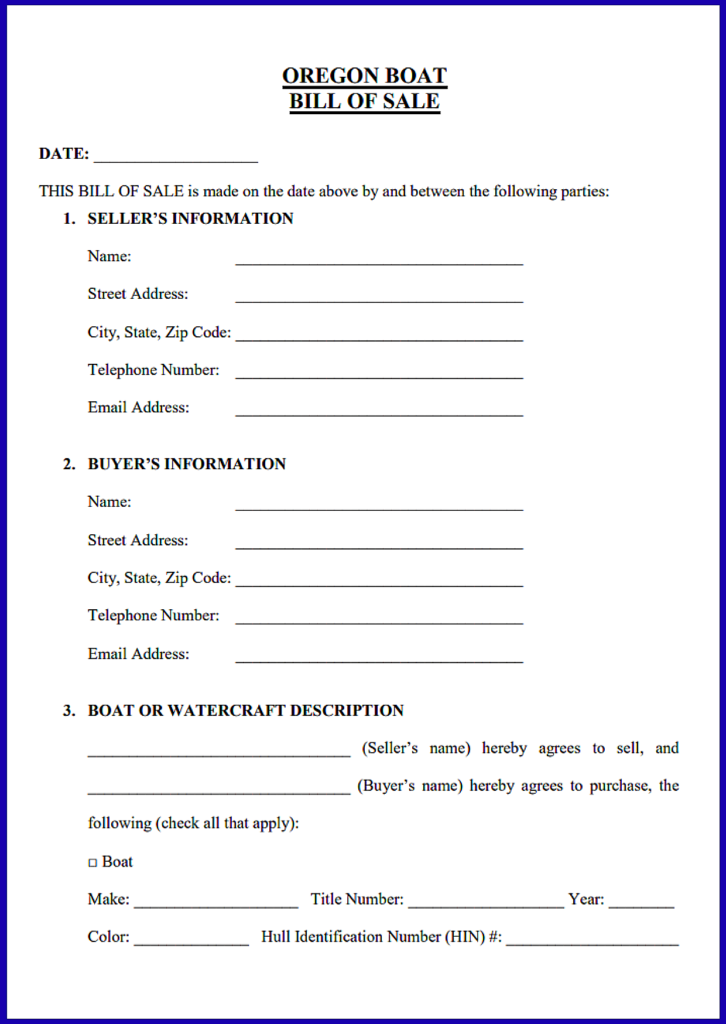
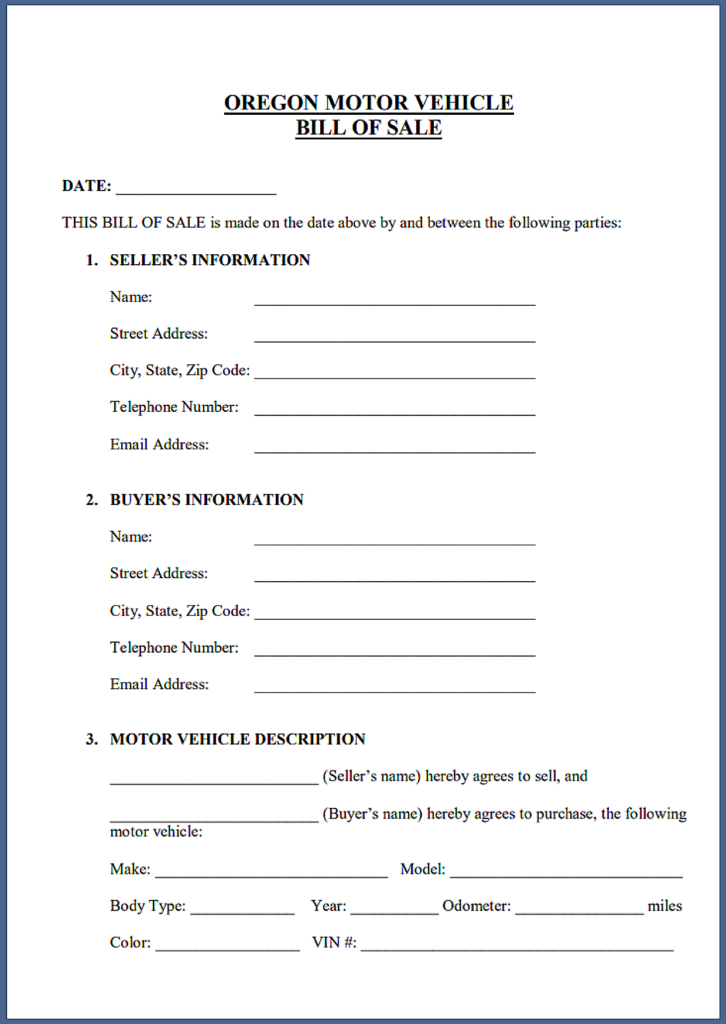
Over the years, I’ve had clients ask me if they can just “find a free template online” instead of drafting something formal. The truth is, a properly structured Oregon trailer bill of sale template can absolutely work — if it includes the right legal elements required here in Oregon. I’ve reviewed dozens of poorly written templates that were missing critical details like the VIN, full legal names, or clear transfer dates, and those small omissions can cause real DMV delays.
When I recommend a free Oregon trailer bill of sale template, I always tell people to treat it seriously — fill it out completely and double-check every line. A good template should clearly document the buyer, seller, trailer description, purchase price, and date of transfer. If you’re using one, make sure it’s Oregon-specific and not some generic multi-state form. You can also download the PDF format below.
Oregon DMV Trailer Bill of Sale
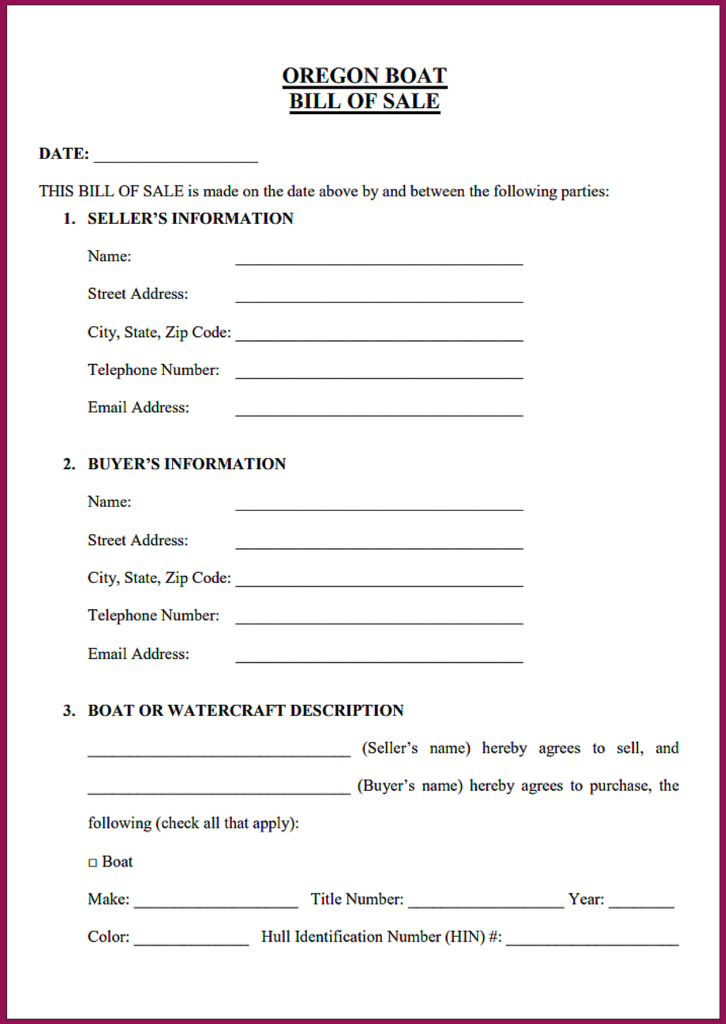
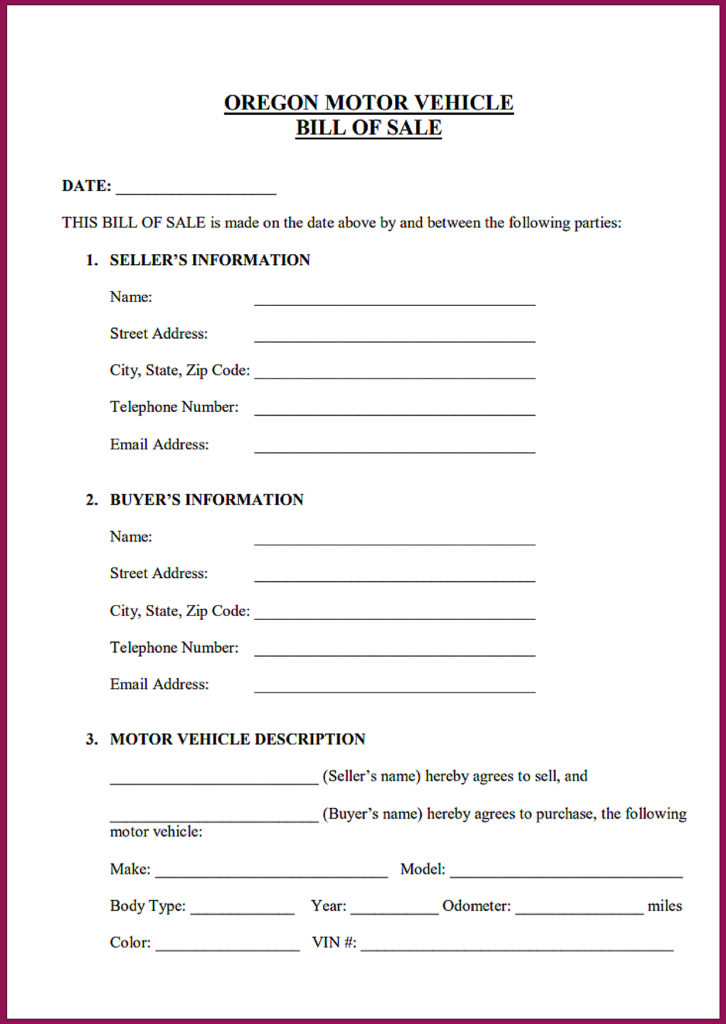
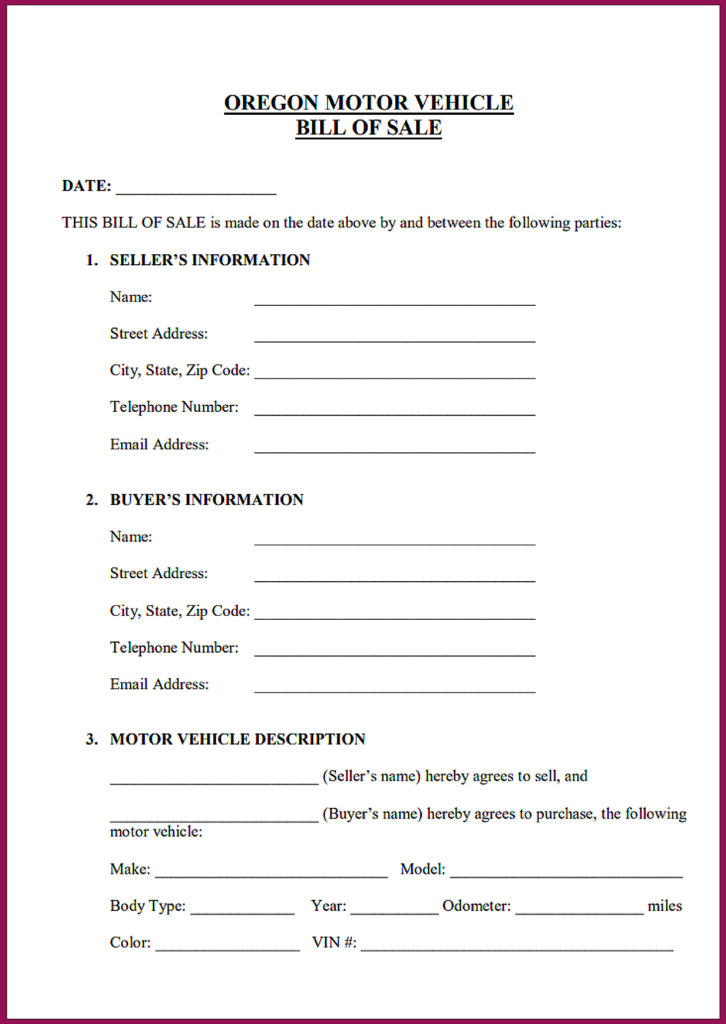
When people mention an Oregon DMV trailer bill of sale, they’re usually referring to the official form provided by the Oregon Driver & Motor Vehicle Services Division (Form 735-501). In my practice, I’ve seen that using the DMV’s own form can prevent unnecessary questions during title transfer because it follows the state’s formatting expectations.
That said, the DMV form doesn’t replace proper title assignment — it supports it. I’ve had cases where clients thought the bill of sale alone transferred ownership, which isn’t true under Oregon law. The title must still be properly signed and submitted. The DMV bill of sale simply creates a clean written record of the transaction, which becomes incredibly important if disputes arise later. You can also download the PDF format below.
Oregon Boat Trailer Bill of Sale
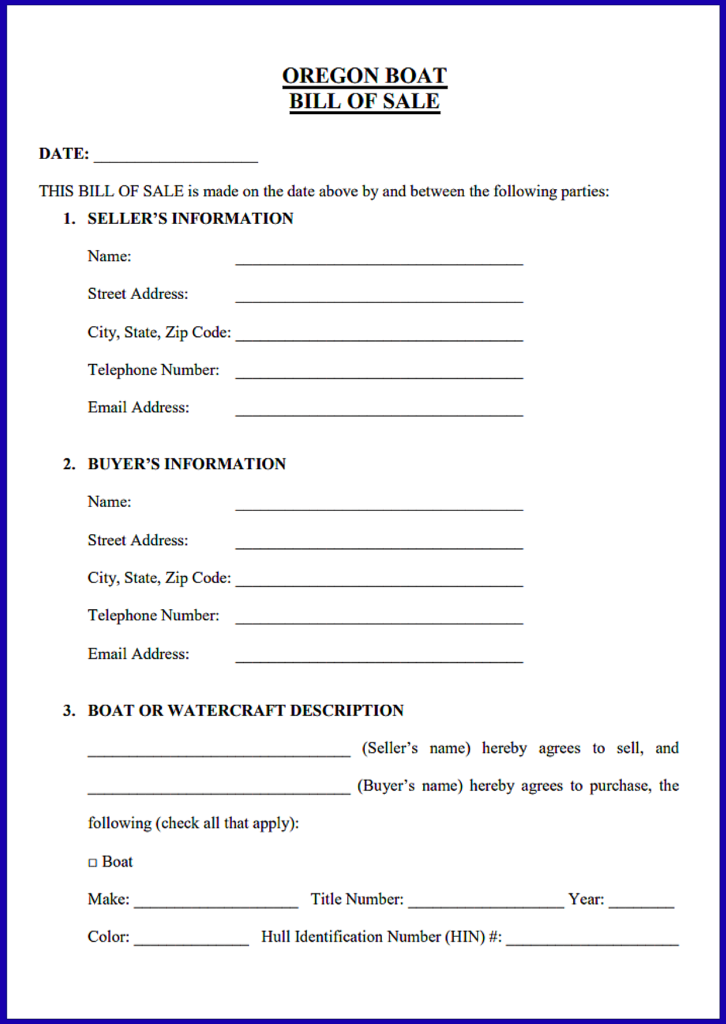
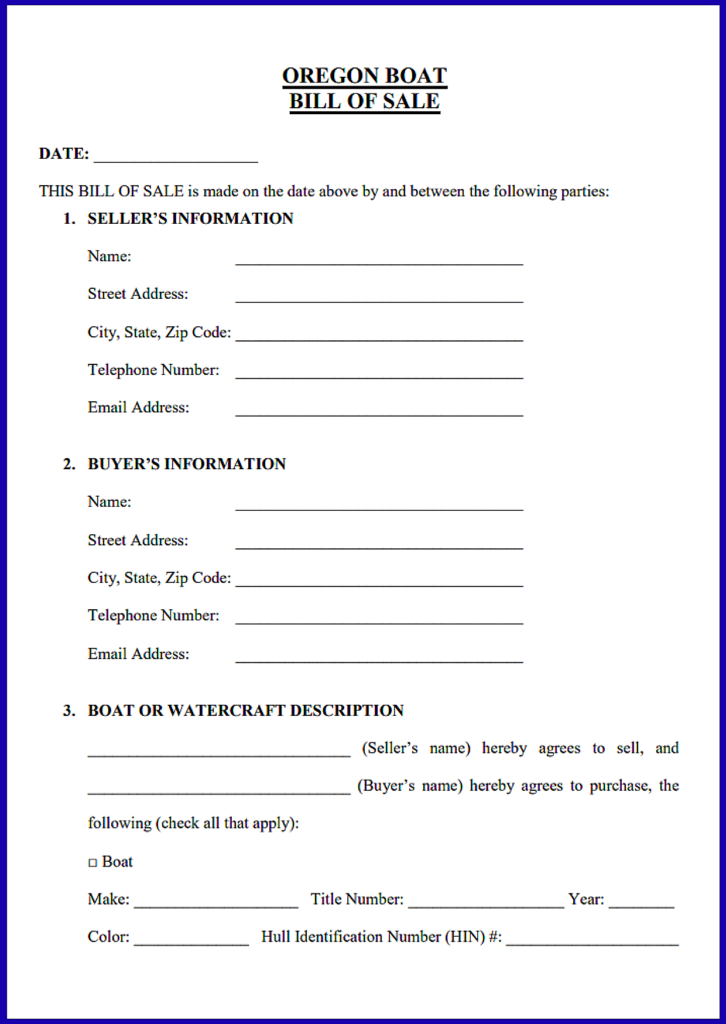
Boat trailers create a unique layer of confusion because people mix up vessel paperwork and trailer paperwork. I’ve had clients who properly transferred their boat through the Oregon State Marine Board but forgot that the trailer itself still requires separate documentation through the DMV. An Oregon boat trailer bill of sale specifically documents the transfer of the trailer — not the boat.
From a legal standpoint, this distinction matters. If the trailer ends up abandoned, damaged, or involved in a traffic incident, ownership questions will revolve around DMV records — not marine registration. I strongly advise clients to draft a clear boat trailer bill of sale that includes VIN, plate number, and accurate weight classification. You can also download the PDF format below.
Do You Legally Need a Bill of Sale for a Trailer in Oregon?
Under Oregon law, ownership of a titled trailer is transferred through proper assignment of the title. The official ownership change happens with the Oregon DMV using the title and application paperwork.
But here’s what I’ve learned in practice: the bill of sale is your protection.
The Oregon DMV (through the Oregon Driver & Motor Vehicle Services Division — DMV) does provide a standard Bill of Sale form (Form 735-501). Is it mandatory in every trailer transaction? Not always.
But when:
-
The purchase price is questioned
-
The seller’s signature is messy or incomplete
-
The trailer was homemade or missing VIN clarity
-
There’s a dispute about when the sale occurred
That bill of sale becomes critical evidence.
I’ve had cases where a buyer didn’t file with DMV for months. Then they get a parking ticket or toll violation from before they officially registered it. Without a clear bill of sale date, proving the transfer timing becomes messy.
Personally, I strongly prefer my clients to always use a written bill of sale — even when the title seems “clean.”
What Must Be Included in an Oregon Trailer Bill of Sale?
When I draft or review one, I make sure it includes:
-
Full legal names of buyer and seller
-
Current addresses
-
Trailer description (year, make, model, VIN)
-
Purchase price
-
Date of sale
-
Signatures of both parties
That’s it. Simple. Clean. Clear.
Where I see problems? In the details.
I once had a client who bought a utility trailer. The seller wrote “2016 trailer” and nothing else. No VIN. No model. When it turned out there were two similar trailers registered under that seller’s name, the confusion delayed the title process for weeks.
The VIN matters. Always.
Titling and Registration in Oregon
Here’s how it works in real life:
If the trailer is titled in Oregon, the seller signs the title over to the buyer. The buyer then submits:
-
The signed title
-
Application for Title and Registration (DMV Form 735-226)
-
Appropriate fees
-
Any required odometer or weight information (if applicable)
Trailers with a loaded weight of more than 1,800 pounds must be titled in Oregon. Smaller trailers may not require titling but still need registration.
This is where I see confusion. People assume “it’s just a little trailer” so paperwork doesn’t matter.
But if that trailer ends up in an accident? Or is abandoned? Or racks up toll violations? Ownership records absolutely matter.
Homemade or Lost Title Situations
These are the calls that usually land on my desk.
“Brandon, the guy said he lost the title but gave me a handwritten receipt.”
This is where things get complicated.
In Oregon, if the title is lost, the seller should apply for a replacement title before selling. If that doesn’t happen, the buyer may need to go through a bonded title process.
I’ve seen buyers pay $2,000 for a trailer they can’t legally register because they never received a properly assigned title.
If I’m advising a client before purchase, I always say:
If there’s no title and it should have one — walk away until it’s fixed.
Why the Date on the Bill of Sale Really Matters
Let me tell you why I care so much about this.
Oregon requires buyers to transfer title within 30 days of purchase. If you don’t, late fees apply.
I once handled a dispute where the seller dated the bill of sale a week earlier than the actual transfer. That triggered late fees and confusion at DMV.
In my experience, clarity on the date prevents:
-
Late penalties
-
Liability disputes
-
Tax questions
-
Enforcement issues
It’s a small detail that carries real weight.
Private Party Sales vs Dealer Sales
If you’re buying from a licensed Oregon dealer, most of this gets handled for you. Dealers submit paperwork electronically and manage title transfer.
Private party sales? That’s where I see the most problems.
People trust too easily. They skip paperwork because the seller “seems nice.”
I’m not saying distrust everyone — but protect yourself.
A clean bill of sale creates a paper trail. And in legal work, paper trails win cases.
Common Mistakes I See with Oregon Trailer Sales
Let me be blunt about what I’ve seen go wrong:
-
Not verifying the VIN on the trailer matches the title
-
Forgetting to remove license plates (in Oregon, plates stay with the trailer unless otherwise transferred properly)
-
Not filing the transfer promptly
-
Accepting a title with missing signatures
-
Relying on text messages instead of formal documentation
What I’ve learned after years of handling these cases is simple: most disputes are preventable.
My Practical Advice (If You Were Sitting in My Office)
If you were across the table from me, here’s what I’d say:
-
Always get a signed title properly assigned.
-
Always create and keep a written bill of sale.
-
Take photos of the trailer and VIN at the time of sale.
-
File with Oregon DMV immediately — don’t wait.
-
If something feels off, pause the transaction.
Personally, I’d rather lose a deal than inherit a legal headache.
A Quick Reality Check
This isn’t formal legal advice for your specific situation — laws change, facts matter, and every case has its quirks. But this is real-world guidance from someone who’s handled Oregon trailer disputes firsthand.
If you’re buying or selling a trailer in Oregon, slow down and do it right. The paperwork might feel tedious, but it’s far cheaper than litigation.
If you have questions about your situation — title problems, bonded titles, disputes, or DMV complications — feel free to reach out. Drop a comment or contact my office. I’m always happy to help people get it sorted before it becomes a bigger problem.
— Brandon
FAQ
Is a bill of sale legally required for a trailer in Oregon?
Technically, Oregon law focuses on the title transfer — that’s what legally moves ownership. But in my experience, skipping a bill of sale is a mistake. The title proves ownership, yes, but the bill of sale proves the details of the transaction: the price, the date, and who transferred it to whom.
I’ve handled disputes where the title was signed but the sale date was unclear, and that caused issues with late fees and liability. So while the DMV may not demand it in every situation, I strongly recommend always having a written Oregon trailer bill of sale. It protects both sides.
What information should be included in an Oregon trailer bill of sale?
At a minimum, I always advise including the buyer’s and seller’s full legal names, addresses, the trailer’s year, make, model, VIN, purchase price, and exact date of sale. If it’s missing the VIN, it’s incomplete — period.
I’ve seen handwritten receipts that just say “trailer sold for $1,000.” That’s not enough if a dispute arises. The more detailed and clear the document is, the smoother your DMV process will be.
Can I sell a trailer in Oregon without a title?
If the trailer is required to be titled in Oregon (generally over 1,800 pounds loaded weight), then selling it without a title creates problems. I’ve had clients buy trailers without titles and later discover they need a bonded title process — which costs time and money.
Personally, if a seller tells you the title is “lost,” I would pause the deal until they obtain a replacement from the Oregon DMV. It’s much easier for the current owner to fix that issue before the sale than for you to fix it afterward.
How long do I have to transfer the trailer title in Oregon?
Oregon requires buyers to apply for title transfer within 30 days of the purchase date. If you wait longer, you may face late fees.
I’ve seen people delay the transfer because they weren’t using the trailer yet. Unfortunately, the clock still runs. My advice? Handle the DMV paperwork immediately after the sale. It avoids penalties and keeps your ownership clean and clear.