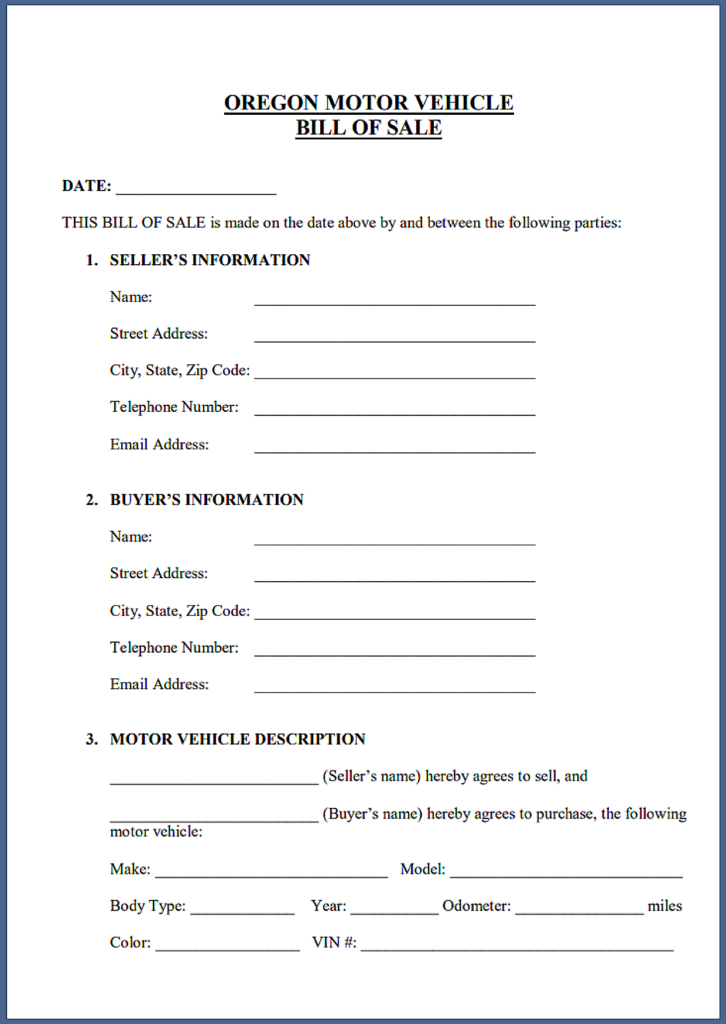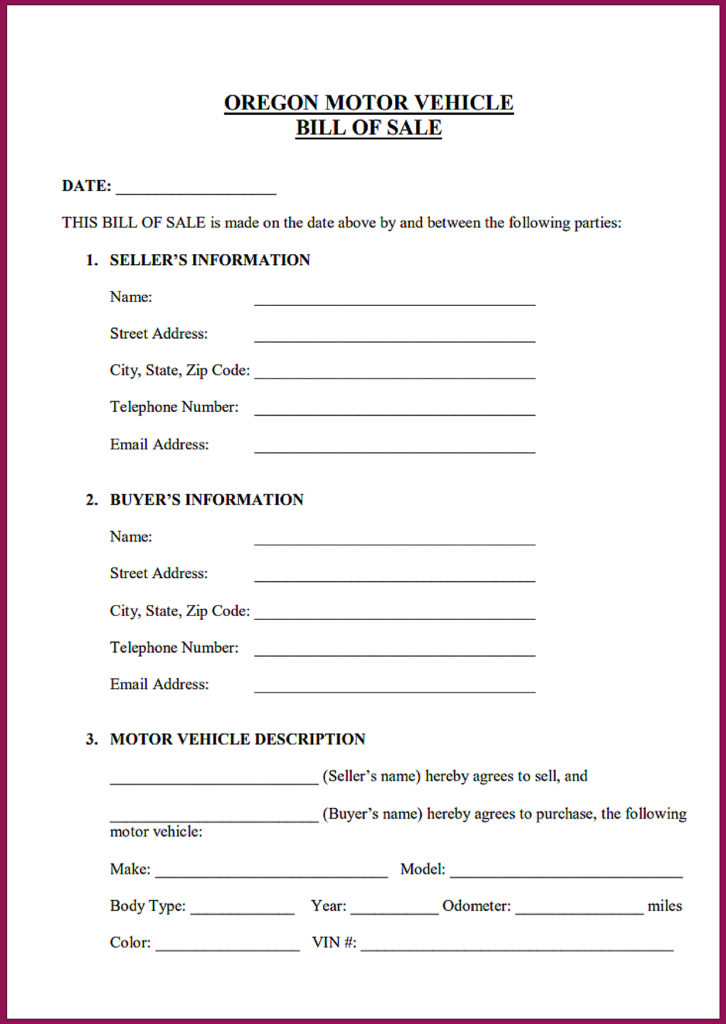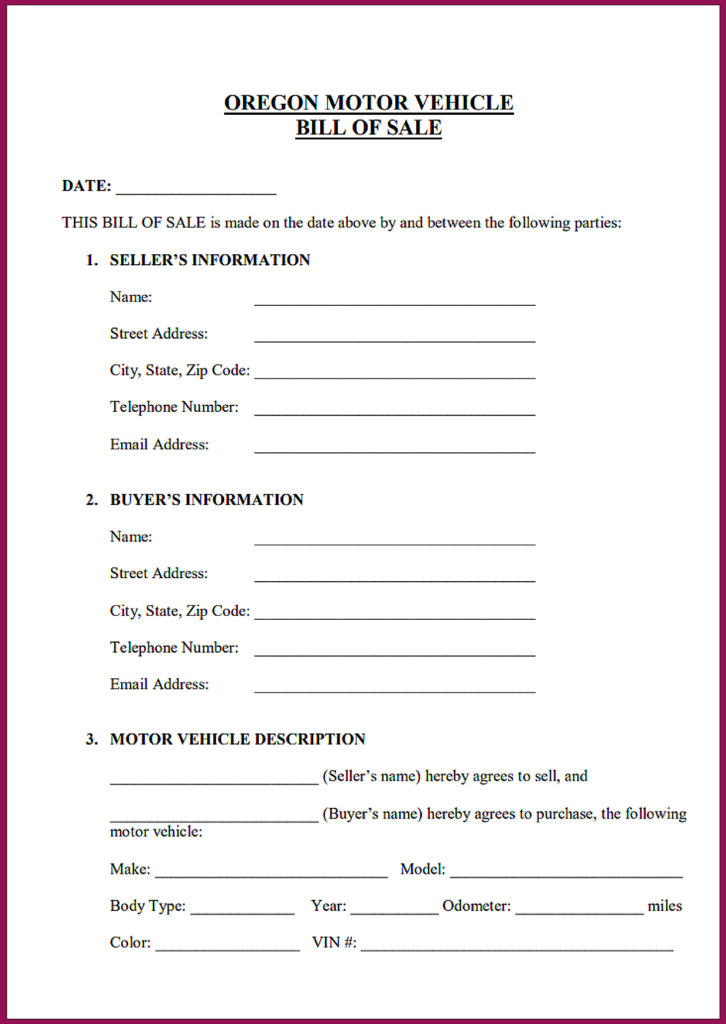
If you’ve ever sat across from me in my Oregon office, you’ve probably heard me say this: most legal problems don’t start with big dramatic disputes — they start with paperwork someone thought was “simple.” A General bill of sale Oregon residents use for private transactions is a written legal document that records the transfer of personal property from one party to another. It sounds straightforward. And legally, it is. But when it’s drafted carelessly — or skipped entirely — it can create serious problems.
Over the years, I’ve handled vehicle title disputes, private equipment sales gone wrong, trailer ownership fights between neighbors, and even small claims cases over cash-only transactions. In many of those situations, the entire case turned on whether there was a clear, properly written bill of sale. When it’s done correctly, it protects both sides. When it’s vague or missing, it becomes the reason people end up needing a lawyer.
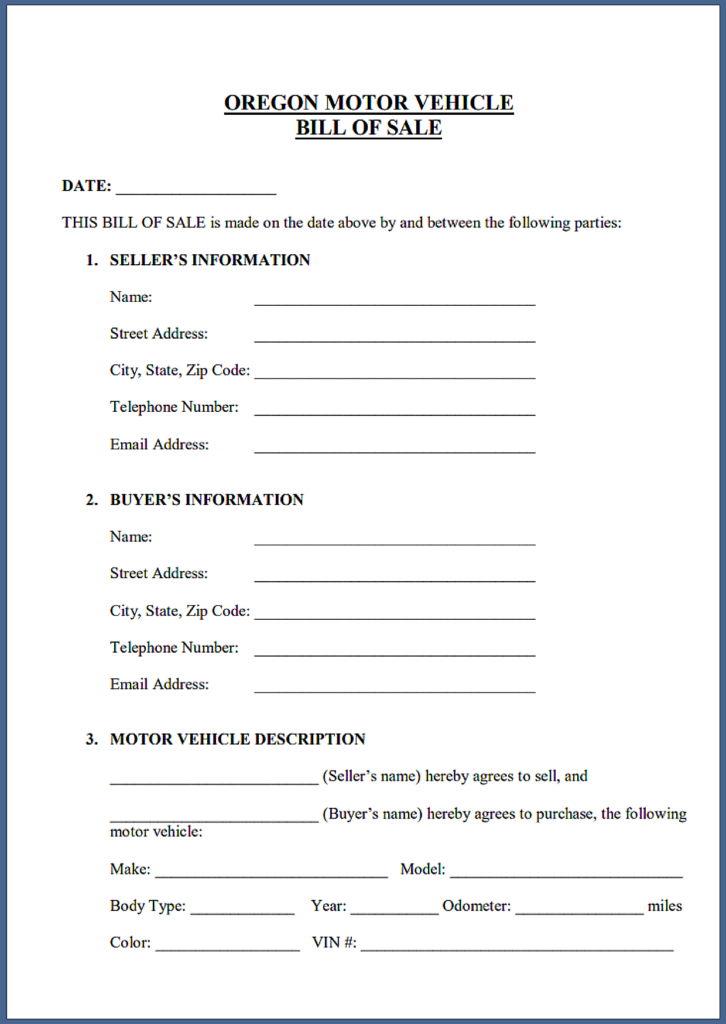
Free Printable General Bill of Sale Oregon Template
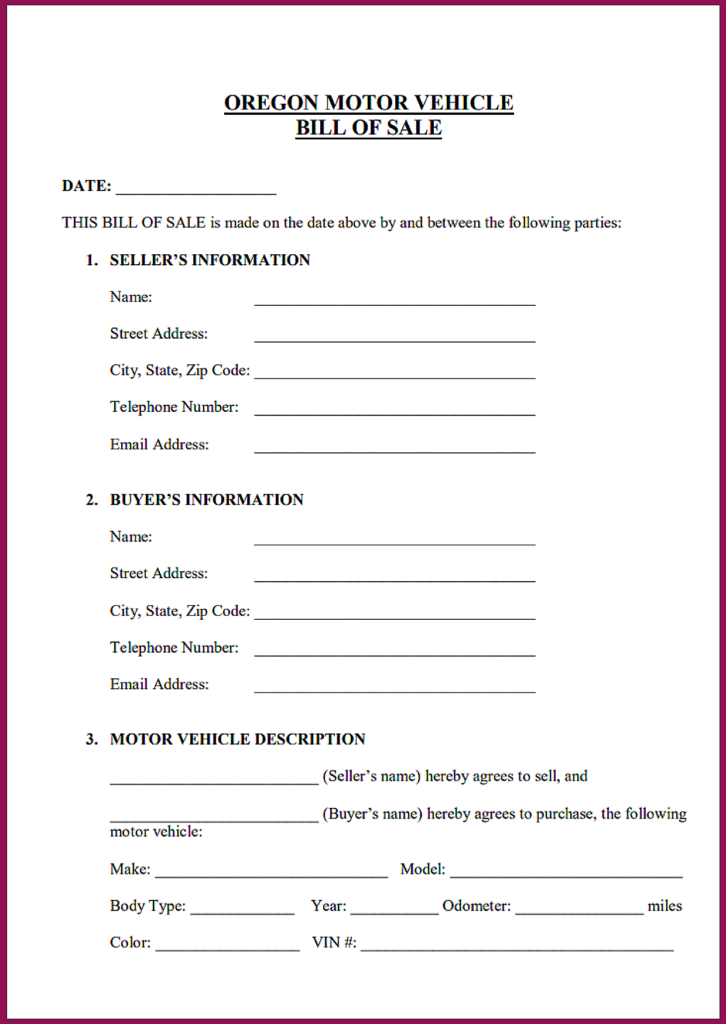
When people ask me for a free printable General Bill of Sale Oregon template, what they’re really asking is, “Can I protect myself without hiring a lawyer?” And honestly, in many straightforward private sales, the answer is yes — if the document is done properly. A general bill of sale is a written record showing that ownership of personal property has legally transferred from one party to another. In Oregon, it becomes especially important in private-party sales where there’s no dealership, no broker, and no third-party paperwork creating a record.
In my experience, a clean, well-written printable template can prevent disputes before they ever start. I’ve seen cases where a simple $5,000 equipment sale turned into a courtroom battle because the seller downloaded a vague template and left out key details like serial numbers and condition language. If you’re using a free printable version, make sure it includes identifying details, sale price, date, and clear “as-is” wording when appropriate. For convenience, I’ve also made this available in PDF format so you can download and use it immediately — because paperwork only protects you if it’s actually completed and signed.
Oregon General Bill of Sale Legal Requirements: Statutory Rules That Actually Apply
| Topic / Issue | [OREGON] Legal Rule | Governing Statute |
|---|---|---|
| Governing Legislation | Oregon’s Uniform Commercial Code provisions govern commercial transactions and sales of personal property and goods. | ORS Chapter 72, Uniform Commercial Code – Sales |
| Contract and Sale Definitions | Oregon law provides definitions for contracts, agreements, and sales. | ORS 72.1060 |
| Statute of Frauds | For the sale of goods priced at $500 or more, the contract must satisfy the statutory writing requirements to be enforceable. | ORS 72.2010 |
| Authorized Signers | The buyer and seller, or their authorized legal agents, may sign. For goods priced at $500 or more, the writing must be signed by the party against whom enforcement is sought. | ORS 72.2010 |
| Quantity Term | For goods priced at $500 or more, the enforceable writing must include an explicit quantity term. | ORS 72.2010 |
| Witness Requirement | No statutory requirement is identified. | N/A |
| Notarization Requirement | No statutory requirement is identified. | N/A |
| Age Requirement | Parties must be at least 18 years of age to possess full independent contractual capacity. | ORS 109.510 |
| Mental Capacity | No specific statutory requirement is identified; the issue is governed by common law principles. | N/A |
| Contract Enforcement Limitation | Contract enforcement actions are subject to a 6-year statute of limitations identified in the provided research. | ORS 12.080 |
| “As Is” Disclaimer | To exclude or modify implied warranties of merchantability or fitness in a private sale of goods, the disclaimer must explicitly mention merchantability and, if written, must be conspicuous. | ORS 72.3160 |
| General Personal Property Terms | No specific statutory requirements are identified for general terms; they are governed by common law principles. | Common law principles |
| Filing Requirement | A general bill of sale for ordinary, non-regulated personal property is a private contract. No state agency, county office, or government filing or registration is required. | No filing statute identified |
| Contract Validity: Statute of Frauds | A bill of sale for goods valued at $500 or more that lacks the required signed writing or quantity term is legally unenforceable in court. | ORS 72.2010 |
| Fraud, Duress, or Capacity | A transaction involving a party lacking legal capacity, or obtained through fraud or misrepresentation, may be voidable under the provided common-law principles. | Common law principles; ORS 42.001 |
| Illegal Subject Matter | Attempting to transfer property that is unlawful to own can make the transaction invalid. | Oregon law / public policy principles |
| Undisclosed Security Interest | Goods subject to an undisclosed perfected security interest may create a legal problem if transferred without the proper legal release. | ORS Chapter 79 / UCC Article 9 |
| Electronic Execution | Oregon’s Uniform Electronic Transactions Act validates electronic signatures and digital execution for general bills of sale. | ORS Chapter 84 |
| State Tax Treatment | Oregon does not impose a general statewide retail sales tax or use tax on personal property transactions. | Oregon state tax rules |
| Unlawful Trade Practices | Commercial and consumer transactions are subject to Oregon’s Unlawful Trade Practices Act, including statutory protections against misrepresentations and deceptive practices in the sale of goods and services. | ORS 646.608 |
| Jurisdictional Scope | General bill-of-sale transactions involving ordinary personal property are governed by Oregon state commercial and contract law. | Oregon law |
| Regulated Property Exception | A general bill of sale cannot override separate Oregon titling requirements for regulated property such as motor vehicles and manufactured homes. | ODOT vehicle requirements under ORS Chapter 803; MHODS requirements under ORS Chapter 446 |
The $500 threshold is one of the most important rules in this table. For goods priced at $500 or more, Oregon’s Statute of Frauds requires a sufficient writing, a signature from the party against whom enforcement is sought, and an explicit quantity term. A vague receipt or incomplete bill of sale can therefore create an enforceability problem if the transaction later reaches court.
The “As Is” clause has its own rule. Oregon’s ORS 72.3160 requires the written disclaimer to specifically address merchantability when excluding that implied warranty, and the written disclaimer must be conspicuous. Simply writing “sold as-is” without considering the statutory wording can therefore provide less protection than the parties expected.
Another useful distinction is that an ordinary general bill of sale does not have to be filed with a state agency or county office. It remains a private contract. But that changes when the property belongs to a regulated category. Oregon’s vehicle and manufactured-home systems have separate title and ownership requirements that a general bill of sale cannot replace.
Getting these distinctions wrong can leave a buyer or seller with an agreement that is difficult to enforce, or with paperwork that does not accomplish the intended transfer.
Firearm General Bill of Sale Oregon
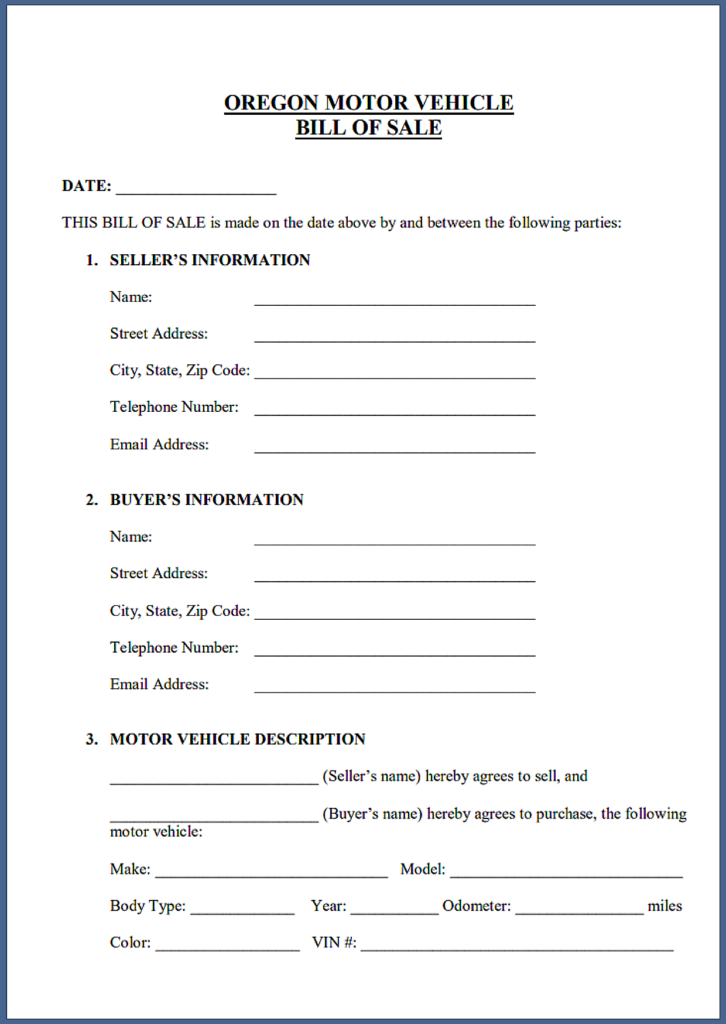
A firearm general bill of sale in Oregon carries more weight than people realize. While the document itself records the private transfer between buyer and seller, Oregon law generally requires private firearm transfers to go through a federally licensed dealer (FFL) for a background check. I’ve had clients assume that a handwritten bill of sale alone made the transaction legally compliant — it doesn’t. The bill of sale documents the agreement, but it does not replace state and federal transfer requirements.
From a liability standpoint, I strongly recommend documenting every lawful firearm transaction carefully. Include full names, identifying information, firearm details (make, model, serial number), and the date of transfer. If a firearm later becomes part of an investigation, clear documentation can matter more than people expect. I’ve made this firearm general bill of sale Oregon template available in PDF format as well, so you can download it and ensure your records are properly maintained — but always make sure the required dealer transfer process is followed.
What a General Bill of Sale Actually Does in Oregon
A general bill of sale is proof that ownership of personal property changed hands. That’s it. It’s not fancy. It doesn’t need legal poetry. But it does need to be clear.
In my experience, most Oregonians use a general bill of sale for:
-
Furniture
-
Tools
-
Farm equipment
-
Trailers
-
ATVs
-
Boats (sometimes alongside title documents)
-
Firearms (private-party documentation)
It’s different from the official vehicle title transfer through the Oregon DMV. For motor vehicles, the bill of sale alone is not enough — but it can absolutely protect you if something goes sideways.
And trust me, things go sideways more often than people expect.
Oregon DMV & Vehicle Sales – Where People Slip Up
When it comes to cars and trucks, Oregon law requires the seller to properly assign the title to the buyer. That means:
-
Signing the title correctly
-
Including odometer disclosure (for qualifying vehicles)
-
Submitting a Notice of Sale to the Oregon DMV
-
Making sure the buyer applies for title within 30 days
I’ve seen sellers get parking tickets in Portland six months after they “sold” a car — because they never filed the Notice of Sale. The buyer never transferred the title. The DMV still showed the seller as the legal owner.
That’s a nightmare.
Even though Oregon doesn’t require a bill of sale for every vehicle transfer, I always recommend one. I personally would never let a client sell a vehicle without it. It creates a clean paper trail. It shows:
-
Date and time of sale
-
Purchase price
-
Names and addresses
-
Vehicle description (VIN, make, model)
-
“As-is” language
That timestamp can save you in court.
For Non-Vehicle Property – Why It Matters More Than You Think
Now, outside of DMV situations, general bills of sale become even more important.
I once handled a dispute involving a $12,000 piece of logging equipment. The seller insisted it was sold “as-is.” The buyer claimed defects were concealed. There was no written bill of sale — just text messages.
We spent months arguing over what was “agreed.”
If they had used a simple written bill of sale clearly stating:
-
The item
-
Condition
-
“As-is, no warranties”
-
Date
-
Signatures
The case likely would have resolved in weeks, not months.
In Oregon, unless you clearly disclaim warranties, you can accidentally create implied warranties under commercial law principles. That’s something many private sellers don’t realize.
Personally, I strongly prefer including a clear “sold as-is, with no warranties expressed or implied” clause unless you’re intentionally offering a guarantee.
What I Always Tell Clients to Include
Here’s what I recommend — not because a template told me to, but because I’ve seen what happens when it’s missing:
-
Full legal names of both parties
-
Physical addresses (not just email)
-
Detailed description of the item
-
Serial numbers or identifying numbers
-
Exact purchase price
-
Payment method
-
Date AND time of transfer
-
Condition statement
-
“As-is” clause if appropriate
-
Signatures of both parties
Do you legally need a notary in most Oregon general bill of sale situations? No.
Do I sometimes recommend it anyway? Yes — especially for higher-value items. It prevents signature disputes later.
Can You Sign an Oregon General Bill of Sale Electronically?
Here’s something I would tell a client who does not want to print, scan, and mail paperwork back and forth: Oregon’s Uniform Electronic Transactions Act provides for electronic signatures and digital execution of general bills of sale. The relevant provisions are in ORS Chapter 84.
That gives you a practical option when the buyer and seller are in different cities or simply want to keep the transaction paperless. You can prepare the bill of sale, complete the identifying information, and use an electronic signature rather than treating a physical signature as the only possible way to execute the document.
I would still make sure the electronic version contains the same important transaction details as a paper copy. The parties, property description, identifying or serial numbers where applicable, price, transfer date, condition terms, and any agreed warranty language should all remain clear.
There is also a good record-keeping reason to keep the completed electronic version. Save the final signed document rather than relying only on an email conversation or text messages. If there is a later disagreement about what was actually agreed, having the completed electronic bill of sale gives both sides a clear transaction record.
For Oregon general personal property, the electronic option can therefore make the process easier without abandoning the written documentation that the transaction may need.
A Quick Word About Firearms in Oregon
Private firearm transfers in Oregon generally must go through a federally licensed dealer (FFL) for a background check. I’ve had people come in thinking a handwritten bill of sale alone made it compliant. It doesn’t.
The bill of sale can document the transaction between parties, but it does not replace required background check procedures.
If you’re unsure, ask. This area changes frequently.
Title Disputes – Where Bills of Sale Save the Day
One of the most stressful things I see is someone who paid cash for a trailer or vehicle and never received a proper title. Now they can’t register it. Now they can’t sell it. Now they’re stuck.
If there’s a detailed bill of sale, it strengthens your position when working with Oregon DMV or in court.
Without one? You’re relying on memory.
And memory doesn’t hold up well under oath.
Common Oregon Pitfalls I See
Let me be blunt about a few mistakes I see constantly:
-
Selling a vehicle but not filing Notice of Sale
-
Accepting partial payments without documenting terms
-
Forgetting odometer disclosures
-
Using vague descriptions like “farm equipment”
-
Trusting handshake deals on high-dollar items
Oregon is friendly, but the law still requires clarity.
What I’ve learned over the years is that people don’t end up in my office because they were careful. They end up here because they assumed things would “work out.”
My Practical Advice
If you’re selling something of value in Oregon:
-
Write it down.
-
Be specific.
-
Keep a copy forever (scan it).
-
File required DMV notices immediately if it’s a vehicle.
And remember — a bill of sale doesn’t fix a bad title. It doesn’t override DMV requirements. It supports them.
Also, just to say this casually but clearly: this isn’t formal legal advice for your specific situation. Every transaction has its own quirks. If there’s real money involved or something feels off, talk to a lawyer before you sign anything.
It’s much cheaper than litigation later.
I’ve spent years helping Oregonians clean up messy transfers that could have been simple. If you have a question about a bill of sale, a vehicle transfer, or you’re unsure whether your paperwork protects you, feel free to reach out.
FAQ
Is a general bill of sale required in Oregon?
In most cases, Oregon law does not specifically require a general bill of sale for ordinary personal property transactions. However, that doesn’t mean you should skip it. I’ve seen too many disputes where the only missing piece was written proof of what was agreed.
For vehicles, the Oregon DMV focuses primarily on the title transfer. But even there, I strongly recommend using a bill of sale as backup documentation. It protects you if the buyer delays registration or if a dispute arises later.
Does a general bill of sale need to be notarized in Oregon?
Generally, no. Oregon does not require notarization for most general bills of sale involving personal property. That said, in higher-value transactions — farm equipment, trailers, expensive tools — I sometimes advise notarizing it anyway.
Why? Because if someone later claims, “That’s not my signature,” a notarized document shuts that argument down quickly.
What should be included in an Oregon general bill of sale?
In my experience, a proper Oregon general bill of sale should include:
-
Full legal names of buyer and seller
-
Physical addresses
-
Detailed description of the item
-
Serial numbers (if available)
-
Sale price
-
Date (and ideally time) of transfer
-
Payment method
-
“As-is” language, if applicable
-
Signatures of both parties
The more specific you are, the safer you are. Vague descriptions like “equipment” or “used trailer” are where problems begin.
Does a bill of sale transfer ownership in Oregon?
For most personal property, yes — it documents the transfer of ownership between private parties. But for titled vehicles, boats, or manufactured homes, ownership legally transfers through proper title endorsement and DMV processing.
I’ve had clients assume a signed bill of sale alone gave them full legal ownership of a vehicle. It doesn’t replace title transfer requirements. It supports them.