I’m Brandon, an Oregon-based lawyer, and for years I’ve dealt firsthand with vehicle sales, title disputes, and Oregon DMV paperwork that didn’t go as planned. One document that keeps showing up in these cases is the Oregon DMV Bill of Sale—often misunderstood, frequently ignored, and usually underestimated.
If you’re sitting across from me in my office, this is usually the moment I lean back and say, “Alright—tell me what actually happened.” Because when it comes to an Oregon DMV bill of sale, the paperwork rarely tells the full story. The real problems surface later—when a car can’t be registered, parking tickets arrive months after a sale, or someone realizes the title was never properly transferred. I’ve handled real bill of sale disputes and vehicle transfers gone sideways all over Oregon, and one thing experience has taught me is this: the bill of sale is treated like a throwaway document—until it suddenly becomes the most important piece of paper in the room. Let me explain how this actually works in Oregon, based on real cases, not internet checklists.
Free Printable Oregon DMV Bill of Sale
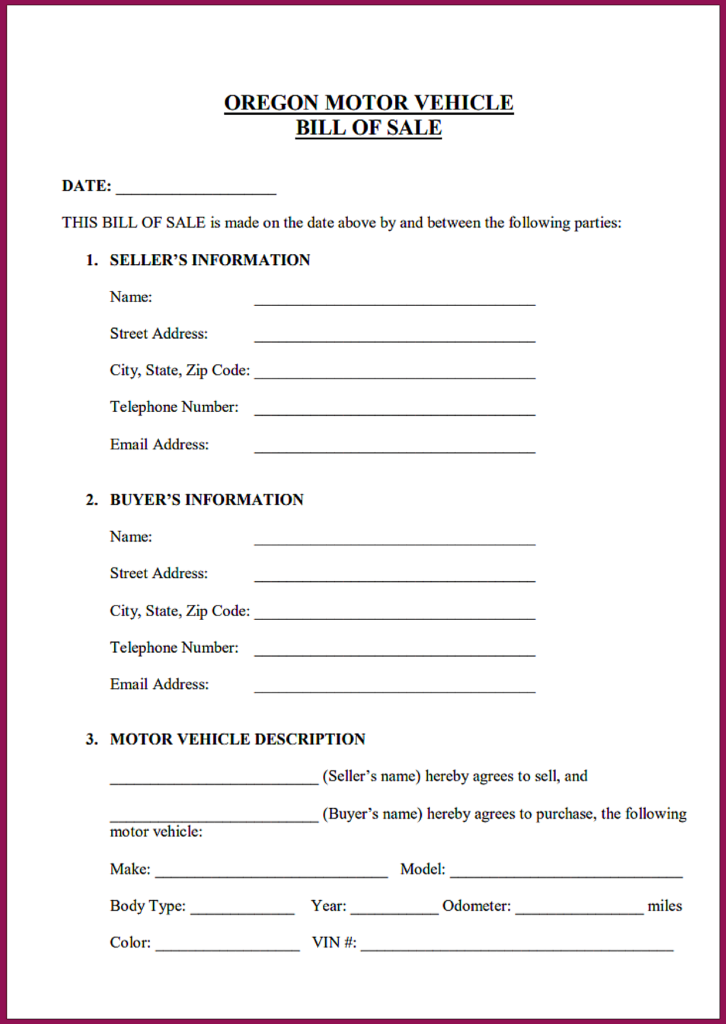
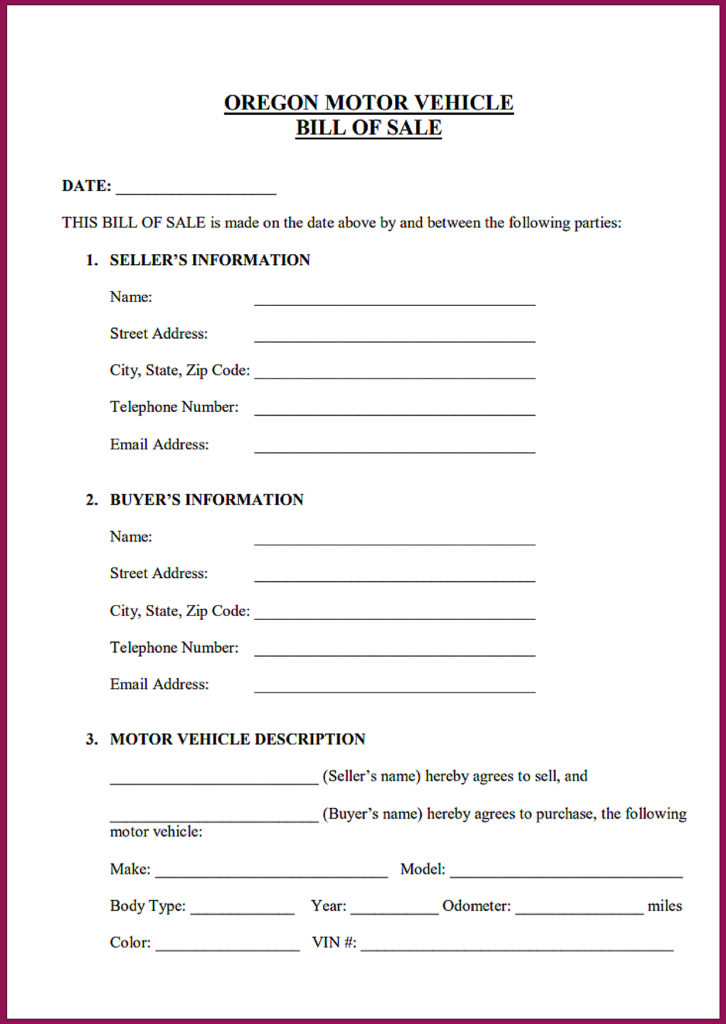
In my practice here in Oregon, I often meet people who just want something simple and reliable—something they can print, fill out, and trust. A free printable Oregon DMV bill of sale is usually where those conversations start. Whether someone is selling an old car privately or buying a used vehicle from a neighbor, having a clean, printable document creates a clear paper trail that protects both sides if questions come up later. I’ve seen too many cases where nothing was written down, and months later everyone remembers the deal differently.
What I like about a printable bill of sale is that it encourages people to slow down and actually document the transaction properly. Names, VIN, sale price, date—these details matter more than people realize until the DMV or law enforcement asks for proof. For convenience, I’ve included this Oregon DMV bill of sale in PDF format, so you can easily download, print, and use it for your own vehicle sale.
Oregon DMV Bill of Sale Legal Requirements: Statutory Rules You Should Know
| Topic / Issue | [OREGON] Legal Rule | Governing Statute |
|---|---|---|
| Governing Vehicle Law | Oregon vehicle titles, ownership transfers, odometer disclosures, lien records, and related vehicle requirements are governed by the Oregon Vehicle Code. | Oregon Revised Statutes – Oregon Vehicle Code, Chapter 803 |
| Application for Title | The transferee must submit an application for title upon transfer of interest, with a 30-day filing deadline. | ORS 803.092 |
| Odometer Disclosure | Mandatory odometer disclosure rules, forms, and certifications apply as provided by Oregon law. | ORS 803.102; ORS 803.120 |
| Seller Notice of Transfer | The seller must notify the Oregon DMV of the vehicle transfer within 10 calendar days of the sale. | ORS 803.112 |
| License Plate Assignment | Oregon law contains provisions governing assignment and transfer of license plates. | ORS 803.530 |
| Warranty Disclaimer | An “As Is” clause must use conspicuous written language meeting the requirements for excluding implied warranties of merchantability and fitness in a private sale. | ORS 72.3160 |
| Federal Odometer Law | Federal law establishes mandatory odometer disclosure standards, including the required disclosure framework for covered vehicle transactions. | 49 U.S.C. § 32705; 49 C.F.R. Part 580 |
| Odometer Certification | For vehicles model year 2011 or newer and under 20 years old, the odometer disclosure must state the numeric reading and certify whether the mileage is actual, exceeds mechanical limits, or is not actual. | ORS 803.120; 49 C.F.R. § 580.5 |
| Authorized Signers | The transferor (seller) and transferee (buyer) are the parties listed on the title assignment or bill of sale. | ORS 803.102; ORS 803.092 |
| Witness Requirement | There is no statutory witness requirement stated in the provided Oregon rules. | N/A |
| Notarization Requirement | There is no statutory notarization requirement stated in the provided Oregon rules. | N/A |
| Age Requirement | Parties must be at least 18 years of age to possess full independent contractual capacity. | ORS 109.510 |
| Mental Capacity | No statutory requirement is provided; the issue is governed by common law principles. | N/A |
| Buyer Filing Deadline | The buyer must submit a complete application for title to the Oregon DMV within 30 calendar days of the transfer. | ORS 803.092(1) |
| Seller Notice Deadline | The seller must notify the Oregon DMV of the vehicle transfer within 10 calendar days of the sale. | ORS 803.112 |
| Filing Agency | The buyer must file the title transfer application, original title, and supporting bill of sale with the Oregon Department of Transportation / DMV. | ORS 803.092 |
| Notice of Sale | The seller must submit a Notice of Sale online through DMV2U or by form within 10 days of the sale. | ORS 803.112 |
| Private Contract Status | A bill of sale functions as a private agreement between the parties and provides supporting evidence of ownership when a title is missing or chain-of-custody verification is required. | ORS 803.092 |
| Fraudulent Information or Odometer Tampering | False statements on an odometer disclosure or falsified transaction data on title documents are unlawful and subject to statutory penalties. | ORS 803.116; ORS 803.117; ORS 803.992 |
| Missing Odometer Disclosure | A transfer packet for a covered vehicle that lacks a properly completed odometer disclosure can cause the Oregon DMV to reject the application. | ORS 803.102; ORS 803.120 |
| Active Lien or Security Interest | An active recorded lien or security interest must be addressed with an original signed lien release from the security interest holder for the title transfer process. | ORS 803.092 |
| Oregon Sales Tax | Oregon does not impose a general statewide retail sales tax or use tax on private vehicle transactions. | No statute provided |
| Oregon Seller Notice Rule | Oregon requires sellers to notify the DMV within 10 days of a sale, creating a formal state-level tracking window. | ORS 803.112 |
| License Plates | Registration plates assigned to an Oregon vehicle remain with the vehicle when ownership changes by default, subject to the stated transfer rules. | ORS 803.530 |
| Recent Federal Odometer Amendment | The federal odometer exemption window was expanded to vehicles under 20 years old, capturing all model year 2011 and newer vehicles. | 49 U.S.C. § 32705; 49 C.F.R. Part 580 |
| Recent Oregon Title Processing Amendments | Operational amendments to ORS 803.092 continue to modernize electronic title processing and security interest releases. | ORS 803.092 |
The most important point here is that an Oregon bill of sale is only one part of the vehicle transfer process. The buyer has a 30-day deadline to submit the title application, while the seller has a much shorter 10-day deadline to notify the DMV of the sale. Those deadlines matter because leaving the paperwork unfinished can create problems after the vehicle has already changed hands.
The odometer rules are another area I would not treat casually. For covered vehicles, the disclosure has to identify the mileage and certify what that mileage represents. Missing or incorrect information can cause the DMV to reject the transfer paperwork. False information or odometer tampering can also lead to statutory penalties.
The lien rule is equally important. If an active security interest remains recorded, the transfer process can be affected unless the required lien release is obtained. That is exactly the kind of problem that can turn an ordinary private sale into a much bigger paperwork dispute.
Oregon DMV Auto Bill of Sale
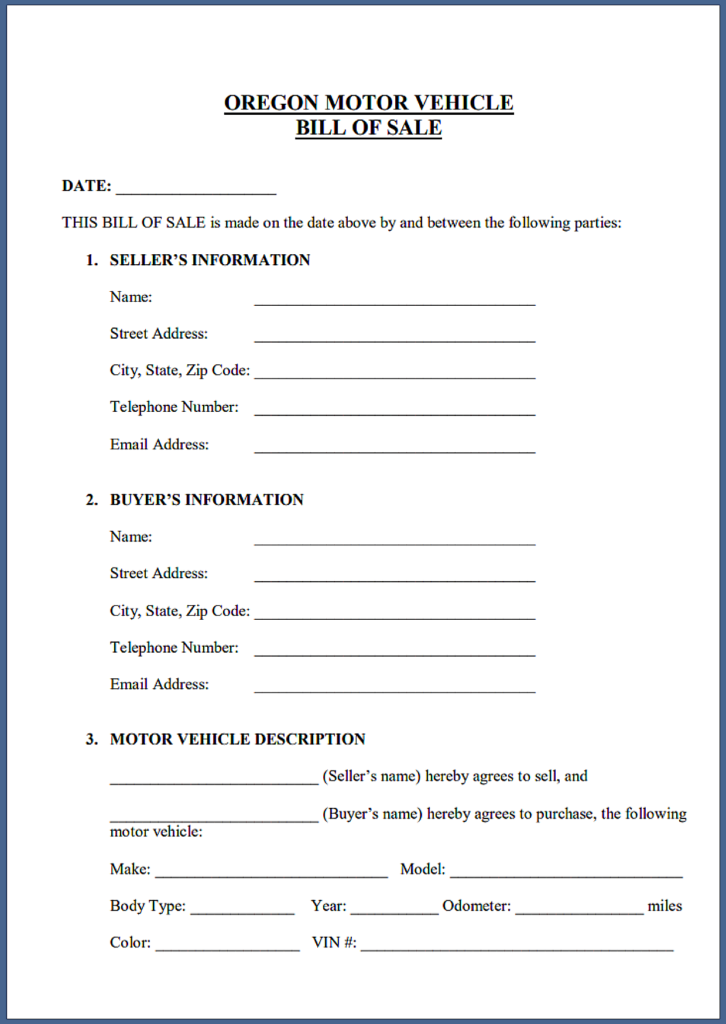
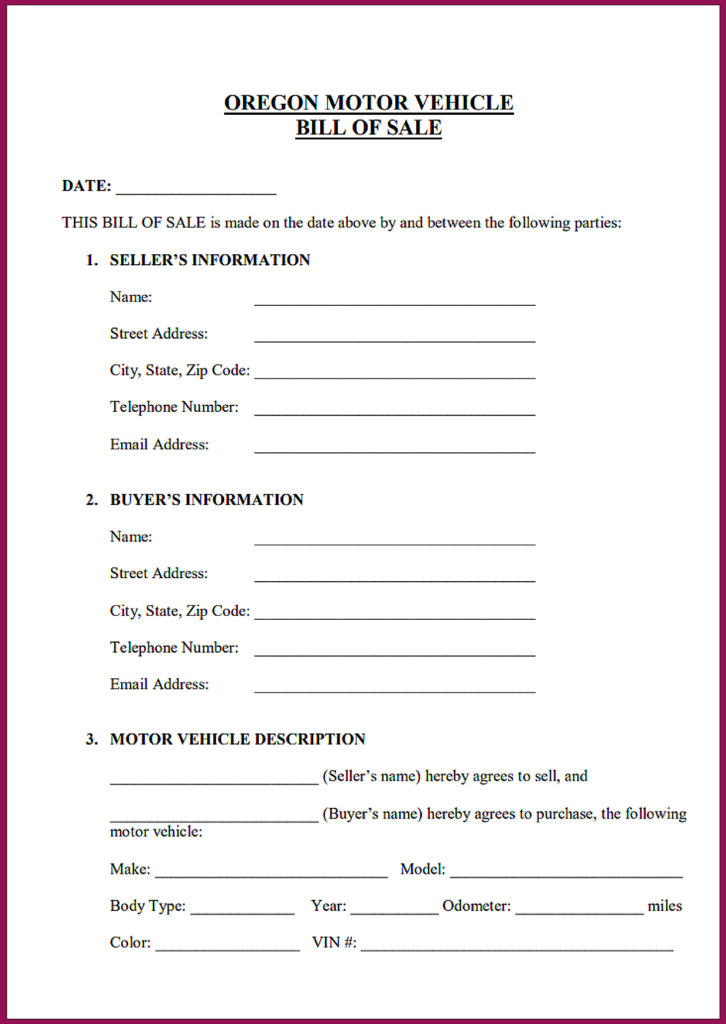
When clients ask me about an Oregon DMV auto bill of sale, it’s usually because something didn’t go as planned after the sale. Maybe the buyer never transferred the title, or the seller is still getting notices tied to the vehicle. In Oregon, an auto bill of sale acts as a written snapshot of the transaction—showing exactly when ownership changed hands and on what terms. I’ve relied on these documents many times to resolve disputes that could’ve gotten much worse without them.
From a legal standpoint, I always prefer auto-specific bill of sale language because it clearly ties the agreement to a motor vehicle, not just a generic sale. It helps avoid confusion and gives the DMV something concrete to reference if questions arise. To make things easier, I’ve added the Oregon DMV auto bill of sale as a downloadable PDF, so you can download it directly and keep a proper record from day one.
Oregon DMV Bill of Sale Form
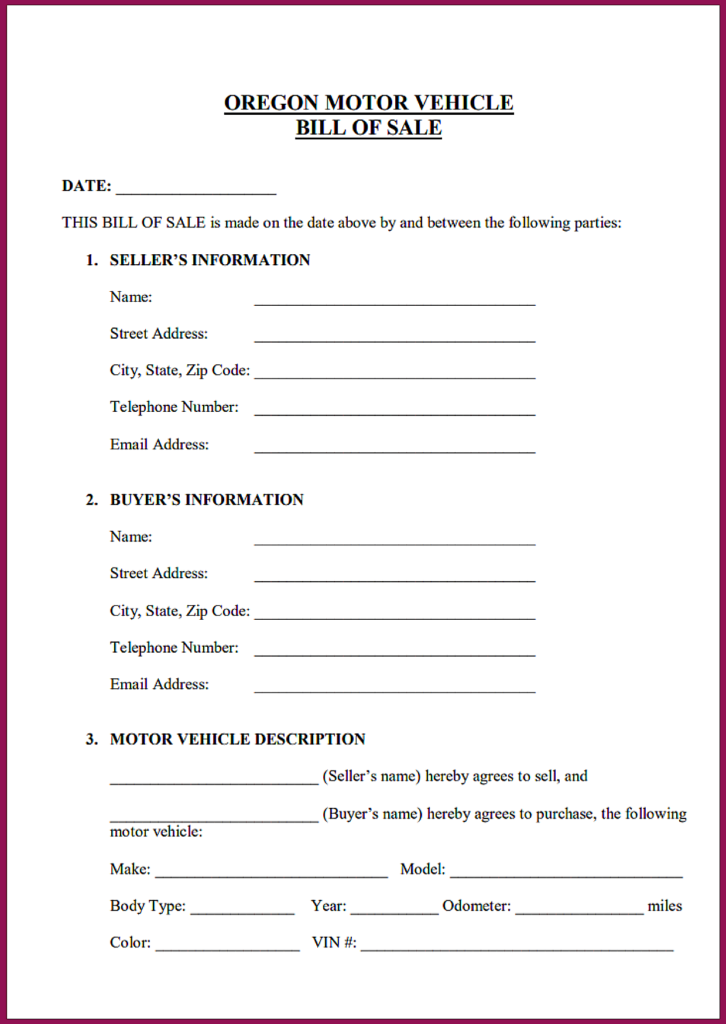
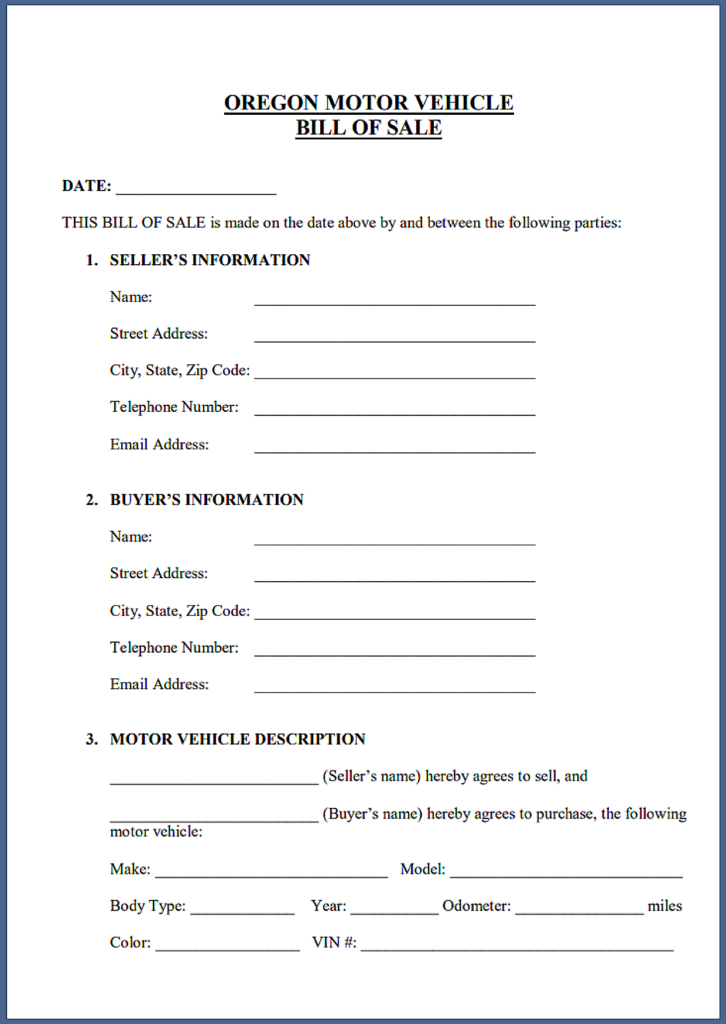
Over the years, I’ve learned that structure matters. A well-laid-out Oregon DMV bill of sale form reduces mistakes, missed information, and future arguments. Many of the problems I see stem from handwritten documents that leave out critical details or use unclear wording. A proper form guides both buyer and seller through the information Oregon typically expects to see tied to a vehicle sale.
Using a standardized bill of sale form also makes DMV interactions smoother. When everything is clearly filled in, there’s less back-and-forth and fewer delays during registration or title correction. For that reason, I’ve provided this Oregon DMV bill of sale form in PDF format, which you can download and use as a clean, professional record of your transaction.
Oregon DMV Bill of Sale PDF
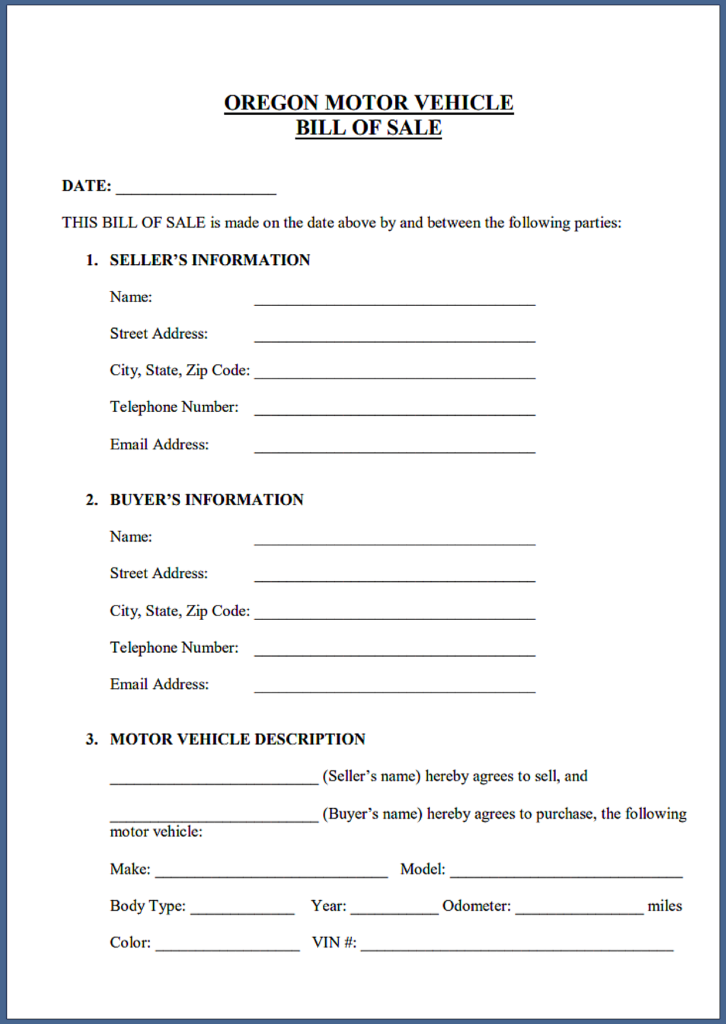
In real life, convenience matters—especially when people are already stressed about DMV paperwork. That’s why many of my clients prefer an Oregon DMV bill of sale PDF they can download instantly, print, or store digitally. I’ve seen PDFs become extremely helpful when someone needs to resend documents, prove a sale date, or respond quickly to a DMV request without scrambling for paperwork.
From my perspective as a lawyer, having a PDF version also helps preserve consistency. The document stays the same, the language stays clear, and there’s less risk of information being altered later. To help with that, I’ve included an Oregon DMV bill of sale PDF that you can download, making it easier to handle your vehicle sale properly and keep solid records if issues ever come up.
Do You Legally Need a Bill of Sale in Oregon?
Here’s the truth I give clients: Oregon doesn’t always require a bill of sale—but I almost always recommend one anyway.
The Oregon Department of Motor Vehicles technically focuses on the title for ownership transfer. If the title is filled out perfectly, a bill of sale isn’t mandatory in every situation.
But “perfectly” is doing a lot of work there.
In real life, I’ve seen:
-
Titles signed in the wrong spot
-
Sale prices left blank
-
Buyers disappearing before submitting paperwork
-
Sellers assuming the DMV “takes care of it”
When any of that happens, a bill of sale becomes your backup parachute.
Personally? I would never sell or buy a vehicle in Oregon without one.
What Oregon DMV Actually Cares About
In my experience, the DMV wants consistency. When something doesn’t line up, that’s when applications stall.
A solid Oregon bill of sale should include:
-
Full legal names and addresses of buyer and seller
-
Vehicle details (VIN, year, make, model)
-
Sale date
-
Purchase price
-
Signatures from both parties
Sounds basic—but I’ve seen deals unravel because someone wrote “$1” to save on taxes, then forgot the title said something else. That kind of mismatch raises eyebrows fast.
I once worked with a seller who got toll violations six months after selling a car. Why? The buyer never transferred the title. The bill of sale—with a clear date and VIN—was the only thing that saved him from paying fines he didn’t earn.
The Seller’s Biggest Mistake (I See This Weekly)
Let me be blunt here: sellers trust buyers too much.
What I strongly prefer—and always advise—is that sellers:
-
Complete the title correctly
-
Keep a signed bill of sale
-
Submit a Notice of Sale to the Oregon DMV immediately
That last step matters more than people realize. It’s what officially tells the state, “This vehicle is no longer my problem.”
I’ve seen sellers get dragged into disputes over accidents, tickets, even abandoned vehicles—all because they didn’t file that notice. A bill of sale alone helps, but the notice seals the deal.
Buyers: Don’t Skip This Step
If you’re the buyer sitting across from me, here’s my candid advice: don’t leave without paperwork in your hand.
I’ve handled cases where buyers paid cash, drove away happy, and later discovered:
-
The seller lost the title
-
The VIN didn’t match
-
The vehicle had prior issues tied to ownership
A bill of sale gives you leverage. It proves when the transaction happened and on what terms. Without it, you’re relying on trust—and trust doesn’t hold up well at the DMV counter.
The Title Problem That Can Stop the Transfer Cold
There is one Oregon DMV problem I would warn buyers about before they hand over the money: a missing title can be more than an inconvenience. If the vehicle is 2011 or newer and an odometer disclosure is required, Oregon DMV says the seller must obtain a replacement title before the title can be transferred. That means a buyer who drives away with only a bill of sale may still be unable to complete the ownership transfer until the title problem is fixed.
The 30-day deadline also has a dollar consequence that is easy to overlook. Oregon DMV currently states that a title transfer submitted 31 to 60 days after the sale carries a $25 late fee, while a transfer submitted after 60 days carries a $50 late fee.
So, if I were reviewing a private Oregon vehicle sale, I would not treat the bill of sale as the final step. I would check that the original title is actually available, confirm whether the vehicle falls into the odometer-disclosure category, and make sure the buyer’s title application is submitted within 30 days. The bill of sale documents the transaction, but it does not replace the title-transfer process.
Handwritten vs. DMV Form: What I’ve Learned
Oregon doesn’t force you to use a specific bill of sale form. Handwritten is legally fine—as long as it’s clear and complete.
That said, I strongly prefer using a structured template. Why? Because handwritten documents tend to leave things out. Missing VINs. No addresses. No signatures. All things I’ve seen cause delays or disputes later.
Think of the bill of sale as insurance you hope you never need—but will be very glad you have.
Why This All Matters More Than People Think
Most people don’t walk into my office because everything went smoothly. They come in because something small was skipped months ago and now it’s a real problem.
What I’ve learned over the years is this: Oregon vehicle transfers reward people who slow down and document the deal properly. The bill of sale isn’t just paperwork—it’s proof, protection, and peace of mind.
Quick side note—this is general information from my experience, not personalized legal advice for your specific situation. Every case has its own wrinkles.
If you’re dealing with a vehicle sale that feels messy, confusing, or already going wrong, you’re not alone—I’ve seen it all. Feel free to leave a comment, ask a question, or reach out. I’m always happy to talk through real-world Oregon DMV issues the same way I would if you were sitting right across my desk.