When someone walks into my Oregon law office holding a Mobile Home Bill of Sale Oregon document, it’s usually because something has already gone wrong. A title wasn’t transferred properly. A lien was never cleared. A buyer paid cash but never secured legal ownership. What looked like a simple private sale suddenly turns into a legal headache.
For clarity, a Mobile Home Bill of Sale in Oregon is a written legal document that records the transfer of ownership of a manufactured or mobile home between a buyer and seller. But in this state, it’s rarely just a piece of paper. Depending on whether the home is titled through the Oregon DMV or recorded as real property with the county, the legal steps can be very different.
I’ve spent years handling real mobile home transfers, title disputes, DMV rejections, and park approval conflicts across Salem, Eugene, Bend, and rural Oregon communities. And what I’ve learned — sometimes the hard way alongside my clients — is that mobile home sales sit in a strange gray area of Oregon law. They look simple. They aren’t.
Let me walk you through what actually matters when you’re dealing with a Mobile Home Bill of Sale in Oregon — the way I explain it to clients sitting across from me in my office.
Free Printable Mobile Home Bill of Sale Oregon Template
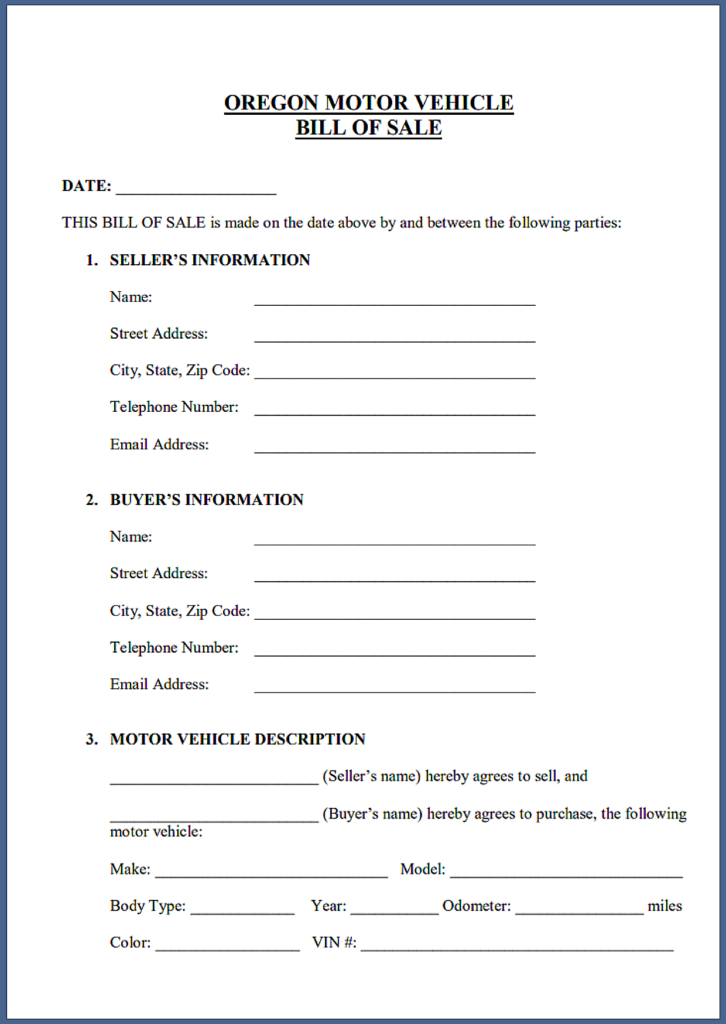
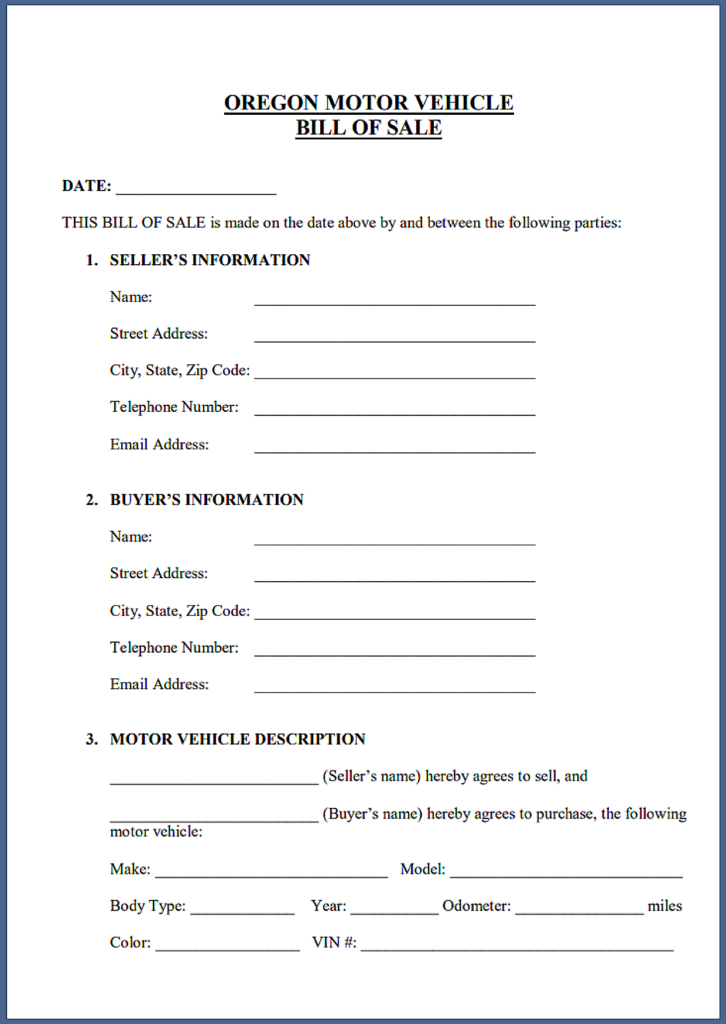
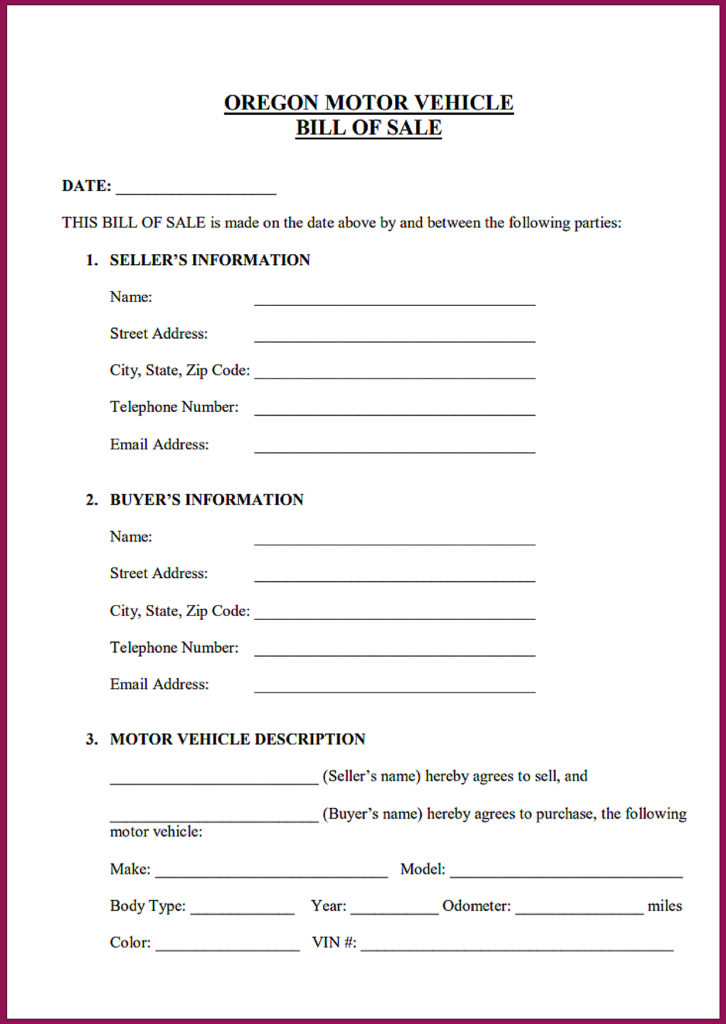
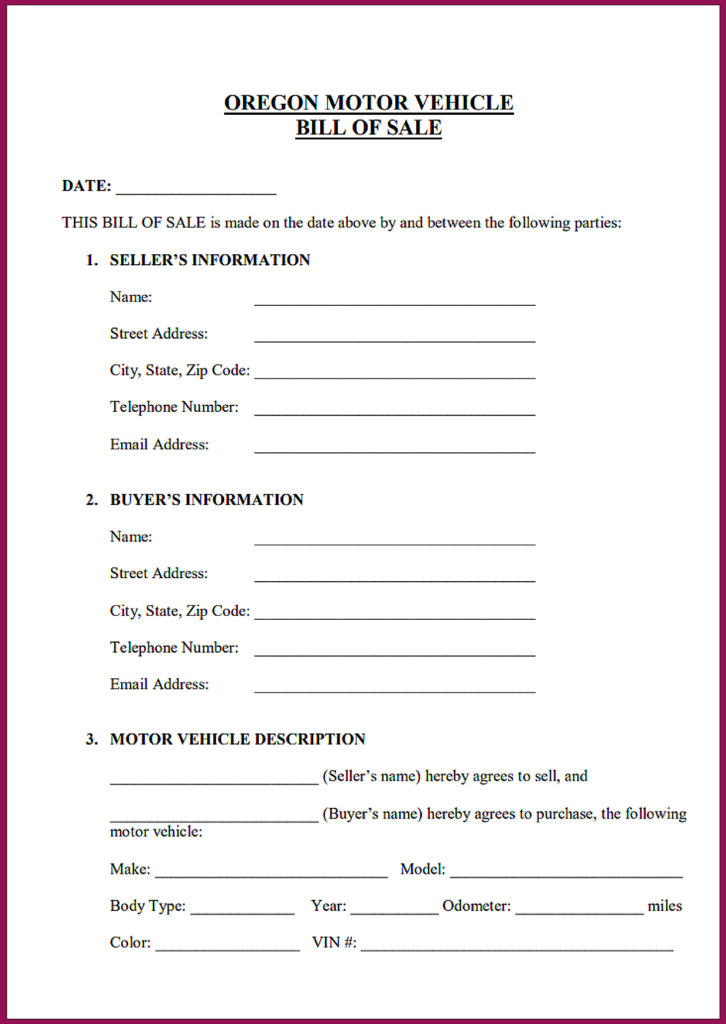
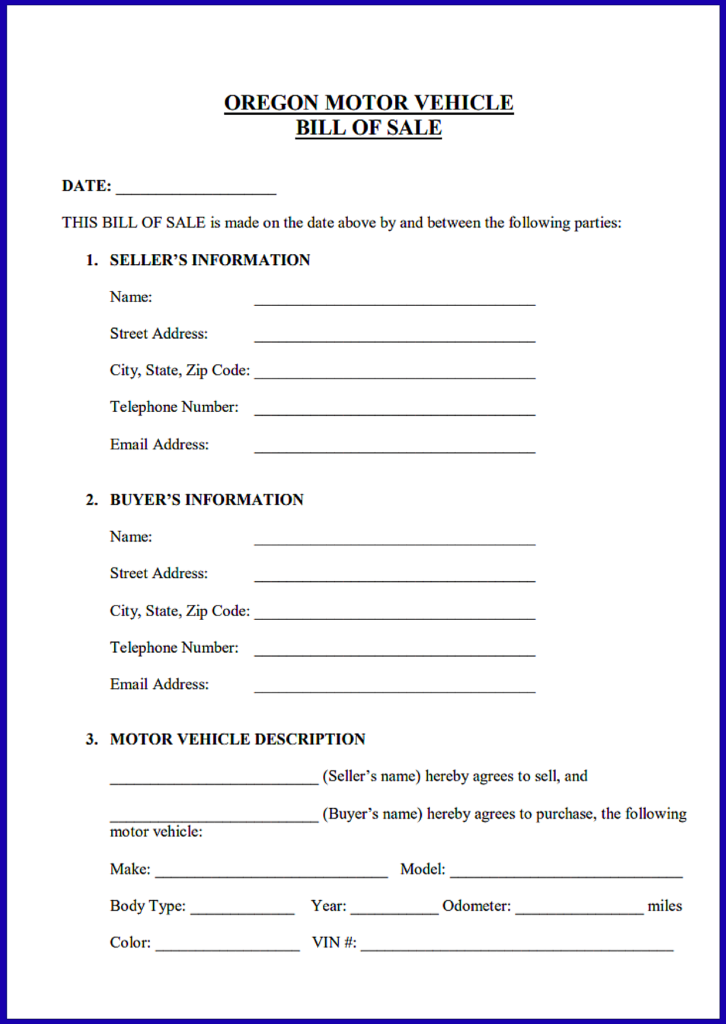
Over the years, I’ve had countless people ask me for a free printable Mobile Home Bill of Sale Oregon template. Usually, they’re trying to move quickly — private sale, cash deal, handshake agreement — and they just need “something official” to put in writing. I understand that urgency. But what I’ve learned in my practice is that a template is only helpful if it reflects how Oregon actually treats manufactured homes — and that’s where many free forms fall short.
In Oregon, a mobile home may still be titled through the DMV or may already be converted to real property through the county. A proper template needs to account for VIN numbers, title status, lien disclosures, tax responsibility, and “as-is” sale language. I always tell clients: use a clean, legally structured document, not a one-size-fits-all generic form. For your convenience, I’ve made the PDF format available for download so you can print and use it properly — but make sure the details match your specific situation before signing anything.
Oregon Mobile Home Bill of Sale Legal Requirements
| Topic / Issue | [OREGON] Legal Rule | Governing Statute |
|---|---|---|
| Governing Law | Oregon manufactured and mobile home ownership, transfers, security interests, and real-property conversion are governed primarily by Chapter 446. | ORS Chapter 446 |
| Ownership Documents | Ownership document applications and state-level recording are handled under Oregon’s manufactured-structure ownership system. | ORS 446.571 |
| Transfer of Interest | Each person whose interest is released, assigned, terminated, or transferred must be properly identified and the required release completed. | ORS 446.616(1) |
| Real Property Conversion | Oregon provides a statutory process for recording a manufactured structure as real property in county deed records. | ORS 446.626 |
| Moving the Home | Moving a manufactured structure involves the applicable tax clearances and movement requirements identified in Oregon law. | ORS 446.631 |
| Authorized Signers | The parties whose interests are being transferred or released, together with the transferee, must be identified in the ownership documentation. | ORS 446.616(1) |
| Witness / Notarization | No statutory witness or notarization requirement is identified in the provided research. | N/A |
| Age Requirement | Parties must be at least 18 years old for full independent contractual capacity. | ORS 109.510 |
| Buyer Filing | Ownership-update applications must be submitted in the manner and form required by department rules. | ORS 446.571; ORS 446.616 |
| Required Identification | Transfer documents must identify the home, including serial number or VIN, HUD certification label numbers, dimensions, and manufacturer details. | ORS 446.571 |
| Ownership Release | The transfer documentation must contain an explicit statement releasing the ownership interest. | ORS 446.616 |
| “As Is” Clause | An “As Is” warranty disclaimer must use conspicuous written language meeting Oregon’s requirements for excluding implied warranties. | ORS 72.3160 (UCC § 2-316) |
| Filing Agency | Ownership documents are filed with the Department of Consumer and Business Services, Building Codes Division, through MHODS. County offices become involved when the home is converted to real property. | ORS Chapter 446; ORS 446.626 |
| MHODS | Oregon uses the Manufactured Housing Ownership Document System to track manufactured-home ownership records. | ORS 446.571 |
| Active Lien | A recorded security interest must be formally released by the secured party before the ownership transfer can properly proceed. | ORS 446.616 |
| False Information | False purchase prices, forged signatures, and material misstatements on ownership documents or bills of sale are unlawful. | ORS 446.990 |
| Missing Serial / HUD Number | Missing manufacturer serial numbers or HUD certification label numbers can prevent proper identification of the home in MHODS. | ORS 446.571 |
| Private Bill of Sale | A bill of sale functions as a private agreement and supporting chain-of-custody evidence for ownership applications and purchase details. | Oregon ownership procedures |
| County Recording | When the manufactured structure is converted to real property, applicable records are filed with the County Assessor and County Clerk. | ORS 446.626 |
| Tax / Movement Clearance | Oregon integrates manufactured-home movement with local tax assessments and requires the applicable clearances and movement documentation identified in the research. | ORS 446.631 |
| Electronic Records | Oregon continues to refine electronic MHODS tracking, digital lien perfection, and real-property conversion procedures. | ORS Chapter 446 |
Why These Oregon Rules Matter in Real Life
The biggest issue is that an Oregon manufactured home can move between two different ownership systems. MHODS handles manufactured-home ownership documents, while a home that qualifies for real-property conversion is recorded through county deed records. That means a buyer cannot safely assume that every mobile home sale is handled through the same records.
The identification requirements are also more detailed than simply writing the home’s address. The provided research calls for the serial number or VIN, HUD certification label numbers, dimensions, and manufacturer information. Missing those identifiers can prevent the Building Codes Division from properly identifying the home in MHODS.
Liens are another major issue. A recorded security interest needs a formal release from the secured party before the transfer can properly proceed. False purchase prices, forged signatures, or material misstatements can also create statutory problems under ORS 446.990.
Bill of Sale for a Mobile Home in Oregon PDF
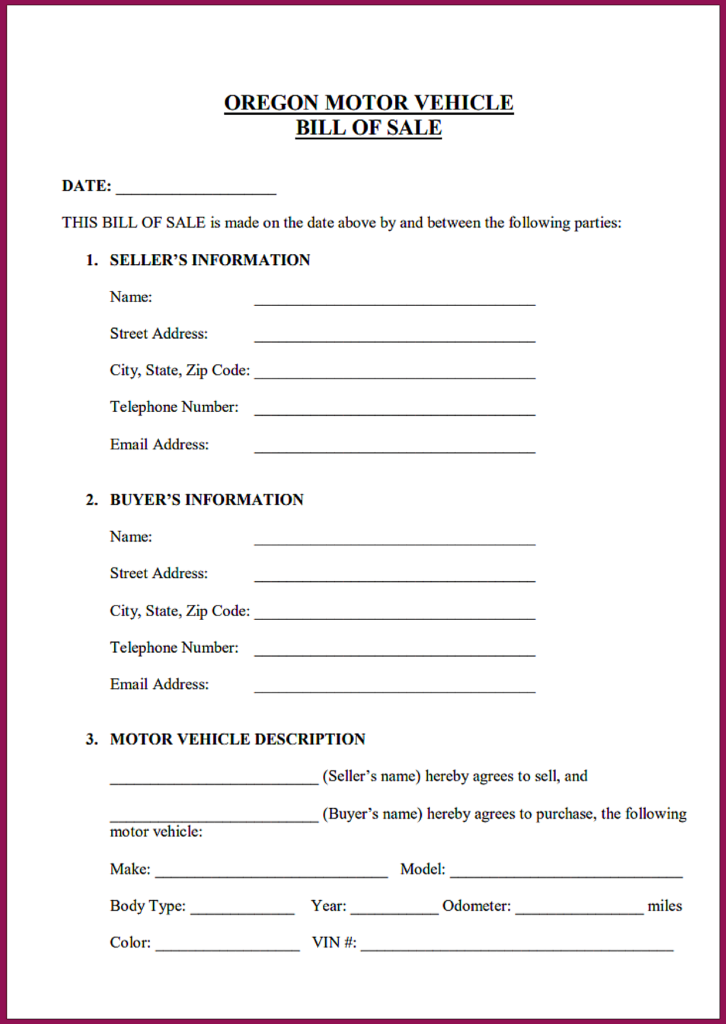
When someone specifically asks me for a Bill of Sale for a mobile home in Oregon PDF, what they usually mean is they want something official-looking and ready to submit. I get it. People feel more secure when they have a clean PDF in hand. But in my experience handling DMV rejections and ownership disputes, the format matters far less than the accuracy of what’s inside it.
A properly prepared PDF bill of sale should clearly identify the manufactured home by year, make, model, and serial or VIN number, include the full legal names of both parties, specify the purchase price, and state whether the sale is “as-is.” If the home is still titled, the DMV process must be handled correctly alongside this document. If it’s real property, county recording rules apply. I’ve seen people rely solely on a bill of sale PDF without transferring title — and that’s where legal problems begin. For ease of use, I’ve provided the PDF version for download, but I always recommend double-checking title status before you finalize the transaction.
First Things First: Is It a Vehicle or Real Property?
This is the question I always ask first.
In Oregon, a mobile home can be:
-
Titled like a vehicle through the Oregon DMV
-
Or treated as real property through the county
And that distinction changes everything.
If the home is still titled through the Oregon DMV, you’re dealing with a vehicle-style title transfer. That means:
-
Proper assignment of title
-
DMV transfer forms
-
Ownership recorded at DMV
If the home has been converted to real property (meaning it’s permanently affixed to land and de-titled), then we’re in county records territory.
I’ve seen buyers assume they’re buying land + home, only to find out the mobile home still has a separate DMV title. That creates a mess.
Personally, I never let a client sign anything until we confirm where the home is legally registered.
Do You Actually Need a Bill of Sale in Oregon?
Short answer? Yes — but it’s not the only document that matters.
In my experience, a Bill of Sale for a mobile home in Oregon serves as:
-
Proof of agreement
-
Backup documentation if the title is lost
-
Protection if disputes arise
-
Evidence for tax or court purposes
The DMV transfer itself is critical, but the Bill of Sale protects you legally if someone later says, “That’s not what we agreed to.”
I’ve had cases where sellers tried to claim the buyer still owed money — and the only thing that saved the buyer was a clear written Bill of Sale.
What I Always Make Sure Is Included
Over the years, I’ve developed a checklist I rarely compromise on.
Here’s what I insist must be in an Oregon mobile home bill of sale:
-
Full legal names of buyer and seller
-
Physical address of the mobile home
-
Year, make, model
-
VIN or serial number
-
Purchase price
-
Payment method (cash, check, financing)
-
Date of transfer
-
Clear statement that the property is sold “as-is”
That “as-is” language matters more than people think.
I once handled a dispute where a buyer discovered plumbing damage weeks later and tried to unwind the sale. Because the Bill of Sale clearly stated “as-is,” the seller avoided a long legal battle.
That’s not about being unfair. It’s about clarity.
Oregon DMV Requirements (If It’s Still Titled)
If the home is still titled, you’ll likely need:
-
Properly signed Oregon title
-
Title transfer application
-
Payment of title fees
-
Potential inspection (depending on situation)
The DMV treats manufactured structures differently from cars in some ways, and delays happen if paperwork isn’t perfect.
I’ve seen transfers rejected because:
-
VIN didn’t match exactly
-
Seller signature didn’t match DMV records
-
Lien release wasn’t properly documented
And once the DMV rejects it, everyone starts pointing fingers.
What I’ve learned is this: double-check everything before submitting.
Land Leases & Park Approval
If the mobile home sits in a park on leased land, another layer gets added.
Oregon manufactured home park laws require:
-
Park approval of the buyer
-
Lease assignment or new lease
-
Compliance with park rules
I’ve seen buyers pay for a mobile home and then get denied by the park manager. That is a terrible position to be in.
Personally, I strongly prefer that park approval be secured before money fully changes hands.
Common Mistakes I See in Oregon
Let me be blunt. These are the mistakes that cost people thousands:
-
Not checking for liens
-
Assuming land ownership transfers with the home
-
Forgetting property taxes
-
Failing to confirm title status
-
Using a generic template pulled off the internet
Oregon property tax issues can follow the structure itself. I once handled a case where a buyer inherited three years of unpaid taxes because they never verified county records.
That conversation was not pleasant.
When Financing Is Involved
If there’s seller financing, I always draft something more detailed than a basic Bill of Sale.
You need:
-
Promissory note
-
Security agreement
-
Clear default terms
Otherwise, if the buyer stops paying, repossession becomes legally complicated.
I’ve had clients who thought a handshake payment plan was fine. It’s not.
My Personal Advice After Years in Oregon
If you’re selling:
-
Confirm title status first
-
Clear any liens
-
Use “as-is” language
-
Keep copies of everything
If you’re buying:
-
Verify DMV or county records
-
Check taxes
-
Confirm park approval
-
Don’t rush
What I’ve learned over time is that most mobile home disputes come from assumptions, not bad intentions.
People think it’s simple.
Oregon law makes it layered.
A Gentle Legal Reality Check
This isn’t formal legal advice specific to your situation — every case depends on its facts. But I can tell you this from experience: the cost of doing it correctly upfront is almost always far less than fixing it later.
Mobile homes sit in this strange legal gray area between vehicle law and real property law in Oregon. That’s where people get tripped up.
And I’ve seen too many good people burned by paperwork that looked fine at first glance.
If you’re dealing with a mobile home sale in Oregon and something feels unclear, trust that instinct. Ask questions. Double-check records. Slow down.
And if you want to run your situation by someone who’s handled these exact issues before, I’m here. Drop a comment, share what you’re dealing with, or reach out directly. I’m always happy to point people in the right direction.
FAQ
Do I legally need a bill of sale to sell a mobile home in Oregon?
Technically, if the mobile home is still titled through the Oregon DMV, the title transfer is the most critical legal document. But in my professional opinion, you absolutely should have a written bill of sale.
I’ve seen too many disputes over payment amounts, included appliances, or move-out dates. The bill of sale protects both sides. It creates a paper trail. If things ever land in small claims court, that document becomes very important.
Is a mobile home in Oregon considered a vehicle or real property?
This is where most confusion starts.
In Oregon, a mobile or manufactured home can be treated either as personal property (titled through the DMV) or as real property (recorded with the county after being affixed to land). The legal process is different depending on its status.
I always check title status first before advising anyone. Assuming it’s one or the other without verifying records is how mistakes happen.
Does the bill of sale transfer ownership by itself?
No. And this is critical.
If the home is DMV-titled, ownership does not legally transfer until the title is properly assigned and processed. A bill of sale alone is not enough.
I’ve handled cases where buyers thought they owned the home because they had a signed bill of sale — but the seller never transferred the title. That creates serious problems.
What information must be included in an Oregon mobile home bill of sale?
At minimum, I recommend including:
-
Buyer and seller full legal names
-
Physical location of the home
-
Year, make, model
-
Serial number or VIN
-
Purchase price
-
Date of sale
-
“As-is” language
The VIN or serial number must match exactly with DMV or county records. Even small mistakes can delay transfers.