If you were sitting across the table from me in my Oregon office right now, this is exactly how I’d explain it—plain language, no legal theater, just what actually matters in real Oregon vehicle sales. I’m an Oregon attorney who’s spent years handling bill of sale disputes, title transfer problems, DMV headaches, and private-party vehicle deals that didn’t go as planned. I’ve seen smooth neighbor-to-neighbor sales, family transfers that quietly turned complicated, and Craigslist deals that felt fine—until an Oregon DMV notice arrived months later. In almost every one of those cases, the same document sat at the center of the problem: the Oregon vehicle bill of sale. Let me walk you through what it really is, when it actually matters under Oregon law, and how to use it the right way—lawyer to human.
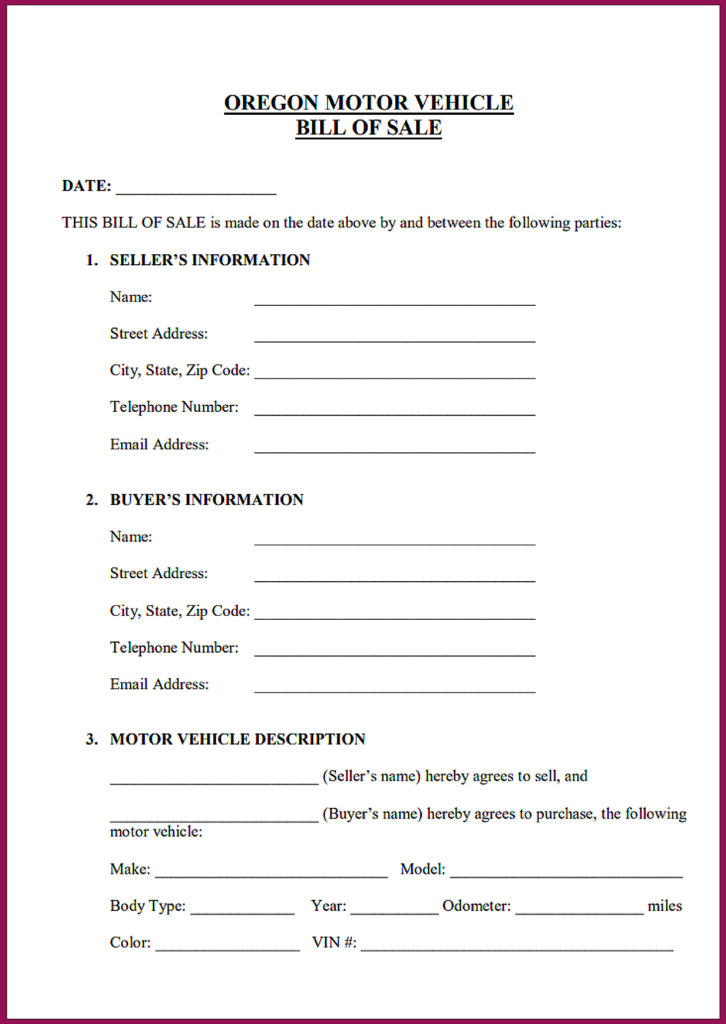
Free Oregon Vehicle Bill of Sale Template
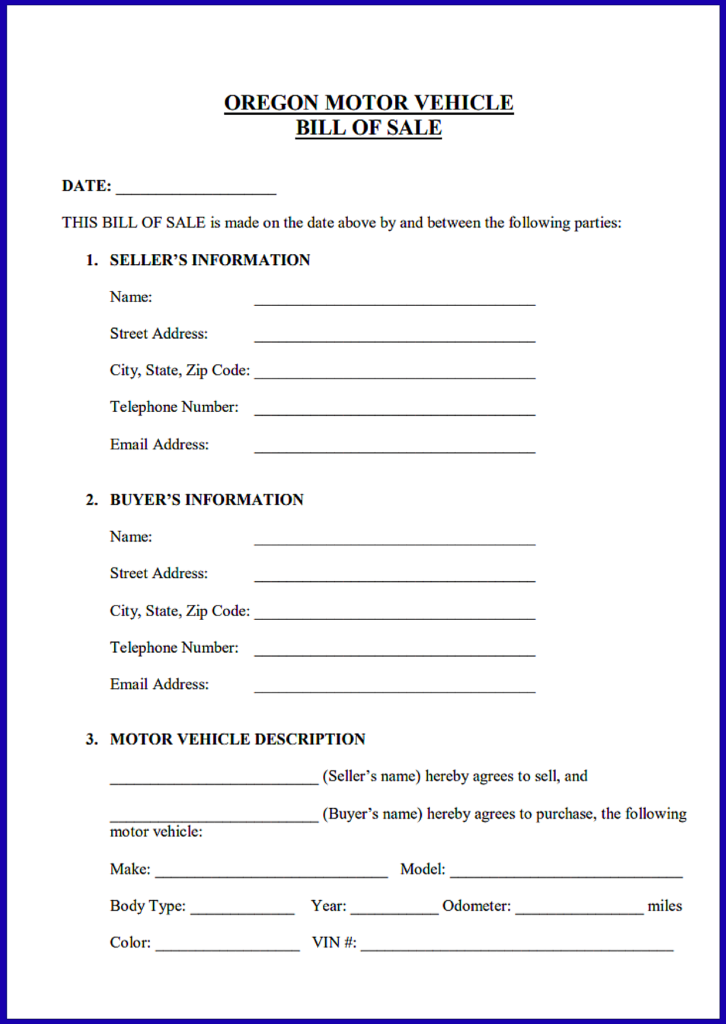
Over the years, I’ve learned that most people don’t struggle with Oregon vehicle sales because the law is complicated — they struggle because they don’t know where to start. A clean, properly structured bill of sale template removes that confusion right away. When I work with clients who want to keep things simple but legally sound, this is usually the first thing I point them toward.
This free Oregon vehicle bill of sale template is designed to reflect real DMV expectations, not just generic language pulled from the internet. It includes the essential details I’ve seen matter most in real cases. I’ve also made this template available in PDF format, so you can download it, fill it out easily, and keep a copy for your records or DMV use.
Oregon Vehicle Bill of Sale Legal Requirements
| Topic / Issue | [OREGON] Legal Rule | Governing Statute |
|---|---|---|
| Governing Vehicle Law | Vehicle titles, ownership transfers, odometer disclosures, and lien records are governed by the Oregon Vehicle Code. | ORS Chapter 803 |
| Title Transfer Application | The transferee must submit a complete application for title to the Oregon DMV within 30 calendar days of the date of transfer. | ORS 803.092(1) |
| Seller Notice Deadline | The seller must notify the Oregon DMV of the vehicle transfer within 10 calendar days of the sale. | ORS 803.112 |
| Authorized Signers | The transferor and transferee are the parties identified on the title assignment or bill of sale. | ORS 803.102; ORS 803.092 |
| Witness Requirement | No statutory witness requirement is identified in the provided research. | N/A |
| Notarization Requirement | No statutory notarization requirement is identified in the provided research. | N/A |
| Age Requirement | Parties must be at least 18 years old to possess full independent contractual capacity. | ORS 109.510 |
| Mental Capacity | No specific statutory requirement is identified; the provided research treats this as governed by common law principles. | N/A |
| Odometer Disclosure | For vehicles model year 2011 or newer and under 20 years old, a compliant odometer disclosure must state the numeric reading and indicate whether the mileage is actual, exceeds mechanical limits, or is not actual. | ORS 803.120; 49 C.F.R. § 580.5 |
| Federal Odometer Requirements | Federal Truth in Mileage Act requirements apply alongside Oregon’s odometer disclosure requirements. | 49 U.S.C. § 32705; 49 C.F.R. Part 580 |
| Odometer Signatures | Where an odometer disclosure is required, the transferor and transferee must sign the odometer disclosure form. | ORS 803.122 |
| “As Is” Warranty Disclaimer | To exclude or modify implied warranties of merchantability and fitness, the written disclaimer must meet Oregon’s statutory requirements, including the applicable conspicuousness requirement. | ORS 72.3160 (UCC § 2-316) |
| Electronic Title Processing | Oregon statutory amendments address electronic title processing, digital documentation, and electronic lienholder transmissions. | ORS 803.092 |
| Filing Agency | The buyer must file the title-transfer application, original title, and supporting bill of sale with the Oregon Department of Transportation / DMV. | ORS Chapter 803 |
| Seller Notice Procedure | The seller must submit a Notice of Sale online through DMV2U or by form within 10 days of the sale. | ORS 803.112 |
| Private Contract Status | A bill of sale functions as a private agreement between the buyer and seller and acts as supporting evidence of the transaction. | Oregon vehicle-transfer framework |
| Fraudulent Information | False statements on an odometer disclosure or falsified transaction data on title documents are unlawful and subject to statutory penalties. | ORS 803.116; ORS 803.117; ORS 803.992 |
| Missing Odometer Disclosure | A required odometer disclosure missing from a covered vehicle transfer can cause the Oregon DMV to reject the application. | ORS 803.102; ORS 803.120 |
| Active Lien / Security Interest | An active recorded lien or security interest must be addressed through the required lien-release process. | ORS 803.092 |
| Oregon Sales Tax | Oregon does not impose a general statewide retail sales tax or use tax on private vehicle transactions. | No statute identified in the provided research |
| License Plates | Registration plates assigned to an Oregon vehicle remain with the vehicle when ownership changes, subject to the stated DMV rules. | ORS 803.530 |
| Federal 20-Year Odometer Rule | The federal odometer exemption window was expanded to vehicles under 20 years old, capturing model year 2011 and newer vehicles. | 49 U.S.C. § 32705; 49 C.F.R. Part 580 |
| Recent Oregon Title Amendments | Operational amendments to ORS 803.092 address electronic title processing and security-interest releases. | ORS 803.092 |
Why These Oregon Rules Matter in a Real Vehicle Sale
The two deadlines are easy to mix up, but they belong to different people. The buyer has 30 days to submit the title application, while the seller has 10 days to notify Oregon DMV of the transfer. Filing one does not complete the other.
The odometer rule is another detail that can become a real problem. For a 2011 or newer vehicle that is under 20 years old, the disclosure must identify the mileage and its status. The transferor and transferee must sign the required disclosure.
The “As Is” rule is different from the DMV paperwork. Oregon’s ORS 72.3160 governs how implied warranties can be excluded or modified. That means a seller who wants an “As Is” transaction should not assume that any casually written phrase automatically achieves the intended warranty disclaimer.
There is also a serious issue with false information. The provided Oregon research identifies false odometer statements and falsified transaction information as conduct subject to statutory penalties. An active recorded lien also needs to be dealt with through the required lien-release process.
These are the details I would want checked before money and keys change hands, because getting the paperwork wrong can result in DMV rejection, title-transfer problems, or statutory penalties.
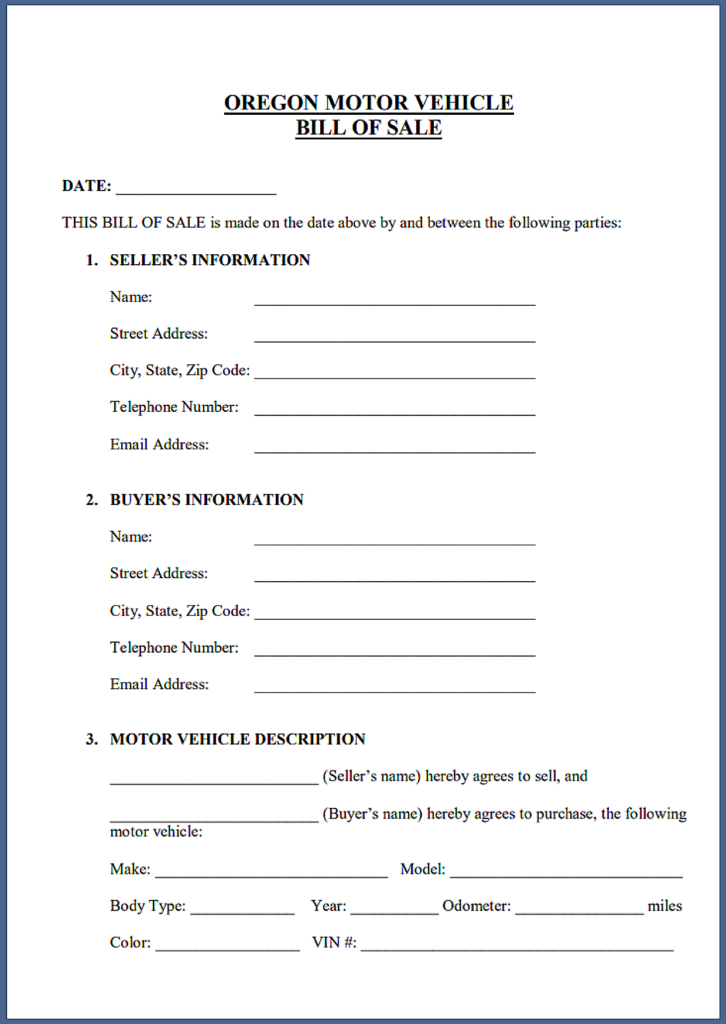
Oregon Motor Vehicle Bill of Sale Form
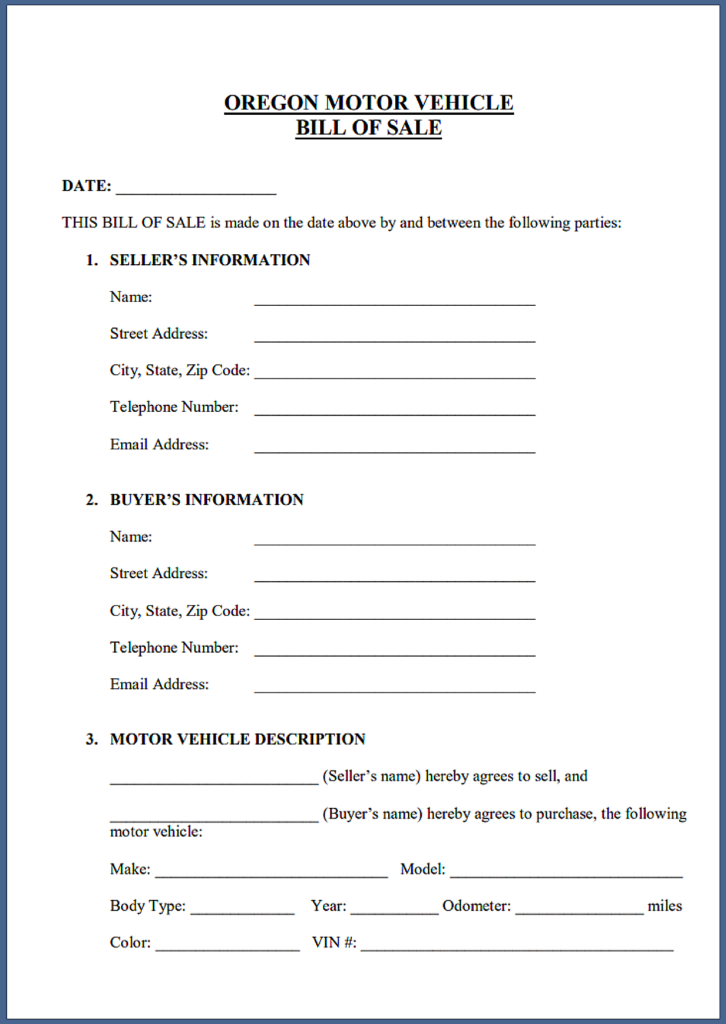
In my practice, I’ve noticed that a well-written motor vehicle bill of sale does more than document a transaction — it tells a clear story. Who sold the vehicle, who bought it, when it happened, and under what terms. When those details are clear, problems tend to disappear before they even start.
This Oregon motor vehicle bill of sale form is structured to cover those key facts without unnecessary legal language. It’s practical, straightforward, and designed for real private-party sales. I’ve included this form in PDF format as well, so you can download it, complete it accurately, and store it safely for future reference.
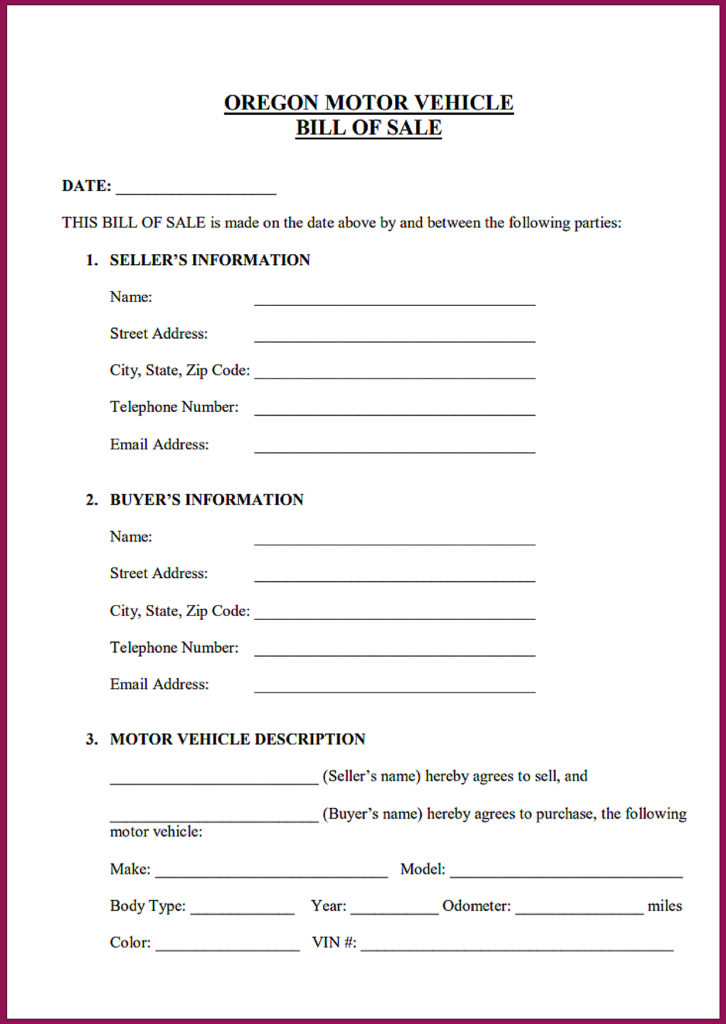
Printable Oregon Vehicle Bill of Sale
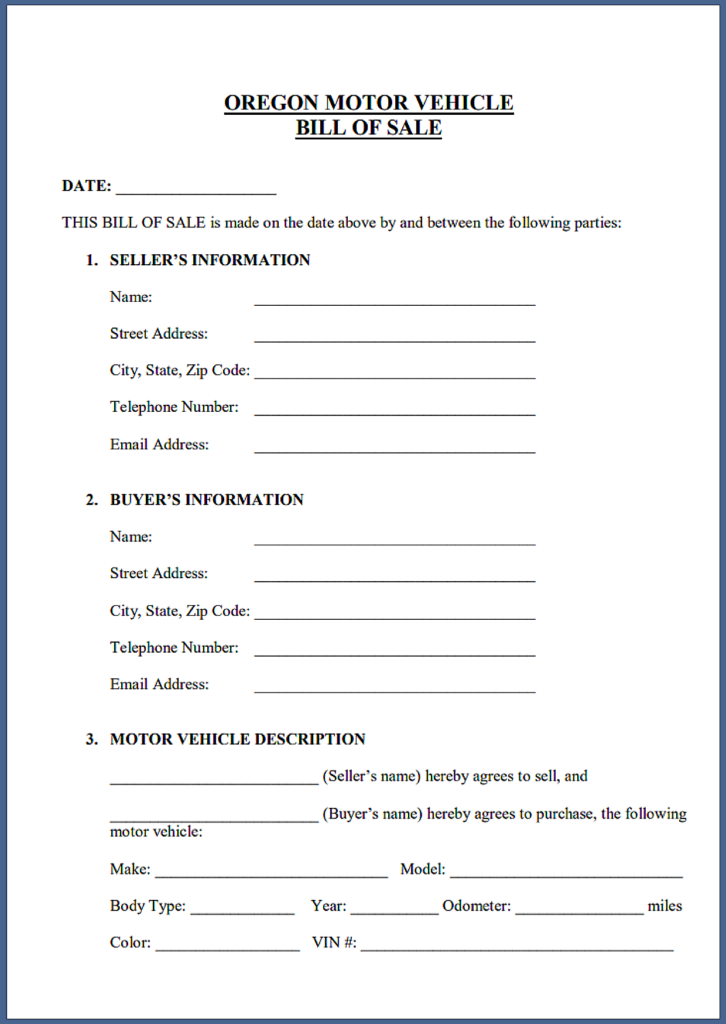
Some people prefer working digitally, while others want something they can physically hold and sign. From experience, I can say that a printable bill of sale still plays an important role, especially for in-person transactions and older vehicle transfers where paper records matter.
This printable Oregon vehicle bill of sale is formatted for easy printing and clean signatures. It’s the kind of document I’m comfortable seeing clients walk into the DMV with. You can also download this version as a PDF, making it easy to print multiple copies for both buyer and seller.
Oregon Vehicle Bill of Sale Sample
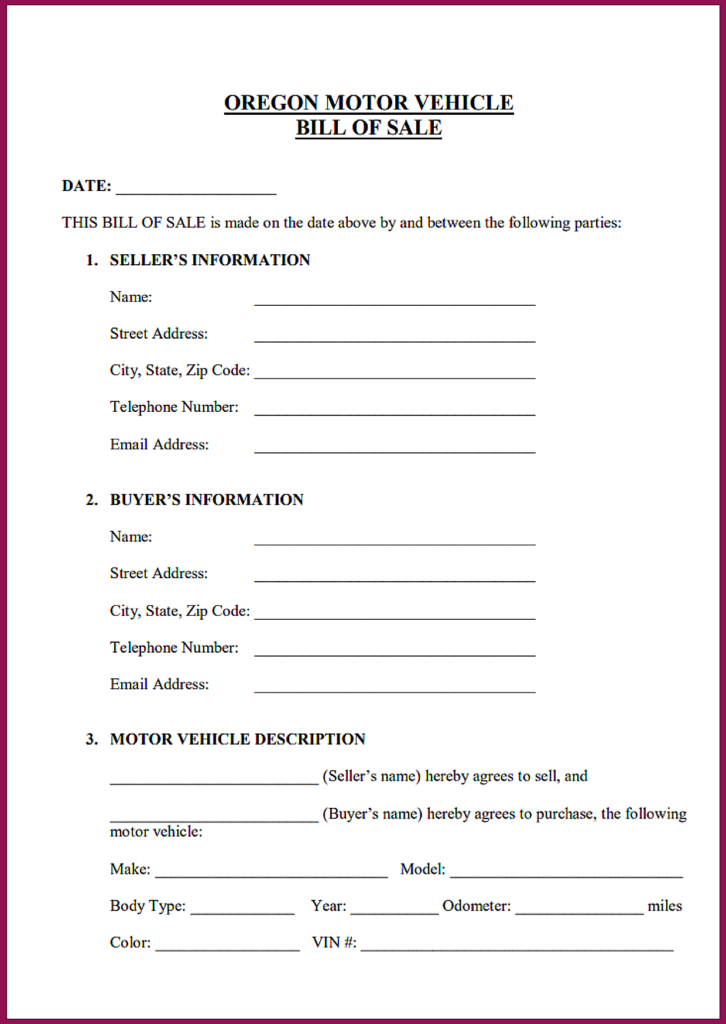
I often get asked, “Can I see what a proper Oregon bill of sale actually looks like?” That’s a fair question. Seeing a sample helps people understand how much information is enough — and how much is unnecessary.
This Oregon vehicle bill of sale sample shows a realistic, correctly completed example based on situations I’ve handled in real cases. It’s meant to guide you, not overwhelm you. For your convenience, this sample is also provided in PDF format, so you can download it and use it as a reference while completing your own bill of sale.
Oregon DMV Vehicle Bill of Sale
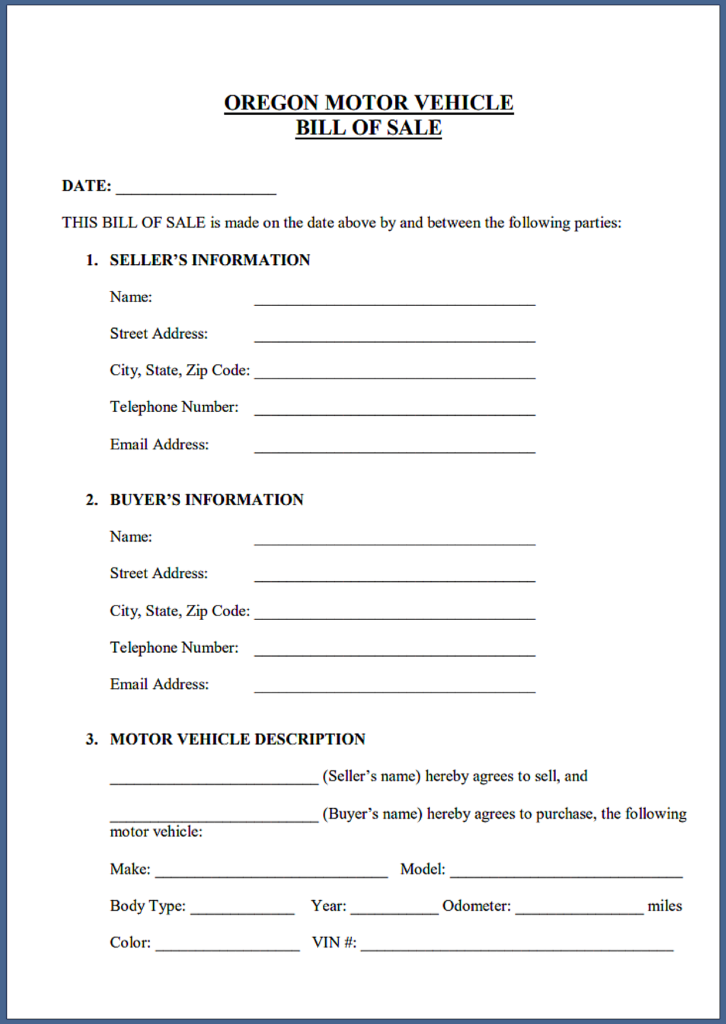
When a dispute reaches the DMV level, the smallest details suddenly matter a lot. I’ve seen cases where one missing line or unclear description caused weeks of back-and-forth. A bill of sale that matches Oregon DMV expectations can prevent that frustration.
This Oregon DMV vehicle bill of sale focuses on accuracy, consistency, and completeness — the three things the DMV pays attention to. I’ve also made this document available as a downloadable PDF, so you can easily access it, complete it correctly, and submit it with confidence.
Oregon Bill of Sale Vehicle PDF
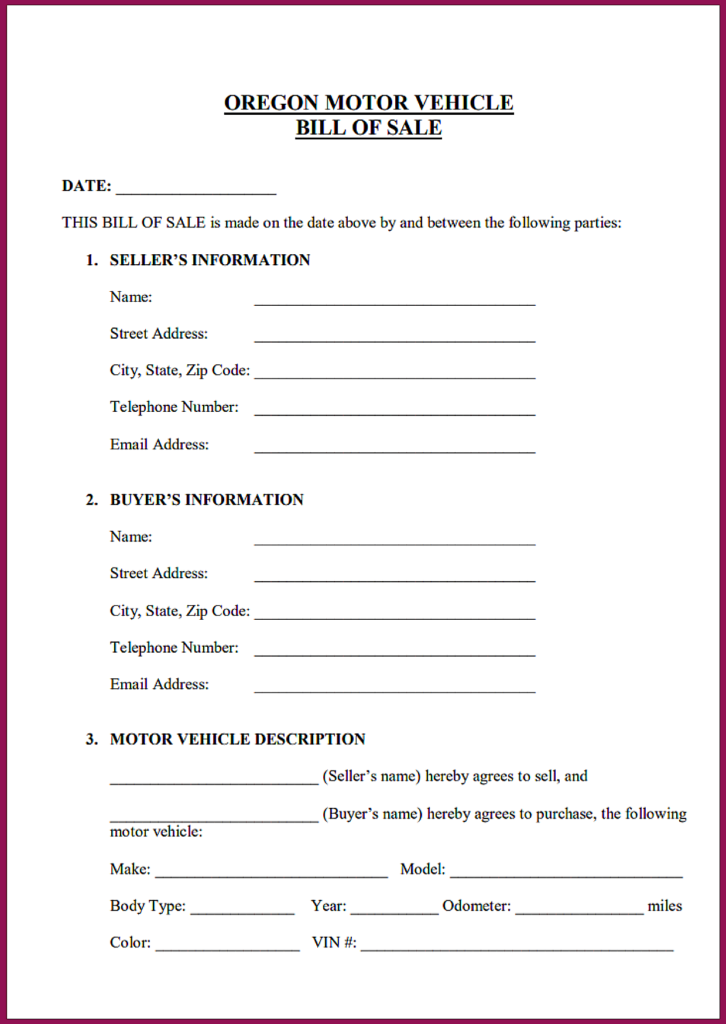
In today’s world, having a reliable PDF version of your documents isn’t just convenient — it’s practical. I’ve worked with clients who needed proof of a vehicle sale years later, and a saved PDF made all the difference.
This Oregon vehicle bill of sale PDF is designed for easy download, digital storage, and printing when needed. It reflects real-world Oregon vehicle transactions and includes all the essential information. You can download this PDF directly, fill it out accurately, and keep it as part of your permanent records.
Do You Legally Need a Bill of Sale in Oregon?
Here’s the honest answer: sometimes yes, sometimes no—but you should always use one.
In Oregon, the title is king. If the title is properly signed over, the state doesn’t always require a bill of sale. But in real life? I’ve watched missing bills of sale cause delays, tax disputes, and ownership fights that could’ve been avoided with one simple page of paper.
Personally, I strongly prefer a bill of sale in every vehicle transfer. No exceptions.
Why? Because when something goes sideways—and sometimes it does—the bill of sale becomes your backup truth.
What Oregon Actually Cares About (Not What Blogs Say)
Oregon isn’t interested in fancy templates. The Oregon Driver and Motor Vehicle Services wants clarity, not poetry.
From my experience, a solid Oregon vehicle bill of sale should clearly show:
-
Buyer and seller full legal names
-
Vehicle description (year, make, model, VIN)
-
Sale date
-
Purchase price
-
Signatures from both parties
That’s it. No witnesses required. No notarization required (and yes, people ask me that weekly).
If I’m advising a client, I always say: write it so a stranger at the DMV can understand it in ten seconds.
Why the Sale Price Matters More Than You Think
This is where people get uncomfortable.
I’ve had clients whisper, “Can we just put a lower number?”
Short answer: I don’t recommend it.
Oregon uses the sale price to calculate use tax obligations and verify legitimacy. If the number looks unrealistic—or worse, conflicts with other documents—you may trigger a DMV review.
I once represented a buyer who wrote “$1” on the bill of sale for a perfectly good SUV. Six months later, they were explaining themselves to the state and scrambling for proof. Not a fun place to be.
What I’ve learned: accuracy protects you. Honesty saves time.
Titles, Releases, and the Mistake I See Constantly
Here’s the scenario I see over and over:
Seller hands over the car. Buyer drives away happy.
Seller forgets to file the Notice of Sale.
Three months later… parking tickets, toll notices, or worse.
In Oregon, sellers should immediately file a Notice of Sale with the DMV. I always tell clients: do it the same day. Don’t wait. Don’t trust the buyer to handle it.
The bill of sale backs you up if something goes wrong during that gap.
The License Plates May Stay With the Car
Here’s one Oregon rule that catches people off guard after a private sale: the license plates generally stay with the vehicle. Under ORS 803.530, registration plates assigned to a vehicle remain with that vehicle and are valid during the registration period for which they were issued, subject to the exceptions in the statute.
That means I would not tell a seller to automatically remove ordinary Oregon plates just because the vehicle has been sold. The plate rule is different from states where sellers routinely remove their plates and take them to their next vehicle.
There is an important exception for custom plates. Oregon DMV specifically says that if you sell a vehicle with custom plates and want to keep those plates, you must remove them before the sale. If you leave them on the vehicle, they remain with that vehicle.
So, when I prepare a private-sale file, I check the plate situation separately from the bill of sale and title. The bill of sale documents the transaction, but the plate does not automatically follow the seller simply because the seller used to own the vehicle.
For the buyer, this is worth knowing before driving away. For the seller, it is worth checking before handing over the vehicle, particularly if the plates are custom.
Private Sales vs. Family Transfers
People assume family transfers are “safe.” Sometimes they are. Sometimes they’re the most emotionally complicated cases I handle.
I’ve seen siblings disagree over who owns a vehicle after a parent passes. I’ve seen verbal promises turn into legal headaches.
My opinion? Still use a bill of sale, even if the price is nominal or $0. Label it clearly. Everyone signs. Everyone walks away protected.
Common Oregon Pitfalls I’d Love You to Avoid
If I could put a sticky note on every Oregon car sale, it would say:
-
Don’t leave the buyer’s name blank
-
Don’t forget the VIN (check it twice)
-
Don’t backdate documents
-
Don’t rely on texts or emails instead of paperwork
-
Don’t assume the DMV will “figure it out”
They won’t. And they shouldn’t have to.
My Practical Advice (Lawyer to Human)
If you’re selling a vehicle in Oregon, here’s what I personally do and recommend:
-
Complete the title and a bill of sale
-
Make copies for both parties
-
File the Notice of Sale immediately
-
Keep everything for at least a few years
This isn’t about paranoia. It’s about peace of mind.
And yes—this isn’t legal advice for your specific situation. It’s the kind of grounded guidance I give every day based on real cases, real people, and real Oregon law.
Final Thought
I’ve learned that most people don’t get into trouble because they’re careless. They get into trouble because no one explained why the paperwork mattered.
If you’re unsure, confused, or just want to double-check something before signing—ask. That’s always cheaper than fixing a mess later.
If you’ve got questions, drop them in the comments or reach out. I’m always happy to talk things through like we’re sitting across the desk—coffee optional.