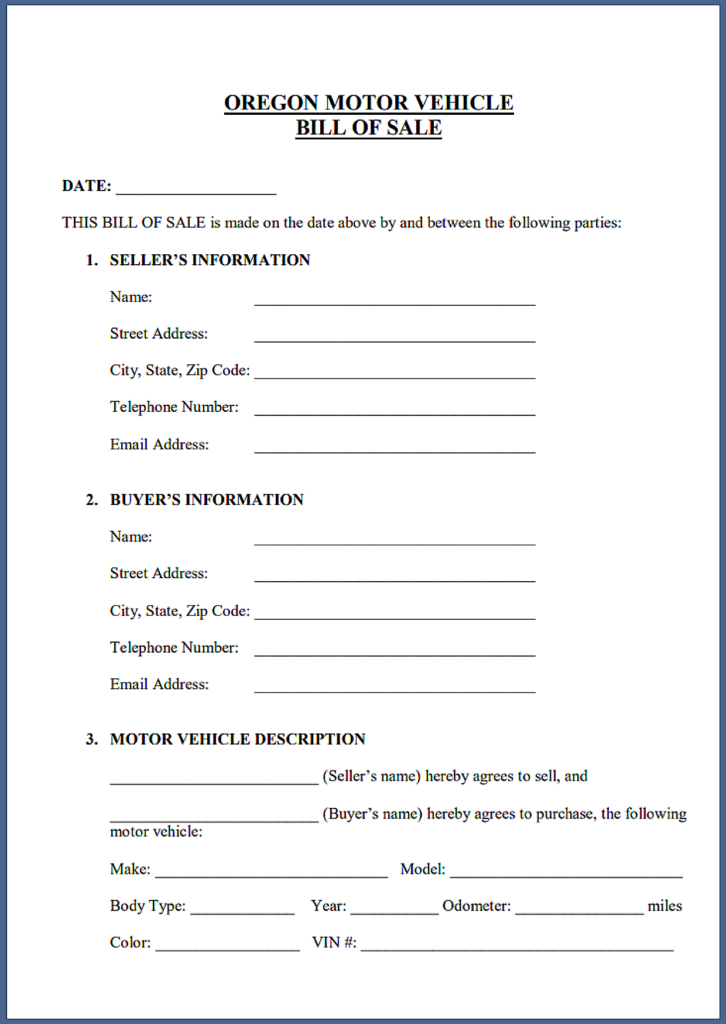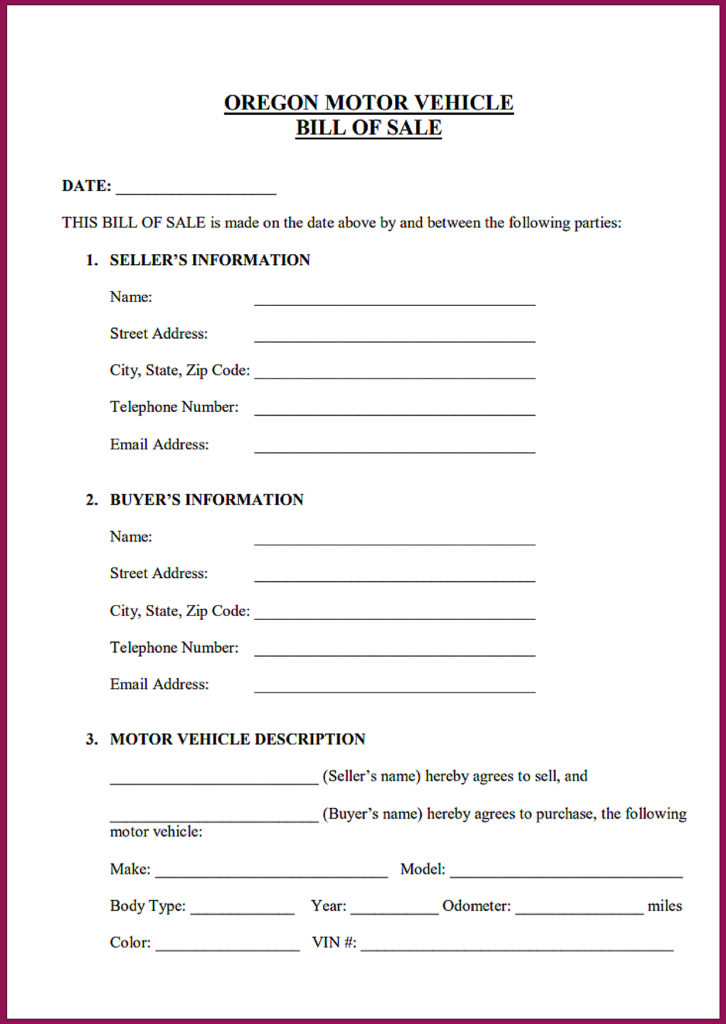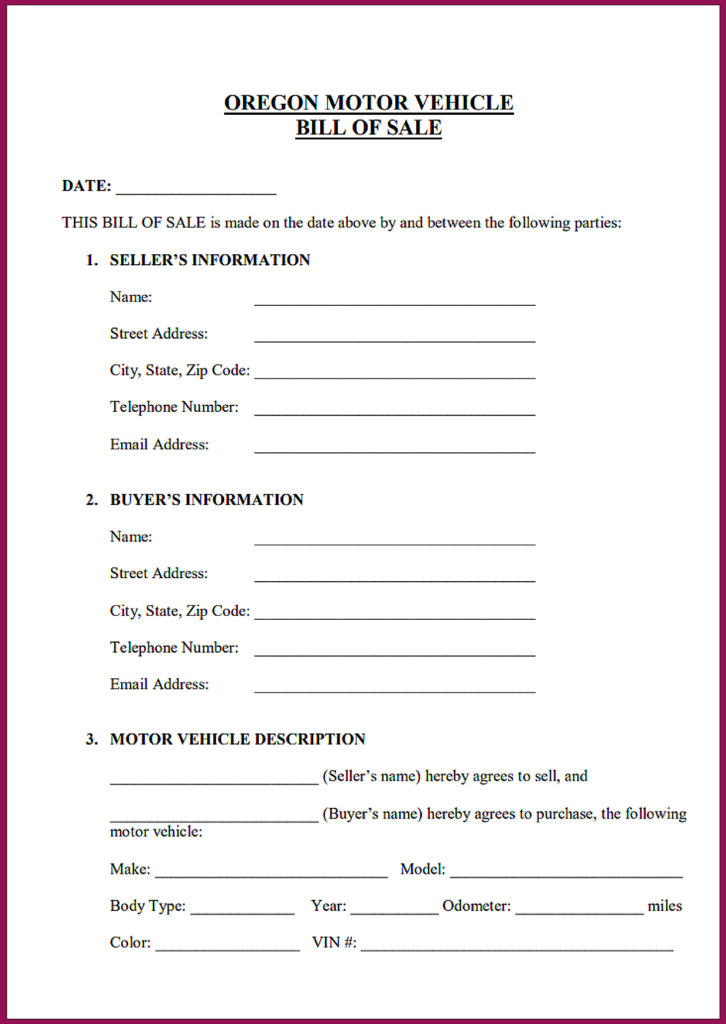
If you’re sitting across from me in my Oregon office and asking, “Do I really need a Car Bill of Sale Oregon form?” my answer is almost always the same: yes—and not because it’s just paperwork, but because I’ve seen what happens when people skip it. In Oregon, a car bill of sale is the written proof that a vehicle actually changed hands—who sold it, who bought it, when it happened, and for how much. That single page has saved my clients from DMV headaches, legal disputes, and unexpected liability more times than I can count.
I’ve been practicing law here in Oregon for years, and a surprising amount of my day-to-day work involves very ordinary vehicle sales that went sideways. Friends selling cars to friends. Craigslist deals done in a grocery store parking lot. Quick “cash-and-keys” exchanges where everyone trusted a handshake. Everything felt fine—until a title problem popped up, a ticket showed up in the mail, or the DMV started asking questions.
That’s why I take car bills of sale seriously. In this post, I’m not giving you theory or generic advice—I’m sharing how car bills of sale actually work in Oregon, what the law truly expects, and what I personally recommend based on real cases I’ve handled sitting right here at my desk.
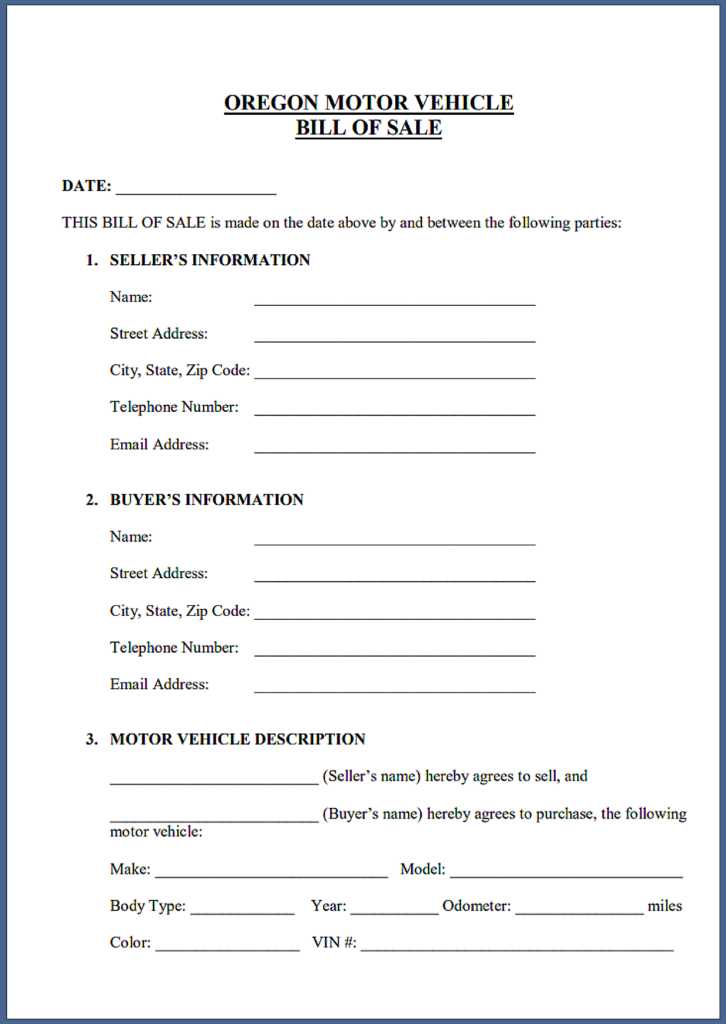
Free Oregon Bill of Sale for Car Template
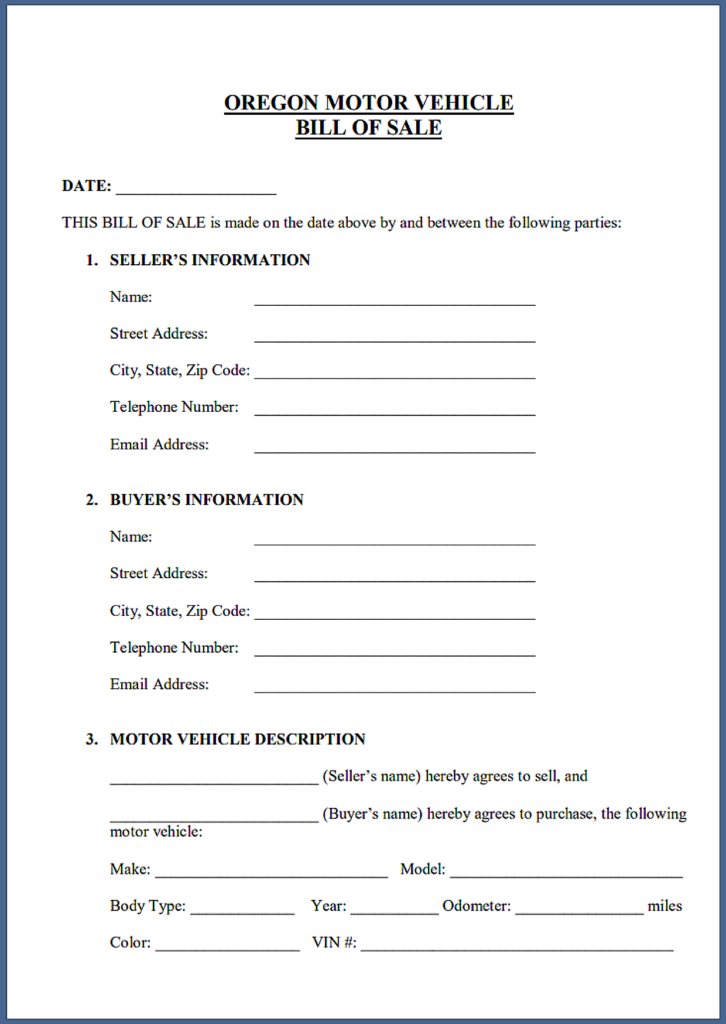
Over the years, I’ve noticed that most people walking into my office aren’t trying to cut corners—they’re just trying to keep things simple. That’s exactly why a free Oregon bill of sale for car template can be so helpful. In real life, private vehicle sales move fast, and having a ready-made template ensures you don’t miss critical details that the Oregon DMV or a future dispute might care about.
From my experience, a solid template does more than save time—it creates clarity. When both buyer and seller are working from the same clean document, expectations are clear and misunderstandings drop dramatically. For convenience, I’ve included a free downloadable PDF version of this Oregon car bill of sale template below, so you can easily download, print, and use it when you’re ready.
Oregon Car Bill of Sale Legal Requirements
| Topic / Issue | [OREGON] Legal Rule | Governing Statute |
|---|---|---|
| Governing Legislation | Oregon vehicle transfers, titling, odometer disclosures, and seller notices are governed by Oregon Vehicle Code, while commercial sale standards and warranty disclaimers are governed by Oregon’s UCC. | ORS Chapter 803; ORS Chapter 72 |
| Federal Odometer Law | Federal Truth in Mileage Act and its implementing regulations govern interstate odometer disclosure standards. | 49 U.S.C. § 32705; 49 C.F.R. Part 580 |
| Jurisdiction | Both state and federal law apply. Oregon law controls title transfers, registration, and seller notices, while federal law regulates mandatory odometer reporting. | ORS Chapter 803; 49 U.S.C. § 32705; 49 C.F.R. Part 580 |
| Recent Amendment | Federal odometer rules expanded the exemption window to vehicles under 20 years old, affecting model year 2011 and newer vehicles. Administrative updates to ORS 803.112 continue to integrate digital submissions and online recordkeeping. | ORS 803.112; 49 C.F.R. Part 580 |
| Authorized Signers | The transferor and transferee listed on the title assignment or bill of sale are the parties to the transfer. For transactions involving goods priced at $500 or more, the document must be signed by the party against whom enforcement is sought. | ORS 803.102; ORS 803.092; ORS 72.2010 |
| Witness Requirement | No statutory requirement — governed by common law principles | N/A |
| Notarization Requirement | No statutory requirement — governed by common law principles | N/A |
| Age Requirement | Parties must be at least 18 years of age to possess full independent contractual capacity. | ORS 109.510 |
| Mental Capacity | No statutory requirement — governed by common law principles | N/A |
| Buyer Filing Deadline | The buyer must submit an application for title to ODOT within 30 calendar days of the transfer date. | ORS 803.092(1) |
| Seller Notice Deadline | The seller must notify Oregon DMV of the vehicle transfer within 10 calendar days of the sale. | ORS 803.112 |
| Odometer Disclosure | For model year 2011 or newer vehicles under 20 years old, the disclosure must state the numeric mileage and certify whether it is actual, exceeds mechanical limits, or is not actual. | ORS 803.120; 49 C.F.R. § 580.5 |
| “As Is” Clause | To exclude implied warranties of merchantability and fitness in a private vehicle sale, the contract must contain conspicuous written language meeting Oregon’s requirements. | ORS 72.3160 |
| General Terms | No statutory requirement — governed by common law principles | N/A |
| Filing Agency | The buyer files the title-transfer application, original title, and supporting bill of sale with ODOT / DMV. The seller submits a Notice of Sale through DMV2U or by form within 10 days. | ORS 803.092; ORS 803.112 |
| Private Contract Status | A bill of sale functions as a private agreement between the parties and supporting evidence of ownership when a title is missing or requires chain-of-custody verification. | No statutory requirement — governed by common law principles |
| False Statements | Knowingly submitting false statements or material misrepresentations on vehicle title or transfer paperwork is unlawful and subject to statutory penalties. | ORS 803.070; ORS 803.114 |
| Missing Odometer Disclosure | A required odometer disclosure for a model year 2011 or newer vehicle under 20 years old must be properly completed or the DMV can reject the transfer application. | ORS 803.102; ORS 803.120 |
| Active Lien | An active recorded lien requires an original signed lien release from the security-interest holder for the title-transfer process. | ORS 803.092 |
| Sales Tax | Oregon does not impose a general statewide retail sales tax or use tax on private vehicle transactions. | Oregon state tax rule |
| Seller Protection | The 10-day seller notice creates a formal state-level record of the transfer and helps protect the seller from post-sale civil-liability issues. | ORS 803.112 |
| License Plates | Registration plates assigned to an Oregon vehicle remain with the vehicle when ownership changes, subject to specific custom-plate exceptions. | ORS 803.530 |
The two deadlines are easy to mix up. The buyer has 30 calendar days to submit the title application, but the seller has only 10 calendar days to notify Oregon DMV. Those are separate obligations. A seller who simply hands over the keys and waits for the buyer to handle everything can still be left dealing with tickets, toll violations, or accident-related correspondence if the transfer is not properly documented.
The odometer rule is another point that can cause a real DMV problem. For model year 2011 or newer vehicles that are under 20 years old, the required disclosure must state the mileage and identify whether it is actual, exceeds mechanical limits, or is not actual.
An active lien also needs attention because the supplied Oregon rules require an original signed lien release for the title-transfer process. False information can create statutory penalties as well.
Oregon also has no general statewide retail sales tax on private vehicle transactions, and its default plate rule keeps the registration plates with the vehicle, subject to the stated exceptions.
Bill of Sale for Car Oregon PDF
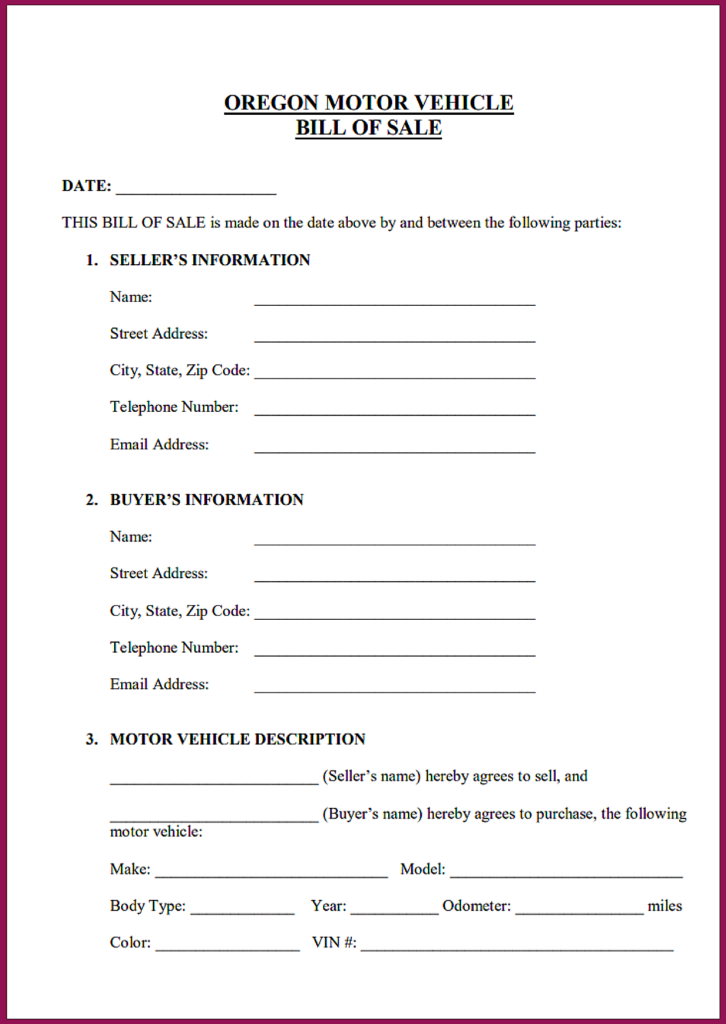
I strongly prefer using a PDF bill of sale for car transactions in Oregon, especially for private-party sales. PDFs prevent accidental edits, keep formatting consistent, and hold up better when documents are shared with lenders, insurance companies, or the DMV. I’ve seen too many disputes arise simply because someone altered a document later—or claimed they didn’t.
In my practice, PDFs are often the safest format to rely on when you want proof that stays intact over time. That’s why I recommend using a bill of sale for car Oregon PDF, which you can download and store digitally or print for your records. I’ve made a free downloadable PDF available here so you can use it without worrying about formatting or missing information.
Simple Bill of Sale for Car Oregon
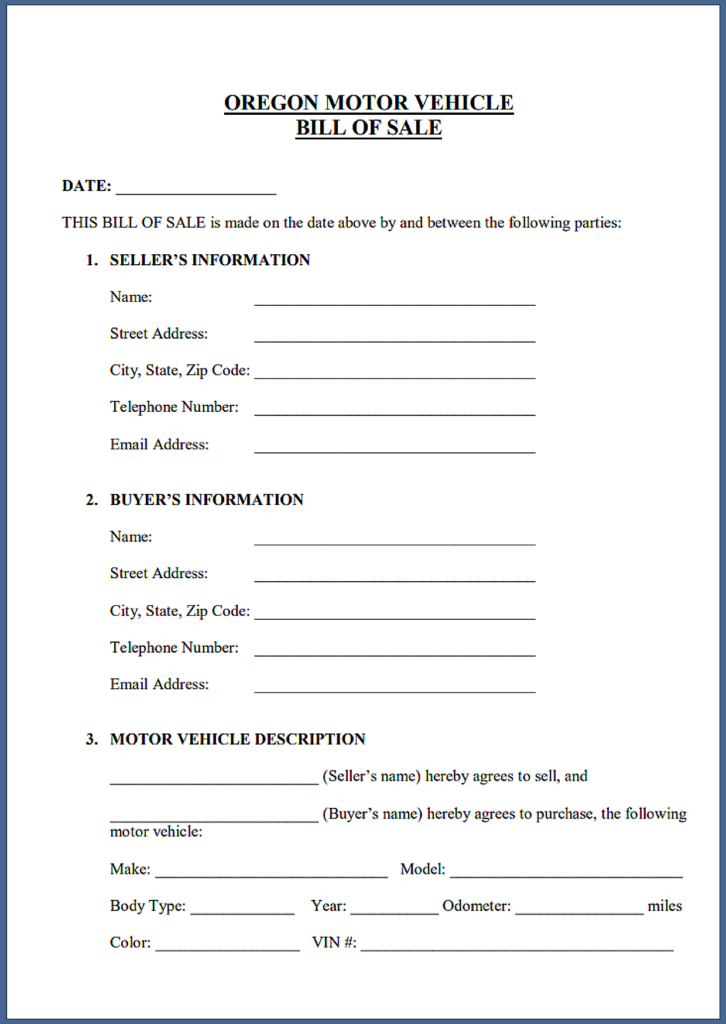
Not every car sale needs to feel like a legal maze. In fact, many Oregon vehicle transactions are straightforward, and in those situations, a simple bill of sale for car Oregon is often all that’s needed. What matters most isn’t length—it’s accuracy. I’ve handled plenty of cases where a short, clear document did its job perfectly.
That said, “simple” should never mean incomplete. Even a basic bill of sale must capture the essentials to protect both sides. To make that easy, I’ve included a simple, free printable PDF bill of sale you can download below. It keeps things clean, readable, and legally practical for everyday Oregon car sales.
Oregon Car Bill of Sale Form
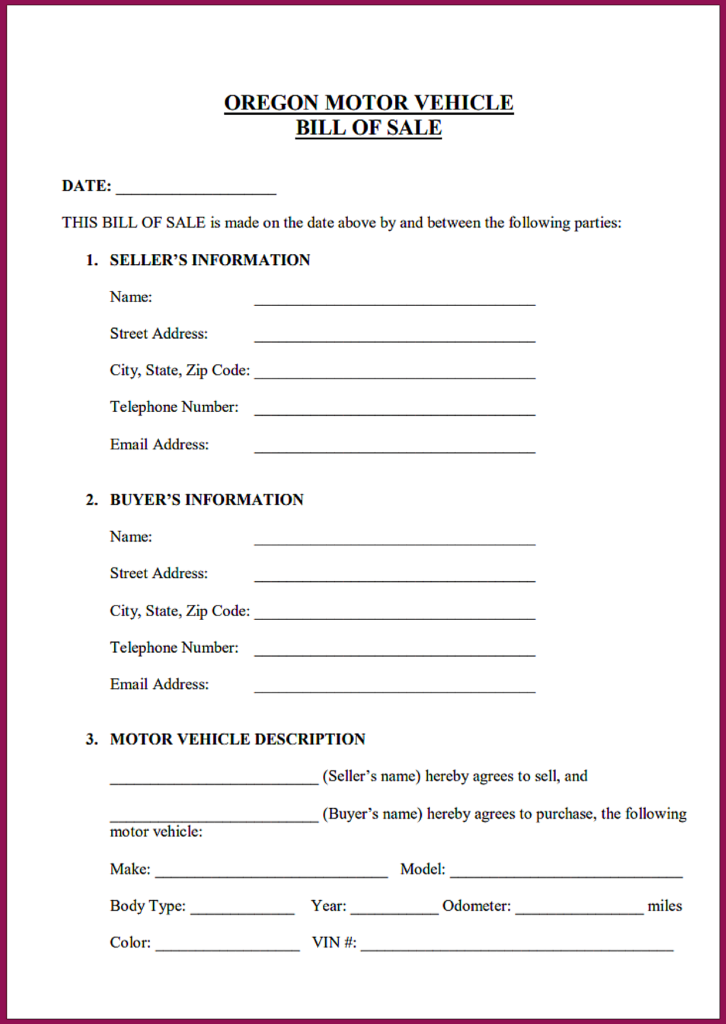
When clients ask me what document feels the most “official,” I usually point them toward a proper Oregon car bill of sale form. While the state doesn’t mandate a single universal form, using one that follows Oregon norms can prevent unnecessary DMV delays and uncomfortable follow-up questions.
In my experience, standardized forms create confidence—especially for buyers who want reassurance that everything was done correctly. For that reason, I’ve provided an Oregon-style car bill of sale form in PDF format, which you’re welcome to download and use. It’s designed to reflect real-world Oregon practices, not just generic templates.
Bill of Sale Template for Car in Oregon
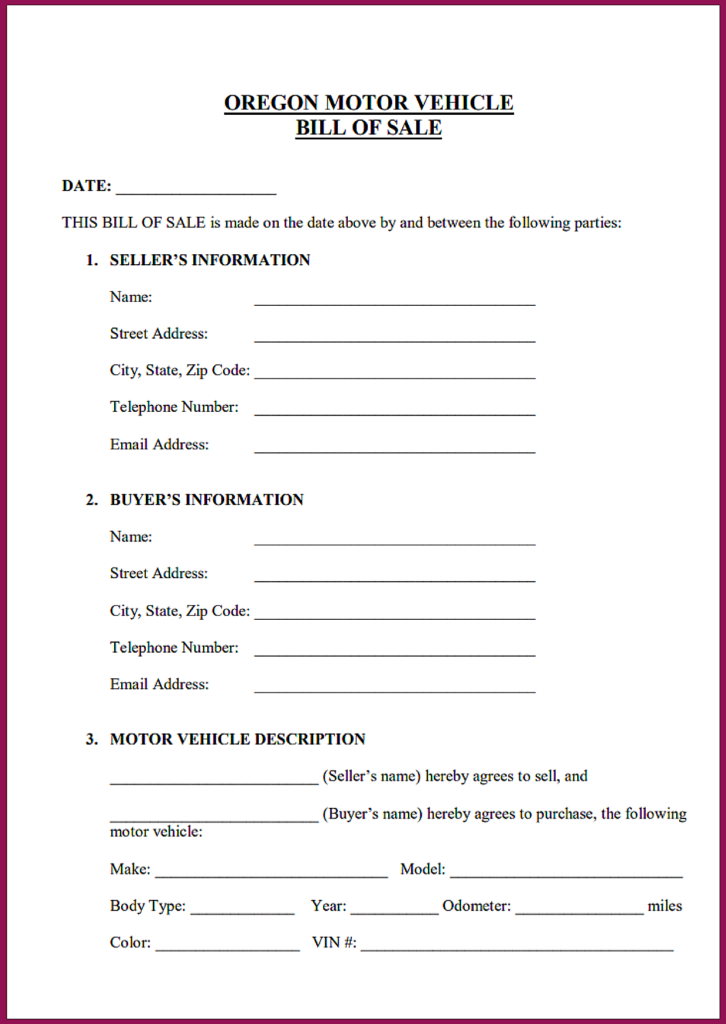
I’ve learned that people often search for a bill of sale template for car in Oregon when they’re trying to do the right thing—but don’t want to overcomplicate the process. A well-structured template acts like a checklist, making sure nothing important slips through the cracks during the sale.
Personally, I prefer templates that balance simplicity with legal protection. That’s exactly what this one does. To make things easier, I’ve included a free downloadable PDF version of this Oregon car bill of sale template, so you can download it, fill it out, and move forward with confidence.
Free Printable Bill of Sale for Car Oregon
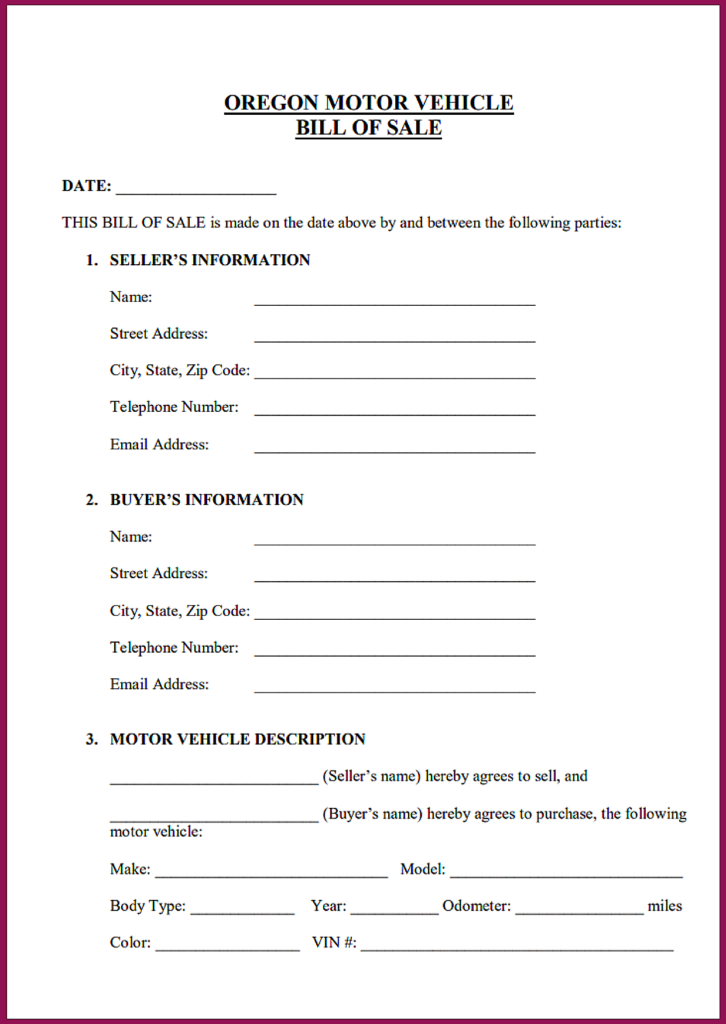
Some people still like having paperwork in hand—and honestly, I don’t blame them. A free printable bill of sale for car Oregon is especially useful if you’re meeting in person, selling in a rural area, or just prefer physical copies for your records. I’ve seen printed bills of sale resolve disputes years after a transaction took place.
That’s why I always recommend keeping at least one signed paper copy for both buyer and seller. Below, you’ll find a free printable PDF bill of sale that you can download, print, and use immediately. It’s designed for real Oregon vehicle sales, not just theoretical ones.
Why I Always Push for a Bill of Sale (Even When Oregon Doesn’t Always Demand One)
Oregon doesn’t technically require a bill of sale for every vehicle transfer. And yes, I know—that’s where people get comfortable cutting corners.
But here’s the thing I’ve learned the hard way: the bill of sale is often the only neutral witness left when a deal is later questioned.
I’ve represented:
-
Sellers accused of selling a “lemon” months later
-
Buyers stuck with tickets and towing fees for a car they thought they sold
-
Families fighting over ownership after a private sale with no paperwork
In almost every one of those situations, the absence—or poor quality—of a bill of sale made things far worse.
Personally, I would never let a client sell or buy a vehicle in Oregon without one. Ever.
What Oregon Actually Cares About in a Car Sale
In Oregon, the title transfer is king. Everything flows from that. The Oregon Driver and Motor Vehicle Services wants clean, accurate information so they know who owns the car and when that ownership changed.
A solid bill of sale supports that transfer by proving:
-
The exact date the vehicle changed hands
-
The agreed purchase price
-
That the transaction was voluntary, not stolen or disputed
I’ve seen DMV holds placed simply because the dates didn’t line up between the title and what one party later claimed. A clear bill of sale usually ends those arguments fast.
What I Include on Every Oregon Car Bill of Sale (No Exceptions)
When I draft or review a bill of sale for a client, I’m looking for a few non-negotiables:
-
Full legal names and addresses of both buyer and seller
-
Vehicle details: VIN, year, make, model
-
Sale price (even if it’s $1 or a gift—I’ll explain why in a second)
-
Exact date of sale
-
Signatures from both parties
Oregon doesn’t require notarization, but if this is a higher-value vehicle or a tense sale, I sometimes recommend it anyway. Not because the law demands it—because people forget what they agreed to.
The $1 Sale Trick (And Why It Can Backfire)
I see this one a lot.
Someone sells a car to a cousin or friend and writes “$1” to keep taxes low. Sounds harmless. Until the DMV questions it.
What I’ve learned is that Oregon can assess value independently if the sale price looks unrealistic. I’ve had clients get letters asking them to explain the transaction, sometimes months later.
If it’s a gift, I strongly prefer writing “gift” and attaching a clear bill of sale stating no money changed hands. It’s cleaner, more honest, and less likely to raise eyebrows.
One Mistake That Gets Sellers in Real Trouble
If I could stop Oregon sellers from making just one mistake, it would be this:
Failing to file a Notice of Sale.
I’ve handled cases where someone sold a car, skipped this step, and then received:
-
Parking tickets
-
Toll violations
-
Even accident-related letters
All because, on paper, they still looked like the owner.
I always tell clients: file the Notice of Sale with the DMV the same day you hand over the keys. Your bill of sale backs that up if anything goes wrong.
A Real Scenario I See Too Often
A buyer comes into my office frustrated. They paid cash, got the car, but now the seller won’t respond—and the title has an issue. No bill of sale. No proof of payment. No clear date.
At that point, we’re not talking about convenience anymore—we’re talking about legal leverage, and without paperwork, there’s very little.
That’s why I treat the bill of sale as protection for both sides, not just a formality.
A Quick, Plainspoken Disclaimer
This is general guidance based on real Oregon practice and cases I’ve handled—not legal advice for your exact situation. Every sale has its own wrinkles, especially when liens, estates, or out-of-state titles are involved.
If something feels off, trust that instinct and get help early. It’s always cheaper before a dispute starts.
Final Thoughts (The Advice I’d Give My Own Family)
If you remember nothing else, remember this:
A clear, signed Oregon car bill of sale turns a casual deal into a defensible one.
I’ve seen how quickly “simple” sales turn complicated. I’ve also seen how one good page of paper saves people months of stress.
If you’ve got questions, odd situations, or just want a second set of eyes before you sign something, feel free to reach out—or drop a comment below. I’m always happy to talk these things through, just like I would with someone sitting across the desk from me.
FAQs
Do I need a Car Bill of Sale in Oregon to sell a vehicle?
Oregon doesn’t always require a bill of sale to transfer a car, but in my experience, skipping it is risky. I’ve seen sellers pulled into disputes months later simply because there was no written proof of the sale date or price.
Does a Car Bill of Sale replace the Oregon title transfer?
No. A bill of sale supports the transaction, but the title transfer is still mandatory in Oregon. I always tell clients the bill of sale protects you legally, while the title transfer keeps you right with the DMV.
Does an Oregon Car Bill of Sale need to be notarized?
Not usually. Oregon law doesn’t require notarization for most car bills of sale. That said, for higher-value vehicles or tense private sales, I sometimes recommend it for extra protection.
What happens if I lose my Car Bill of Sale in Oregon?
Losing it can make things harder, especially if ownership or sale date is questioned later. That’s why I strongly recommend keeping both a printed copy and a digital PDF saved somewhere safe.