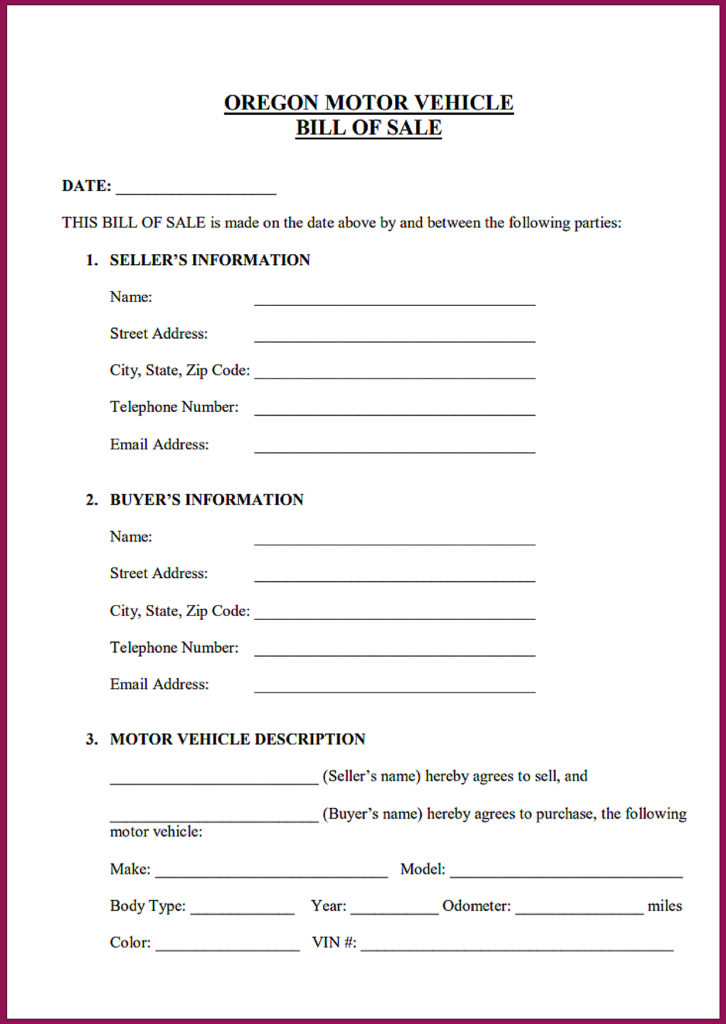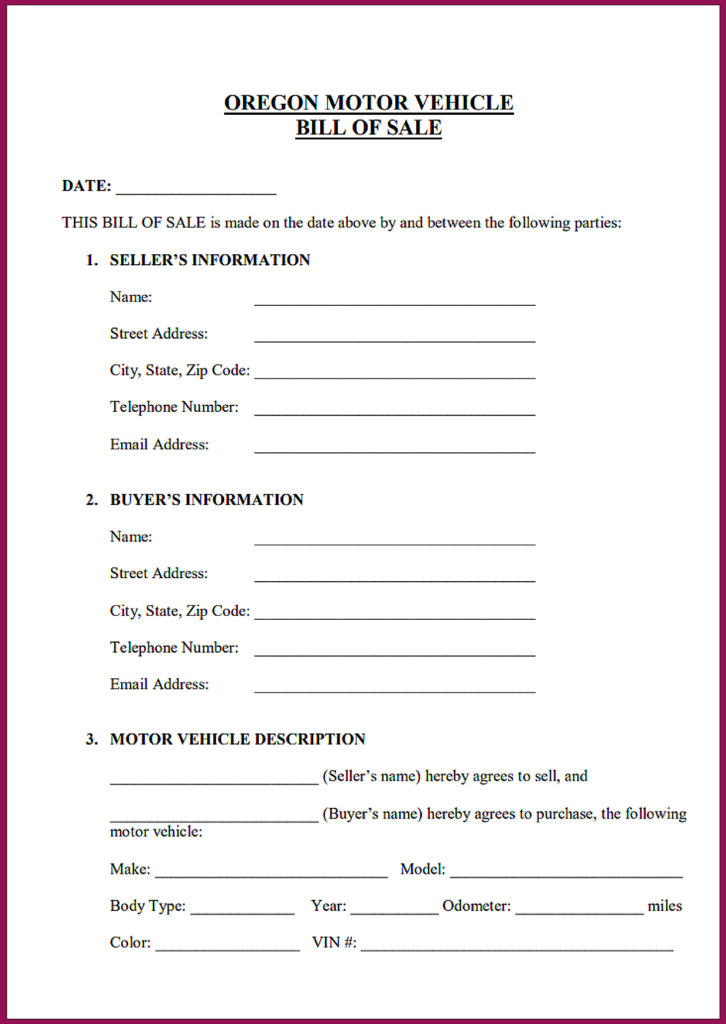
Free ATV Bill of Sale Oregon​ Templates

Over the years practicing law here in Oregon, I’ve handled countless private-party vehicle transactions — and ATV transfers are no exception. An ATV Bill of Sale Oregon is more than just a receipt; it’s a written legal record of the transfer of ownership between a buyer and seller, and in my experience, it often becomes the most important document when something goes wrong.

I’ve seen everything from smooth farm equipment sales in Eastern Oregon to complicated title disputes in the Willamette Valley. And I can tell you this honestly — most ATV-related legal issues I deal with could have been avoided if the parties had taken the time to prepare one clear, properly written bill of sale.

When someone sits across from me and says, “I sold it months ago — why am I getting tickets?” nine times out of ten, there was either no paperwork or paperwork that wasn’t done correctly.

If you’re buying or selling an ATV in Oregon, let me walk you through how to protect yourself the right way.
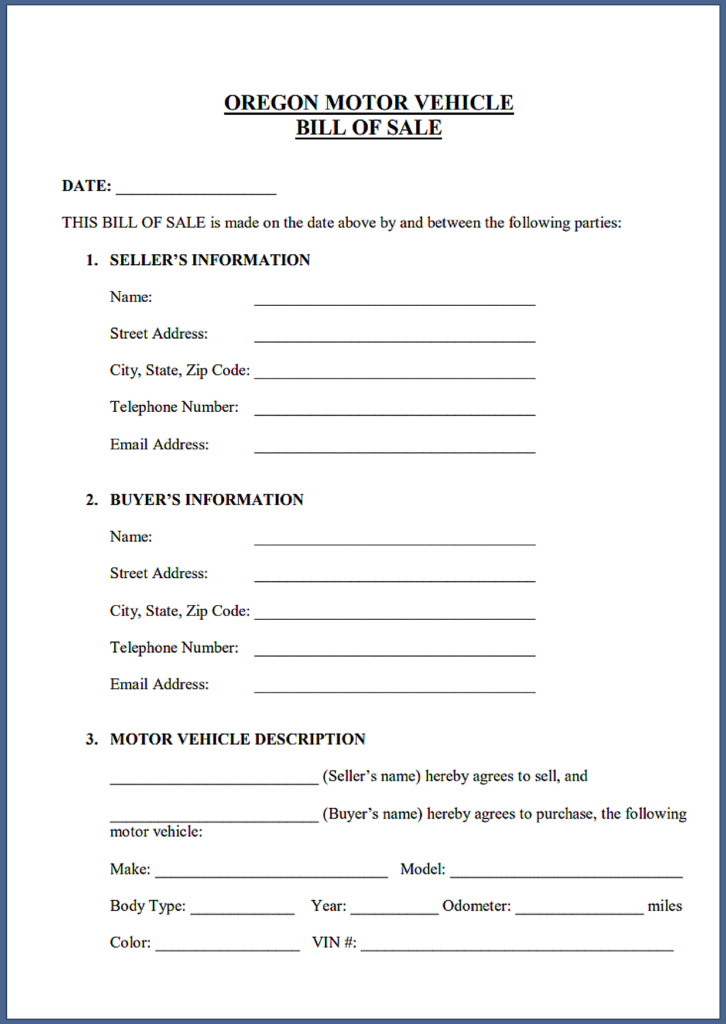
ATV Bill of Sale Oregon

Free ATV Bill of Sale Oregon​ Templates

Free ATV Bill of Sale Oregon​ Templates

Over the years, I’ve reviewed dozens of ATV bills of sale that people downloaded online — and I’ll be honest, many of them are either incomplete or not tailored for Oregon law. When we talk about Free ATV Bill of Sale Oregon templates, what you’re really looking for is a legally solid starting point that reflects how ownership transfers actually work here in Oregon. A proper template should include the correct identification details, VIN space, sale price acknowledgment, and “as-is” language that protects both sides.

In my practice, I always tell clients that a template is only as good as how you fill it out. If you’re using a free form, make sure it’s Oregon-specific and not some generic national version. I strongly recommend reviewing it carefully before signing. And yes — for convenience, you can also download the PDF format of these templates so you have a clean, printable version ready for your records. Having a PDF copy saved can make a real difference later if questions arise.

Get PDF | WORD

Oregon ATV Bill of Sale Legal Requirements: Rules Buyers and Sellers Actually Need

Topic / Issue [OREGON] Legal Rule Governing Statute
Governing ATV Law Oregon ATV operation, equipment standards, and permit/decal requirements are governed by the Oregon off-road vehicle laws. ORS Chapter 821, including ORS 821.195
Vehicle Titles and Transfers Oregon DMV rules govern optional ATV titling, ownership transfers, and seller notices. ORS Chapter 803; ORS 803.092; ORS 803.102; ORS 803.112
Authorized Signers The seller and buyer are the parties to the transfer. For an ATV priced at $500 or more, the document must be signed by the party against whom enforcement is sought. ORS 72.2010; ORS 803.102
Witness Requirement No statutory witness requirement is identified. N/A
Notarization Requirement No statutory notarization requirement is identified. N/A
Age Requirement Parties must be at least 18 years old to possess full independent contractual capacity. ORS 109.510
Mental Capacity No statutory requirement is identified; governed by common law principles. N/A
DMV Title Transfer Deadline If the ATV is voluntarily titled with DMV, the buyer must apply for transfer within 30 calendar days. ORS 803.092
Seller Notice Deadline If the ATV is voluntarily titled, the seller must notify DMV through DMV2U within 10 calendar days. ORS 803.112
Contract Limitation Period General contract enforcement is subject to a 6-year statute of limitations under the provided research. ORS 12.080
Statute of Frauds An ATV sale priced at $500 or more must be in writing, signed by the party against whom enforcement is sought, and include a clear quantity term to be enforceable in court. ORS 72.2010
“As Is” Clause To exclude implied warranties of merchantability and fitness, the ATV bill of sale must contain conspicuous written language using terms such as “as is” or “with all faults.” ORS 72.3160
ATV Identification The bill of sale should clearly identify the ATV using its make, model, year, and 17-digit VIN or frame serial number. Common law principles
Filing Agency An ATV bill of sale is primarily a private contract. If the owner chooses optional title processing, documents are filed with ODOT DMV. ATV trail permits and operating decals are handled separately by Oregon Parks and Recreation. ORS 803.092; ORS 821.195
Untitled ATV An untitled ATV relies on the bill of sale as a private contract and chain-of-custody record between buyer and seller. Oregon ATV ownership procedures
VIN / Serial Number Problem An ATV with an obliterated, missing, or altered VIN or frame serial number creates a statutory identification problem and can invalidate lawful ownership documentation. ORS 803.102; common law fraud principles
Active Lien An ATV subject to an active lien or security interest requires a formal written release from the lienholder for a clean ownership transfer. ORS 803.092
Agency Split Oregon separates ATV ownership/title administration through DMV from mandatory off-road permits and decals administered by Oregon Parks and Recreation. ORS 803.092; ORS 821.195
Optional Titling Oregon does not strictly mandate state-issued titles for off-road ATVs; titling is optional under the provided research. ORS Chapter 803
Sales Tax Oregon imposes no statewide retail sales tax or use tax on private ATV transfers. Oregon state tax rules
Federal Law No federal law directly governs a private ATV bill of sale under the provided research, although federal manufacturing standards apply to VINs and importation. Federal VIN/importation requirements
Recent Administrative Integration Oregon DMV and Oregon Parks and Recreation continue administrative integration for optional ATV titling and electronic tracking records. Oregon DMV / Oregon Parks and Recreation procedures

The most unusual Oregon rule here is that ATV ownership and ATV operating authorization are handled through separate systems. DMV deals with optional title and ownership matters, while Oregon Parks and Recreation handles trail permits and decals. A permit sticker therefore should not be treated as proof of ownership.

The $500 Statute of Frauds threshold is another rule worth paying attention to. If the ATV costs $500 or more, the provided research requires a written agreement, the necessary signature, and a clear quantity term for court enforcement. That becomes particularly relevant when a buyer and seller later disagree about what was actually purchased.

The VIN or frame serial number is also more than a field to fill in casually. Your research identifies an altered, defaced, or missing identification number as a serious ownership-documentation problem. An active lien creates another potential barrier because a formal release is needed for a clean transfer.

Finally, if the ATV is voluntarily titled, the buyer has 30 days to apply for transfer while the seller has 10 days to notify DMV. Missing those separate steps can leave the ownership record and the parties’ paperwork out of sync.

Oregon DMV Bill of Sale ATV
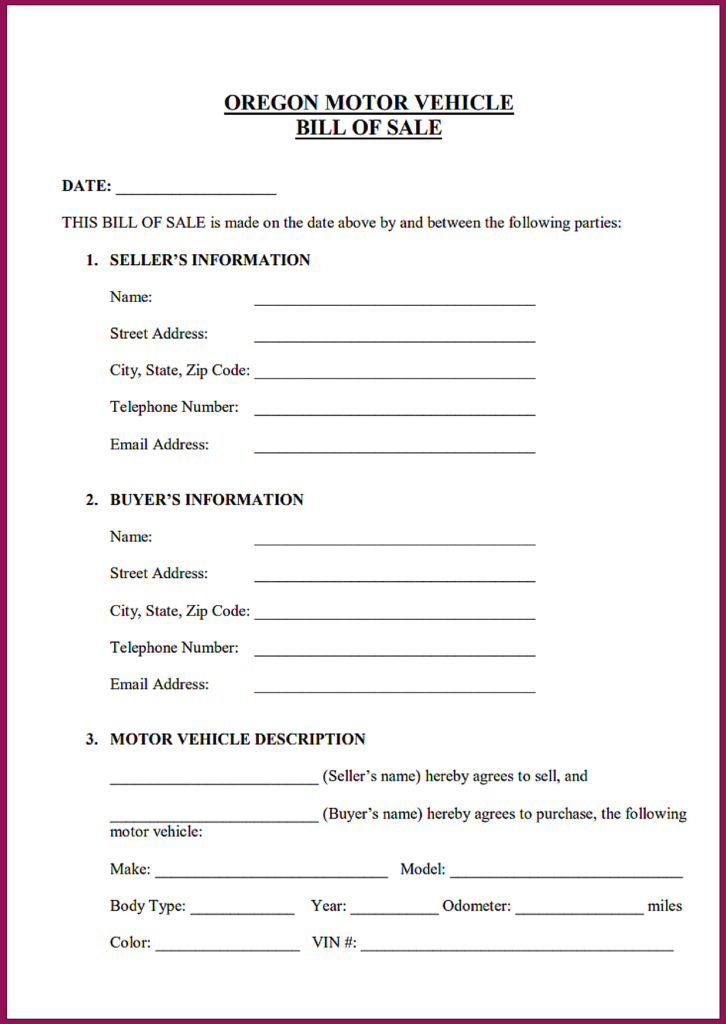
Oregon DMV Bill of Sale ATV

When clients ask me about the Oregon DMV bill of sale for an ATV, what they usually mean is whether the DMV provides or requires a specific form. In Oregon, the DMV primarily focuses on title transfer documents, but a bill of sale is often used as supporting evidence of the transaction — especially if there’s ever a dispute about purchase price, date of transfer, or ownership history. I’ve seen situations where that simple document became the key piece of evidence when ownership was questioned.

In my experience, even if the DMV doesn’t strictly require a separate bill of sale in every ATV transaction, I always recommend having one. It strengthens your paper trail and protects you if something goes sideways. You can also download the PDF format of the Oregon DMV-related ATV bill of sale so you can complete it properly and keep a signed copy for your records. Personally, I prefer clients keep both a printed copy and a digital backup — it’s a small step that prevents big headaches later.

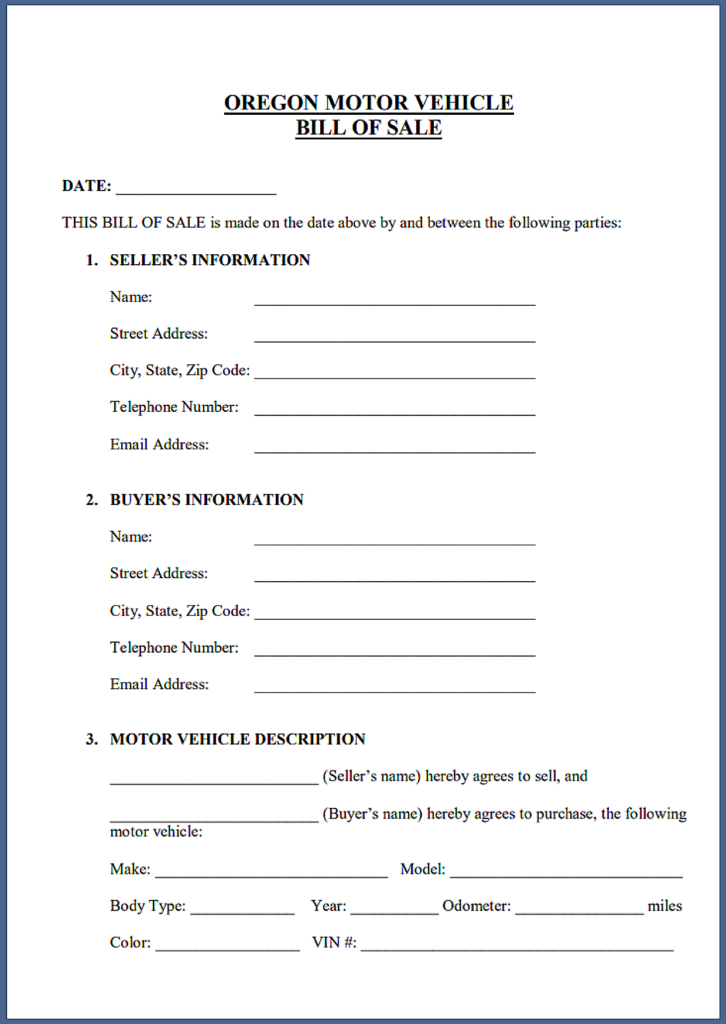
Get PDF | WORD

First — Do You Even Need a Bill of Sale in Oregon?

Legally speaking, Oregon doesn’t always require a bill of sale for every transaction. But in real life? I strongly prefer it every single time.

For ATVs in Oregon, ownership is typically handled through the Oregon DMV title process. If the ATV is titled, you transfer ownership by signing over the title. Simple enough.

But here’s what I’ve learned after years of cleaning up other people’s mistakes:

If something goes wrong, that title alone doesn’t always protect you.

I’ve seen:

  • Buyers deny purchase price

  • Sellers accused of selling stolen property

  • Disputes over whether the sale was “as-is”

  • Problems when titles were lost or improperly filled out

A written ATV bill of sale gives you backup evidence. And in disputes, documentation wins.

How Oregon Handles ATV Ownership

In Oregon, ATVs are generally titled through the Oregon Driver and Motor Vehicle Services Division (DMV).

Depending on the ATV:

  • It may have a title

  • It may require title transfer

  • It may also need registration through Oregon Parks & Recreation for off-road use

That’s where people get confused. DMV handles ownership. Oregon Parks handles ATV operating permits.

Two separate systems.

I’ve had clients assume that an ATV permit sticker equals ownership proof. It doesn’t.

The ATV Class Can Change What You Need After the Sale

One thing I would check before handing over an ATV is which class of ATV it actually is. Oregon law divides ATVs into Class I, Class II, Class III, and Class IV, and that classification is not just a label. It affects how the vehicle is treated under Oregon’s ATV program.

The paperwork can also be confusing because DMV and Oregon Parks and Recreation Department do different jobs. DMV may issue a title for an ATV, but DMV does not issue ATV registration. Oregon Parks and Recreation handles ATV operating permits.

That means a buyer should not assume that receiving a signed title or bill of sale automatically gives them everything needed to operate the machine. For example, Oregon’s current ATV guidance states that Class IV ATVs require an ATV Operating Permit when operated on lands open to ATV use.

I would therefore record the ATV’s class, make, model, year, and VIN or frame serial number in the transaction records. If the buyer later discovers that the machine needs a separate operating permit, the bill of sale should not be mistaken for that authorization.

What I Always Recommend Including in an Oregon ATV Bill of Sale

When I draft or review one, here’s what I insist on:

  • Full legal names of buyer and seller

  • Physical addresses (not just P.O. boxes)

  • Date of sale

  • Exact purchase price

  • Complete ATV description (make, model, year, VIN)

  • Odometer reading (if applicable)

  • Clear “as-is” language

  • Signatures from both parties

Personally, I also prefer including:

  • Driver’s license numbers

  • A statement confirming no liens

  • A duplicate copy for each party

It may feel like overkill. It isn’t.

The “As-Is” Clause — Why It Matters So Much

I’ve had buyers come back weeks later claiming engine issues, cracked frames, or electrical problems.

If your bill of sale does not clearly state that the ATV is sold “as-is, with no warranties expressed or implied,” you may open yourself to arguments.

Does that mean you’re automatically liable without it? No.

But in my experience, strong written language shuts down arguments early.

What I’ve learned is this: disputes often aren’t about what happened — they’re about what can be proven.

Title Transfer — The Step People Forget

Here’s the biggest mistake I see in Oregon.

Seller signs the title.
Hands it to buyer.
Buyer says, “I’ll take care of it.”

And they never transfer it.

Months later:

  • Parking violations

  • Toll notices

  • Even civil claims

I always tell sellers: submit a Notice of Sale immediately with the DMV.

Oregon provides a Notice of Sale through the DMV website. File it right away. Do not rely on the buyer.

It protects you.

I’ve had cases where that one small step saved someone thousands of dollars.

What If the Title Is Lost?

This happens more often than you think.

If the ATV has a lost title, you’ll need to apply for a replacement through the DMV before transfer. I’ve seen buyers pay cash and then discover there’s no clean title available.

That turns into a mess fast.

If you’re buying:
Personally, I would never hand over money without seeing a clean, signed title or proof that a replacement is in process.

Liens — The Silent Deal Killer

I once handled a situation where a father sold his ATV to help cover medical bills. Turns out, there was still a lien from a local credit union.

The buyer didn’t know.
The seller “forgot.”
The lender repossessed.

The bill of sale didn’t save that buyer.

Before purchasing, I always recommend:

  • Ask directly if there is a lien.

  • Verify title status.

  • If large money is involved, consider checking with DMV.

Payment Method Matters More Than You Think

Cash is common with ATV sales in Oregon. I get it.

But I’ve seen counterfeit cash disputes. I’ve seen buyers claim they paid more than they did.

If it’s over a few thousand dollars, I strongly prefer:

  • Cashier’s check

  • Meeting at a bank

  • Written receipt acknowledging full payment

Protect both sides.

Do You Need Notarization in Oregon?

For an ATV bill of sale in Oregon, notarization is generally not required.

That said, if:

  • The deal is high-dollar

  • One party feels uneasy

  • There’s no immediate title transfer

I sometimes suggest notarizing for extra protection.

It’s not mandatory — just added insurance.

Common Oregon Mistakes I See

Let me give you the real-world list:

  1. Not filing Notice of Sale

  2. Leaving purchase price blank

  3. No VIN listed

  4. Trusting handshake agreements

  5. Failing to verify lien status

  6. Selling without confirming title is clear

Every one of these has led someone into my office later.

A Quick Word of Legal Reality

Every situation is different. If there’s:

  • A dispute

  • A missing title

  • A lien issue

  • A fraud concern

You should speak directly with a qualified Oregon attorney.

This is general information based on my experience practicing here in Oregon — not specific legal advice for your unique case.

But I can tell you this: prevention is far cheaper than litigation.

Final Thoughts — What I Tell Clients Sitting Across From Me

If you’re selling an ATV in Oregon, protect yourself like you would with a car.

If you’re buying, slow down. Ask questions. Get paperwork.

Paper trails prevent courtroom stories.

I’ve seen clean, smooth private-party sales where everyone walks away happy. And I’ve seen avoidable disasters.

The difference is almost always documentation.

If you’ve got a question about your ATV sale — whether it’s before the deal or after something’s gone sideways — feel free to reach out or drop a comment.

I’m always happy to help Oregonians do this the right way.

FAQs

Do I legally need a bill of sale for an ATV in Oregon?

In Oregon, the primary ownership transfer happens through the title with the Oregon Driver and Motor Vehicle Services Division. Technically, a separate bill of sale is not always mandatory if the title is properly signed over.

That said — and I say this from experience — I strongly recommend having one. I’ve seen too many disputes over sale price, condition, and transfer date. A written ATV Bill of Sale Oregon protects both parties if questions come up later.

What information should be included in an Oregon ATV bill of sale?

At minimum, it should include:

  • Buyer and seller full legal names

  • Physical addresses

  • Date of sale

  • Purchase price

  • Complete ATV description (year, make, model, VIN)

  • Signatures

Personally, I also prefer adding “as-is” language and confirming there are no liens. I’ve had cases where missing one small detail caused unnecessary stress later.

Does an ATV bill of sale need to be notarized in Oregon?

No, notarization is generally not required for an ATV bill of sale in Oregon.

However, in higher-value sales or situations where one party feels uneasy, I sometimes suggest notarization for extra peace of mind. It’s not mandatory — just additional protection. Think of it as optional insurance.

What happens if I sell my ATV and the buyer never transfers the title?

This is one of the most common issues I deal with.

If the buyer fails to transfer the title, you could still appear as the legal owner in state records. That can lead to tickets, fines, or liability headaches. I always recommend submitting a Notice of Sale to the DMV immediately after selling. Do not rely on the buyer to “take care of it.”

That single step has saved many of my clients from serious problems.

Author

  • Brandon L. Thornburg is a legal professional based in Lake Oswego, Oregon, and currently practices at the Law Office of Nicholas E. Wheeler, LLC. With a strong academic foundation from Lewis & Clark Law School, Brandon focuses on providing reliable, practical legal insight into documents and processes related to property transfers, ownership records, and transactional compliance.

    At BillofSaleOregon.com, Brandon reviews and contributes to content to help ensure that the information and bill of sale templates reflect current Oregon practices and are clear, accurate, and easy for the public to use. His legal background helps bridge the gap between complex legal requirements and simple, user-friendly documentation.

    Brandon is committed to making legal information more accessible to individuals and businesses by offering straightforward guidance based on publicly available laws and standard practices.

Leave a Comment

Your email address will not be published. Required fields are marked *

Scroll to Top