Free Generic Bill of Sale Oregon Templates

If you’ve ever sat across from me in my Oregon office with a stack of DMV papers in your hand, you’ve probably heard me explain this clearly: a generic bill of sale Oregon residents use is a written document that records the transfer of ownership of property — most commonly a vehicle — from a seller to a buyer. It outlines who sold what, to whom, for how much, and on what date. Simple in structure, yes. But legally? It can carry serious weight.

Over the years, I’ve handled real Oregon vehicle transfer disputes, title problems, odometer conflicts, and private-party sales that fell apart because the paperwork wasn’t done carefully. What I’ve learned is this — a generic bill of sale can either protect you cleanly and completely, or it can leave you exposed when something goes wrong months later.

So let me walk you through how this truly works here in Oregon — not just what the statute says, but what actually happens when real people walk into my office after a deal has gone sideways.
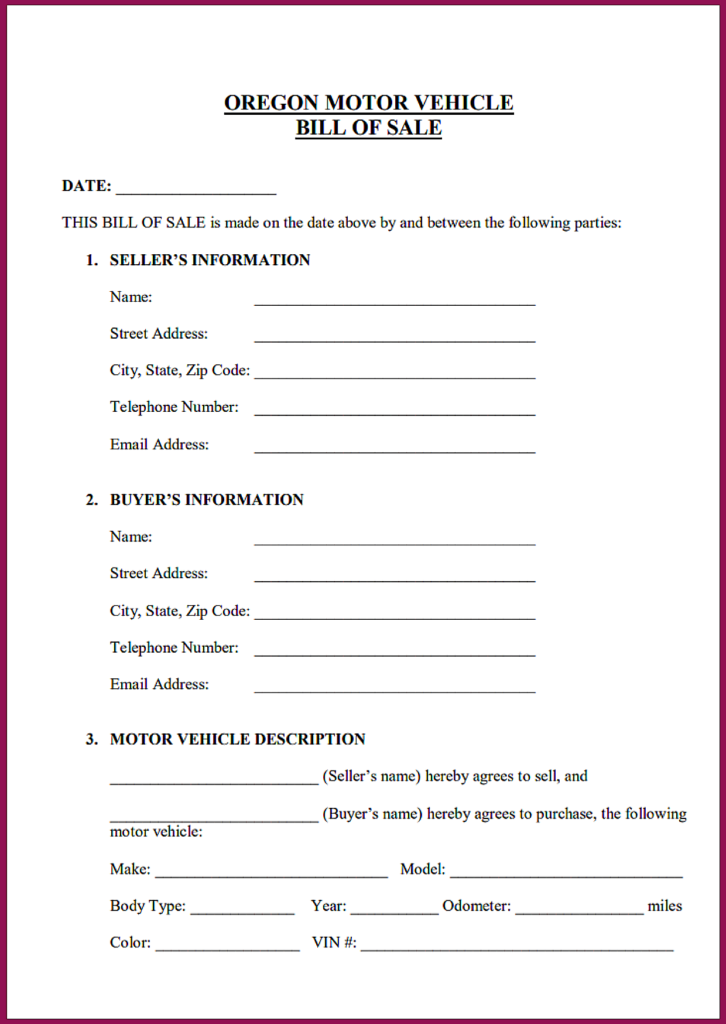
Generic Bill of Sale Oregon

Free Generic Bill of Sale Oregon Templates
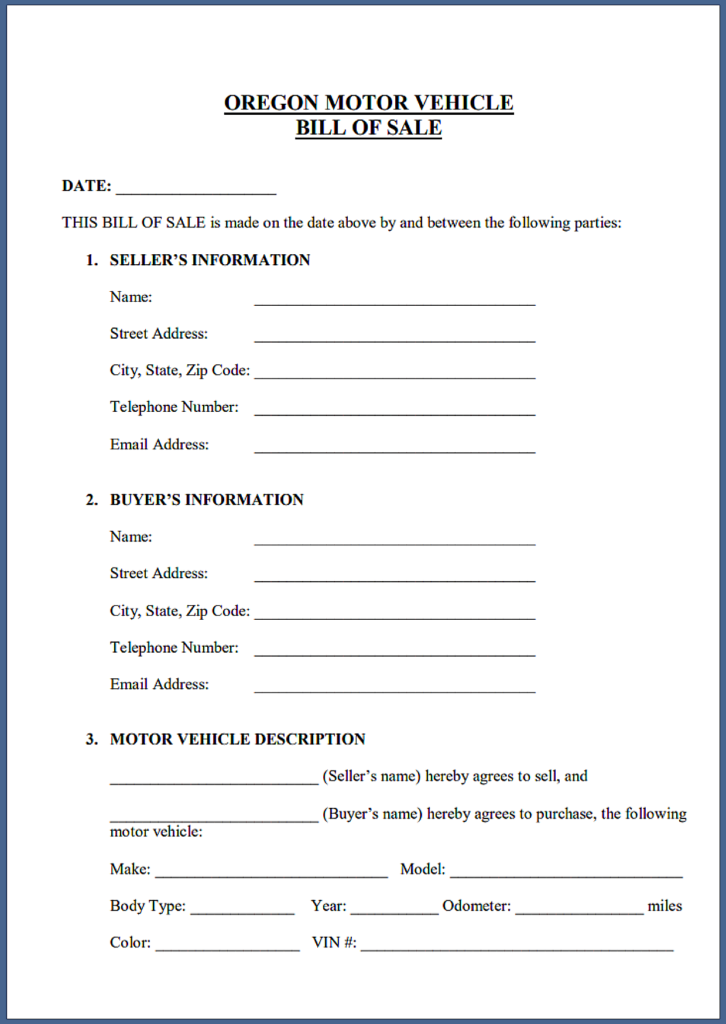
Free Generic Bill of Sale Oregon Templates

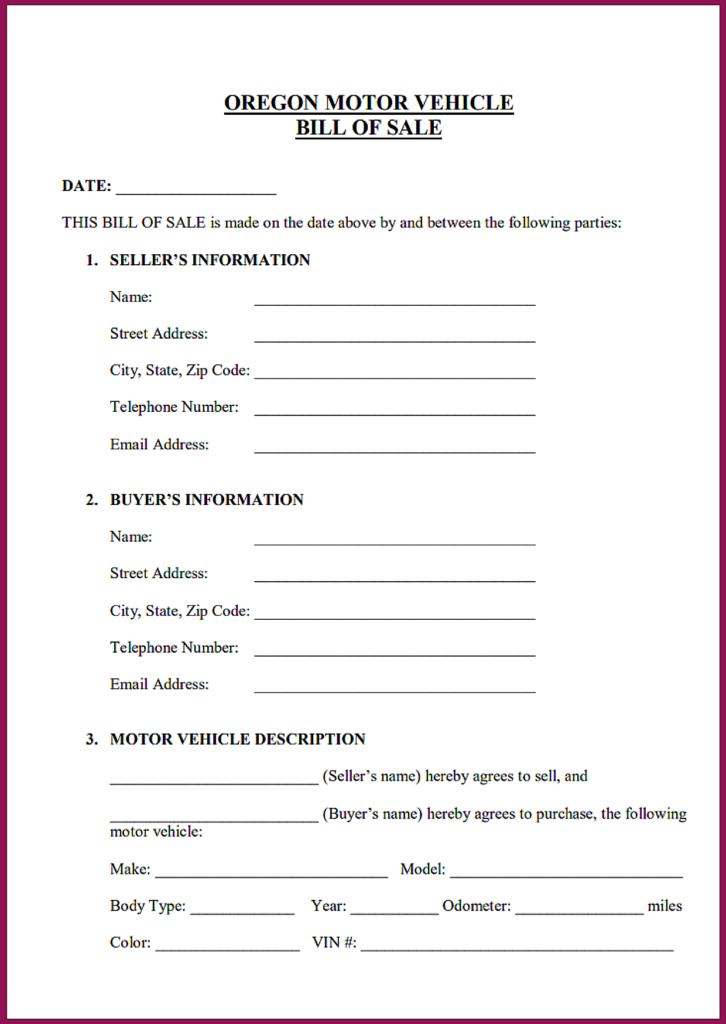
When clients ask me for a free generic bill of sale Oregon template, what they’re really asking for is peace of mind. They don’t want something overly complicated — they just want a clean, legally sound document that protects them during a private sale. In Oregon, a bill of sale serves as written proof that ownership transferred from one party to another on a specific date and for a specific price. I’ve seen how even a simple template, when filled out properly, can prevent months of stress later.

Over the years, I’ve reviewed plenty of homemade documents that were missing key details — no VIN, no address, no “as-is” clause. That’s where problems start. A well-drafted template ensures the essentials are covered and aligns with how the Oregon Driver and Motor Vehicle Services Division handles ownership transfers. I always tell clients: use a clean, structured format instead of improvising. And yes, for convenience, I’ve made these templates available in PDF format — you can download them and use them immediately for your transaction.

Get PDF | WORD

Generic Bill of Sale for Car Oregon

Generic Bill of Sale for Car Oregon

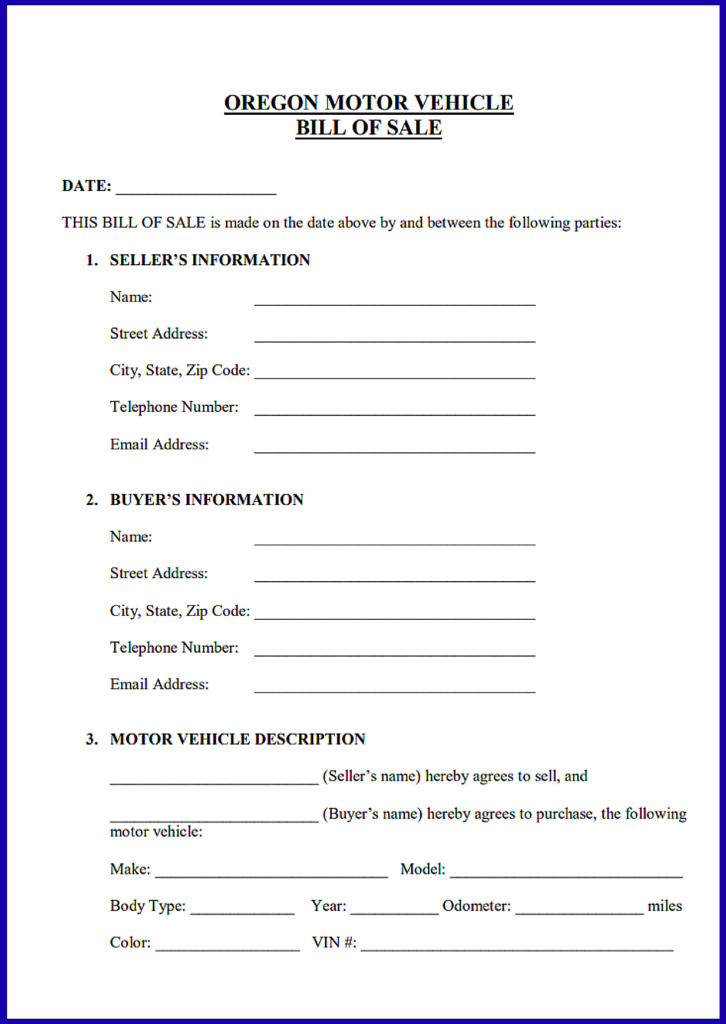
A generic bill of sale for a car in Oregon might seem optional, especially since the DMV focuses heavily on the vehicle title itself. But in my real-world experience handling disputes, that extra document often becomes the deciding factor in who’s responsible for what. It clearly states the sale price, the vehicle identification number (VIN), the odometer reading, and the exact date ownership changed hands — details that matter more than people realize.

I once worked with a seller who thought signing the title was enough. The buyer delayed registering the vehicle, and toll violations started landing in my client’s mailbox. Thankfully, he had a properly drafted bill of sale with the sale date clearly listed. That document protected him. For private-party vehicle sales in Oregon, I strongly prefer having both the signed title and a detailed bill of sale. To make things easier, I’ve also provided this form in PDF format — you can download it and keep it for your records.

Get PDF | WORD

Generic Auto Bill of Sale Oregon

Generic Auto Bill of Sale Oregon

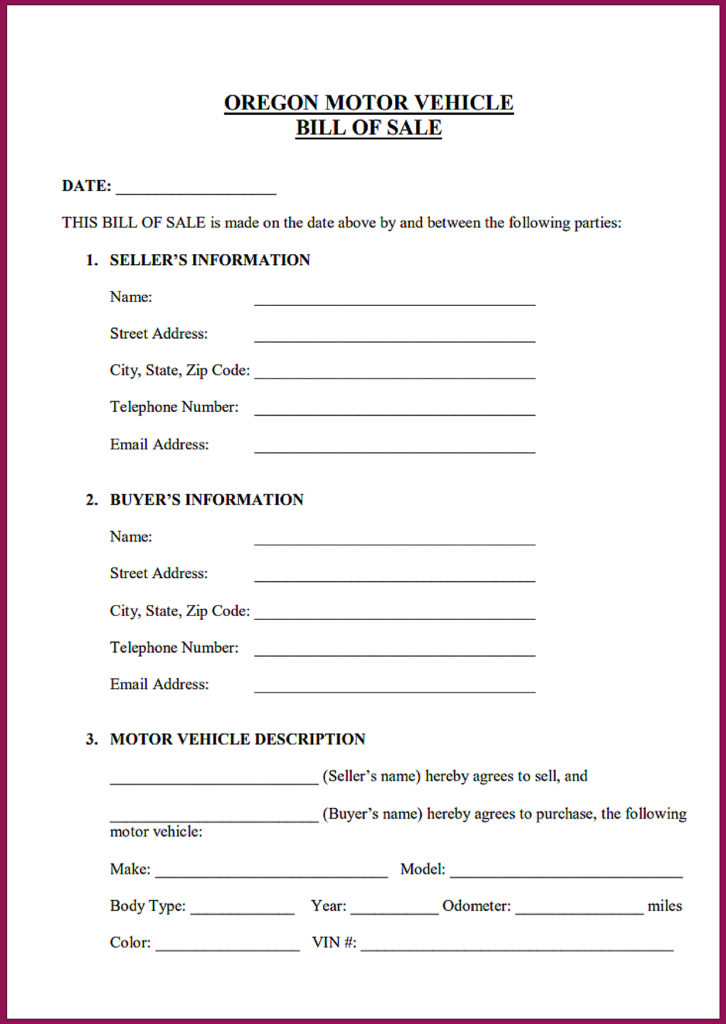
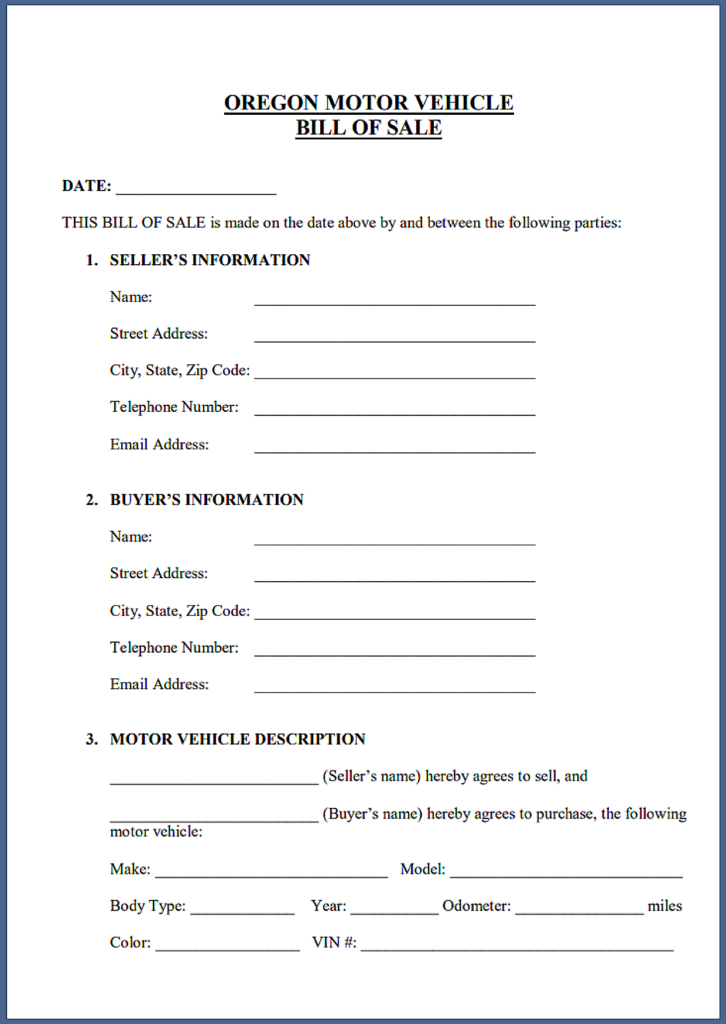
When we talk about a generic auto bill of sale in Oregon, we’re referring to a broader vehicle transfer document that can apply to cars, trucks, SUVs, and sometimes even motorcycles. It records the agreement between buyer and seller and creates a written timeline of the transaction. While Oregon law doesn’t always require notarization, the accuracy of the information — especially the VIN and odometer disclosure — is critical under DMV regulations.

From what I’ve seen in my practice, most legal problems don’t come from complicated fraud — they come from incomplete paperwork. Missing signatures, unclear sale price, or failing to include “sold as-is” language can open the door to future disputes. A properly structured auto bill of sale adds a layer of protection that I personally would never skip in a private sale. For convenience and proper formatting, this document is also available in PDF format — you can download it directly and use it for your transaction.

Get PDF | WORD

First Things First: Is a Bill of Sale Required in Oregon?

Here’s where people get confused.

In Oregon, the DMV doesn’t always require a separate bill of sale if the title is properly signed over. The official ownership transfer happens through the title certificate filed with the Oregon Driver and Motor Vehicle Services Division (DMV).

But in my experience? I always recommend one.

Why?

Because the DMV processes paperwork. They don’t referee disputes.

When something goes wrong — unpaid tickets, abandoned vehicles, “I never agreed to that price,” odometer discrepancies — the bill of sale becomes your evidence.

What a Generic Oregon Bill of Sale Should Include (From Someone Who’s Seen It Go Wrong)

I’ve reviewed handwritten bills of sale on napkins. I’ve seen Facebook Marketplace screenshots submitted as “proof.” That’s not what you want.

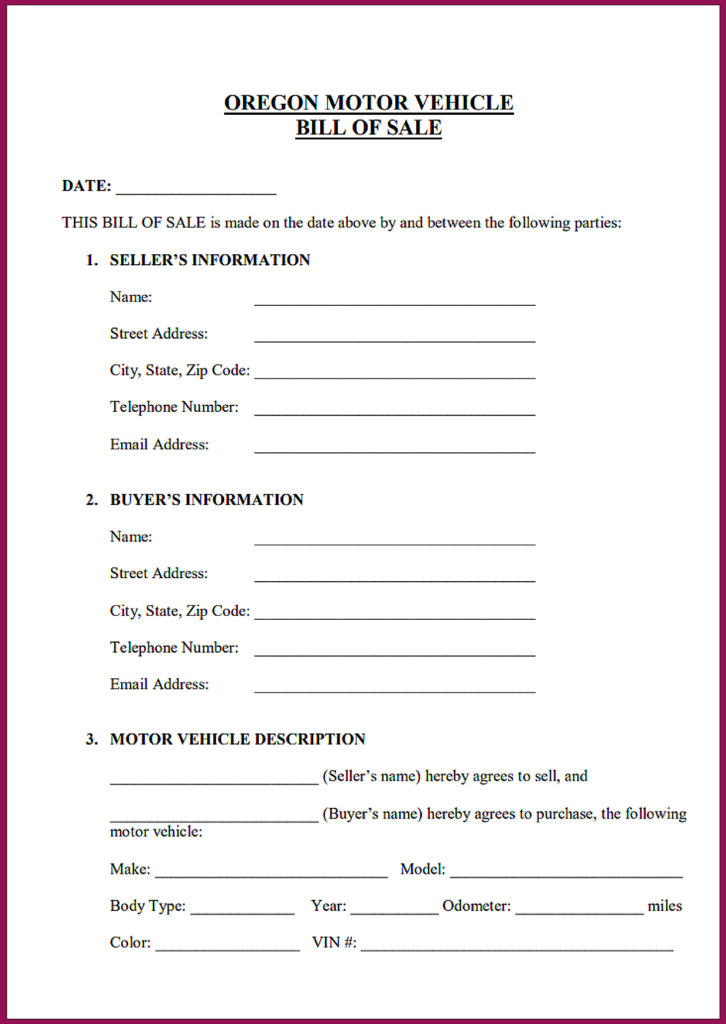
A solid Oregon bill of sale should include:

  • Full legal names of buyer and seller

  • Physical addresses (not just a PO box)

  • Date of sale

  • Purchase price

  • Detailed description of the item

    • For vehicles: VIN, year, make, model, plate number

  • Odometer reading (very important for vehicles under 20 years old)

  • Signatures of both parties

And here’s something I strongly prefer:
Add the phrase “sold as-is, with no warranties expressed or implied.”

I’ve seen buyers come back months later claiming mechanical issues. If you’re selling privately, that one sentence matters.

The DMV Side of Things (Where People Slip Up)

In Oregon, once you sell a vehicle, you must file a Notice of Sale with the DMV within 10 days. You can do this online or by mail.

I cannot stress this enough — file it.

I had a client years ago who sold a pickup in Medford. Nice guy. Thought the buyer would handle the paperwork. Three months later? Toll violations and parking tickets started showing up in his name.

Why? Because the buyer never transferred the title.

Had he filed the Notice of Sale with the Oregon Driver and Motor Vehicle Services Division immediately, those headaches would’ve ended fast.

Do You Need It Notarized in Oregon?

Generally, no. Oregon doesn’t require a generic bill of sale to be notarized for most personal property or vehicle sales.

That said — and this is just my personal legal habit — if the transaction is large (boats, RVs, expensive equipment), I sometimes recommend notarization for added protection.

It’s not legally mandatory, but it strengthens credibility if something ends up in court.

Common Situations Where a Generic Bill of Sale Saves You

1. Private Vehicle Sales

Especially Facebook Marketplace deals. Cash exchanges. Quick meetups in parking lots. That’s where documentation matters most.

2. Trailers

Oregon trailers under 1,800 lbs may not have titles. In those cases, the bill of sale becomes the primary proof of ownership.

3. Firearms

Oregon doesn’t require firearm registration, but background checks are required for transfers. A bill of sale documents that you legally transferred possession.

4. Personal Property Disputes

I once handled a case involving farm equipment sold between neighbors in rural Linn County. No paperwork. Just a handshake. The disagreement later cost far more than drafting a simple document would have.

Why I Care So Much About This

People assume legal protection is complicated. Sometimes it’s just one clean piece of paper signed properly.

What I’ve learned practicing here in Oregon is that most disputes aren’t about fraud — they’re about memory. People remember deals differently over time.

A generic bill of sale freezes the moment.
It captures what both parties agreed to on that day.

That’s powerful.

A Quick Word of Caution

A bill of sale does not replace transferring title through the Oregon DMV. I’ve had clients believe they “sold the car” because they signed a bill of sale — but never signed the title correctly.

If you’re transferring a motor vehicle in Oregon, make sure:

  • The title is properly signed and dated

  • Odometer disclosure is completed

  • Buyer submits title application within 30 days

  • You file your Notice of Sale

And if there’s ever doubt? Spend 15 minutes asking questions before the sale — not months fixing mistakes after.

(And of course, this is general information based on Oregon practice — not specific legal advice for your exact situation.)

If You’re Sitting Across from Me…

I’d probably say this:

If the deal matters enough to exchange money, it matters enough to document properly.

Personally, I would never sell a vehicle, trailer, or high-value property in Oregon without a clear bill of sale — even if the DMV doesn’t strictly demand it.

It’s cheap insurance.

If you have a situation you’re unsure about — title issue, lost paperwork, buyer not transferring ownership, inheritance vehicle transfer — feel free to reach out. Drop a comment or contact me directly. I’m happy to point you in the right direction.

FAQs

Is a generic bill of sale required in Oregon?

In most Oregon vehicle sales, the DMV focuses on the signed title, not the bill of sale itself. That said, in my experience, relying only on the title is risky. A generic bill of sale provides written proof of the sale date, price, and agreed terms. I’ve seen disputes where that one extra document made all the difference. So while it may not always be legally required, I strongly recommend having one for your own protection.

Does a bill of sale need to be notarized in Oregon?

Generally, no. Oregon does not require notarization for a standard vehicle bill of sale. However, for higher-value property — like RVs, boats, or expensive equipment — I sometimes suggest notarizing it simply for added credibility. It’s not mandatory, but it can strengthen your position if a disagreement ever ends up in court.

What information should be included in a generic bill of sale in Oregon?

From what I’ve seen go wrong over the years, missing details cause the biggest headaches. At minimum, you should include the full names and addresses of both parties, the sale date, purchase price, detailed description of the item (including VIN for vehicles), odometer reading if required, and both signatures. I also always recommend including “sold as-is” language to prevent warranty-related disputes later.

Does a bill of sale replace transferring the title with the Oregon DMV?

No — and this is where many people get into trouble. A bill of sale does not replace properly signing and submitting the title to the Oregon Driver and Motor Vehicle Services Division. You still need to complete the official title transfer process. Think of the bill of sale as your protection document, while the title transfer is what legally updates ownership with the state. Both matter, and skipping either can create problems down the road.

Author

  • Brandon L. Thornburg is a legal professional based in Lake Oswego, Oregon, and currently practices at the Law Office of Nicholas E. Wheeler, LLC. With a strong academic foundation from Lewis & Clark Law School, Brandon focuses on providing reliable, practical legal insight into documents and processes related to property transfers, ownership records, and transactional compliance.

    At BillofSaleOregon.com, Brandon reviews and contributes to content to help ensure that the information and bill of sale templates reflect current Oregon practices and are clear, accurate, and easy for the public to use. His legal background helps bridge the gap between complex legal requirements and simple, user-friendly documentation.

    Brandon is committed to making legal information more accessible to individuals and businesses by offering straightforward guidance based on publicly available laws and standard practices.

Leave a Comment

Your email address will not be published. Required fields are marked *

Scroll to Top