I’ve been practicing law here in Oregon for years, handling real vehicle sales, title transfers, and DMV disputes—so I usually know within the first few minutes of a conversation whether a vehicle sale was done right or is about to turn into a serious headache. In my experience, the turning point is almost always the same document: the Auto Bill of Sale Oregon buyers and sellers rely on to legally prove when ownership actually changed hands.
Simply put, an auto bill of sale in Oregon is written proof that a vehicle was sold, who sold it, who bought it, when it changed hands, and for how much. And I can’t count how many times I’ve seen problems start because this one step was rushed, misunderstood, or skipped entirely.
I’ve watched neighbors stop speaking over a $3,000 pickup. I’ve seen good, honest people receive letters from the Oregon Driver & Motor Vehicle Services months after they were certain a car was “long gone.” I’ve had clients sit across from me absolutely convinced they did everything right—only for me to discover there was no written record of the sale at all.
So let me talk to you the same way I talk to people sitting across the desk in my office—plain, practical, and based on what actually happens in Oregon, not what should happen on paper. Because when it comes to vehicle sales, the small details are usually the ones that cause the biggest problems.
Free Oregon Auto Bill of Sale Template
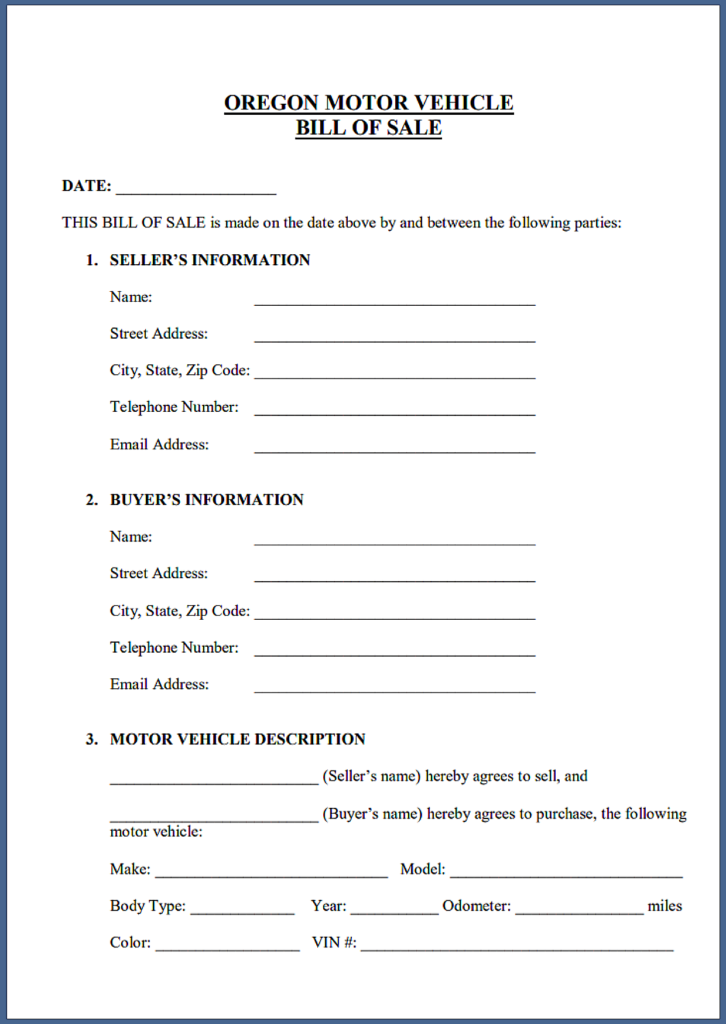
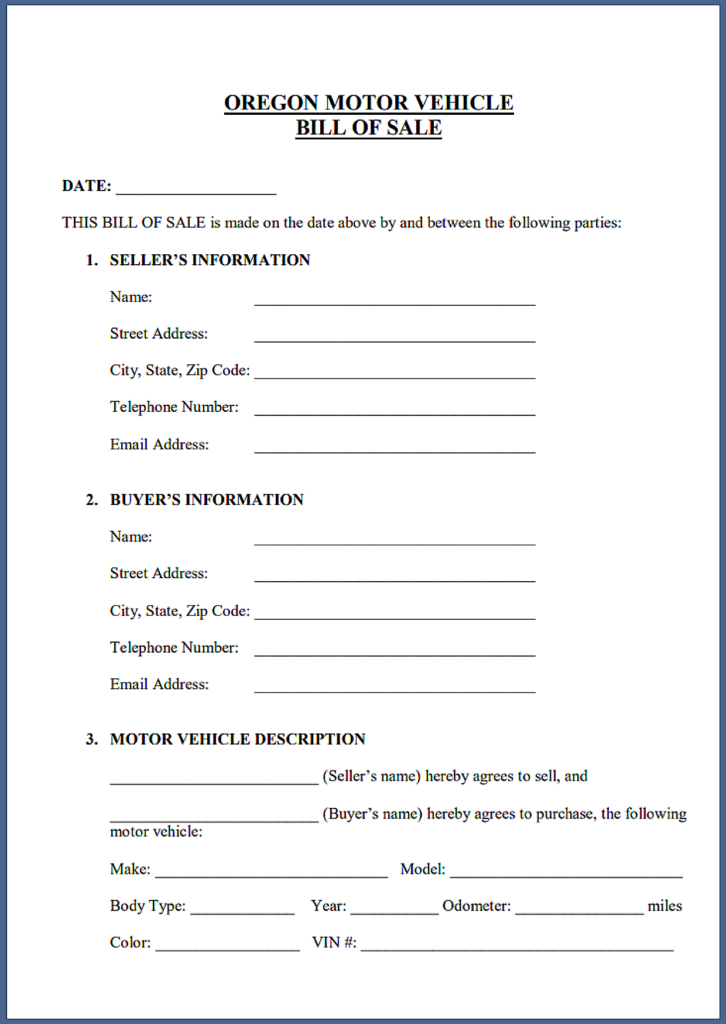
Over the years, I’ve noticed that most people don’t avoid a bill of sale because they don’t care — they skip it because they don’t know where to start. That’s exactly why I often point clients toward a free Oregon auto bill of sale template. When you’re selling or buying a vehicle privately, having a clean, ready-to-use template can save time and prevent simple but costly mistakes that I’ve seen turn into legal disputes later.
A properly drafted template helps make sure the essential details are captured clearly — who sold the vehicle, who bought it, when the sale happened, and what vehicle was involved. I always tell people that a free template isn’t about cutting corners; it’s about having a solid starting point that still holds up if questions come up down the road. For convenience, I’ve also included this template in PDF format, so you can easily download it, print it, and use it when needed.
Oregon Auto Bill of Sale Legal Requirements: What the DMV Actually Requires
| Topic / Issue | [OREGON] Legal Rule | Governing Statute |
|---|---|---|
| Governing Vehicle Law | Vehicle sales, ownership documentation, and transfer protocols are governed by the Oregon Vehicle Code under ORS Chapter 803. | Oregon Revised Statutes, ORS Chapter 803 |
| Transfer of Interest and Title Application | Oregon law governs the transfer of interest and title application requirements for vehicle ownership transfers. | ORS 803.092 |
| Odometer Disclosure | Oregon requires odometer disclosures under the identified state provisions, with federal Truth in Mileage Act requirements applying concurrently. | ORS 803.102; ORS 803.120–803.122; 49 U.S.C. Chapter 327 |
| Seller Transfer Notification | The seller must notify the Oregon DMV of the sale within 10 days. | ORS 803.112 |
| Who Can Legally Sign | The current registered owner or a legally authorized agent holding an explicit power of attorney may sign. | ORS 803.092; ORS 803.010 |
| Witness Requirement | No statutory witness requirement is identified; the source treats this as governed by common law principles. | N/A (Common Law) |
| Notarization Requirement | No statutory notarization requirement is identified for the bill of sale. | N/A (Common Law) |
| Age and Mental Capacity | No specific age threshold for executing a bill of sale is identified in ORS Chapter 803; the source applies common law contract-capacity principles. | Common Law Contract Principles |
| Buyer Deadline | The buyer must submit a title application within 30 days of the sale date. | ORS 803.092 |
| Odometer Language | For a 2011 or newer vehicle under 20 years old, the transferor must make the required certified odometer disclosure and indicate whether the mileage is actual, exceeds mechanical limits, or is not actual. | ORS 803.120; ORS 803.122 |
| Essential Bill of Sale Elements | The source identifies the VIN, clear release of interest, printed seller name, seller signature, and exact sale date as required baseline elements for a bill of sale used as a backup transfer record. | ORS 803.045; Oregon DMV administrative vehicle transfer guidelines |
| Filing and Registration | The bill of sale is a private contract between the parties, while the ownership change must be processed through Oregon DMV with the title application. | ORS Chapter 803 |
| Seller Notice Procedure | The seller must independently file the Notice of Transfer with Oregon DMV through DMV2U within 10 days. | ORS 803.112 |
| Invalid Odometer Disclosure | Omitting or improperly executing the required odometer disclosure for a covered 2011+ vehicle can cause the transfer instrument to be rejected for state processing. | ORS 803.102; ORS 803.122 |
| Non-Owner Signature | A person who is not the registered owner and lacks valid legal authority cannot transfer the legal ownership interest through the bill of sale. | ORS 803.010; ORS 803.092 |
| Missing Baseline Identifiers | Omitting the VIN, express release of interest, or seller signature makes the bill of sale unacceptable as proof of transfer under the source’s stated administrative requirements. | ORS 803.045 |
| Missing Title for 2011+ Vehicle | Where a 2011+ vehicle requires an odometer disclosure and the title is missing, the source states that a replacement title must be obtained before the sale and transfer. | Oregon DMV procedure; ORS 803.102; ORS 803.120–803.122 |
| Late Title Application | The source identifies $25 for title applications submitted between 31 and 60 days and $50 for applications submitted after 60 days. | ORS 803.090 |
| Electronic Title Activity | ORS 803.092 and related statutes incorporate updates concerning electronic titles, digital signatures, and electronic lienholder tracking systems. | ORS 803.092 and related statutes |
| Oregon’s Seller Notice Difference | Oregon requires the seller to report the sale to DMV within 10 days, while the seller remains recorded as owner until the buyer completes the title transfer. | ORS 803.112 |
| Dual-Level Compliance | Oregon DMV administrative requirements operate alongside federal statutory odometer disclosure requirements. | ORS Chapter 803; 49 U.S.C. Chapter 327 |
The rule that catches many people off guard is that the bill of sale does not replace the title-transfer process. Oregon separates the seller’s 10-day notification obligation from the buyer’s 30-day title application deadline. That means signing a document and handing over the keys does not finish every DMV obligation. The seller still has a specific notification duty, while the buyer has a separate deadline for the title application.
The odometer requirement is another place where the vehicle’s model year matters. For a 2011 or newer vehicle that is still within the stated 20-year period, the mileage disclosure has to identify the mileage status rather than simply leaving the odometer information vague. A missing or improperly completed disclosure can cause the DMV to reject the transfer paperwork.
The person signing also matters. The source specifically identifies the registered owner or an authorized agent with legal authority. A bill of sale signed by someone who lacks that authority does not solve the ownership problem. Likewise, leaving out the VIN, release of interest, seller’s signature, or sale date can prevent the document from serving its intended transfer-record purpose.
Auto Bill of Sale Form Oregon
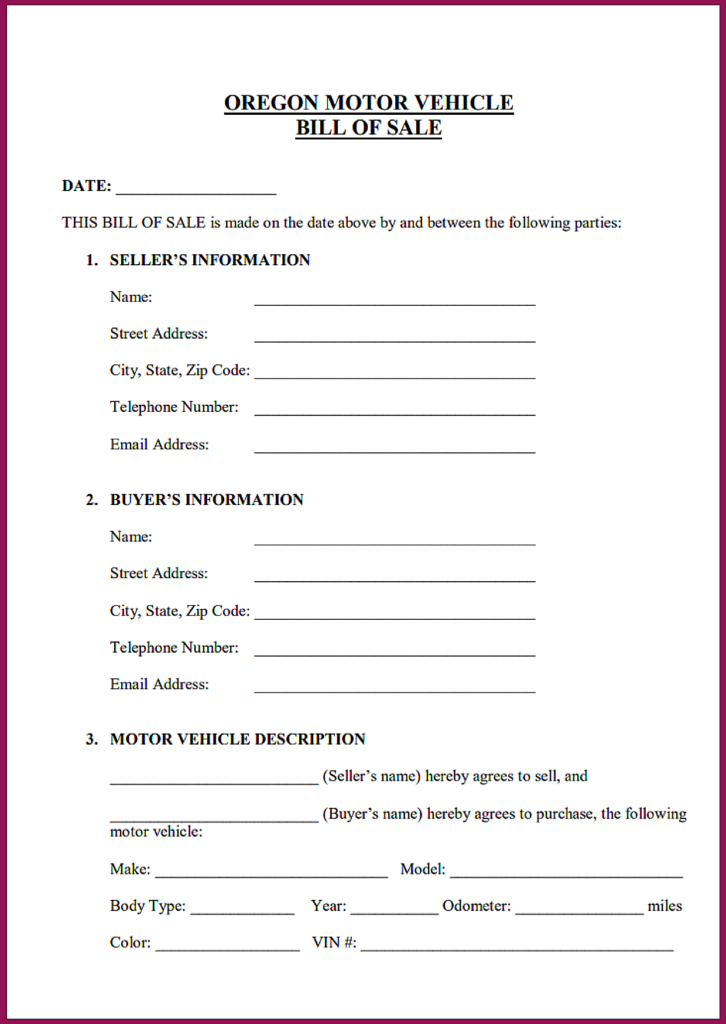
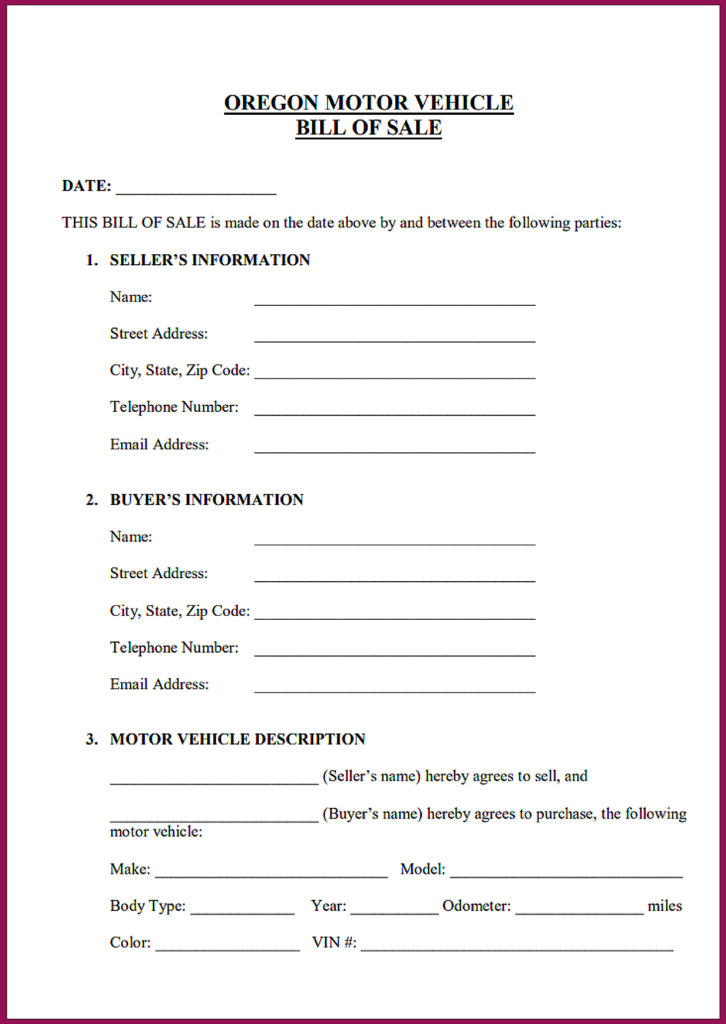
When clients ask me what document Oregon actually recognizes during a vehicle sale, I usually explain the difference between a casual handwritten note and a proper auto bill of sale form Oregon buyers and sellers can rely on. In real DMV situations, clarity matters. A well-structured form shows that the transaction wasn’t rushed or informal — it was intentional and documented.
I’ve handled cases where a loosely written bill of sale caused confusion about the sale date or vehicle details, which led to delays at the DMV. A standardized Oregon auto bill of sale form reduces that risk and makes the transfer process smoother for both sides. To make things easier, I’ve also made this form available in PDF format, so you can download it, keep a copy for your records, and use it whenever you need it.
Blank Auto Bill of Sale Oregon
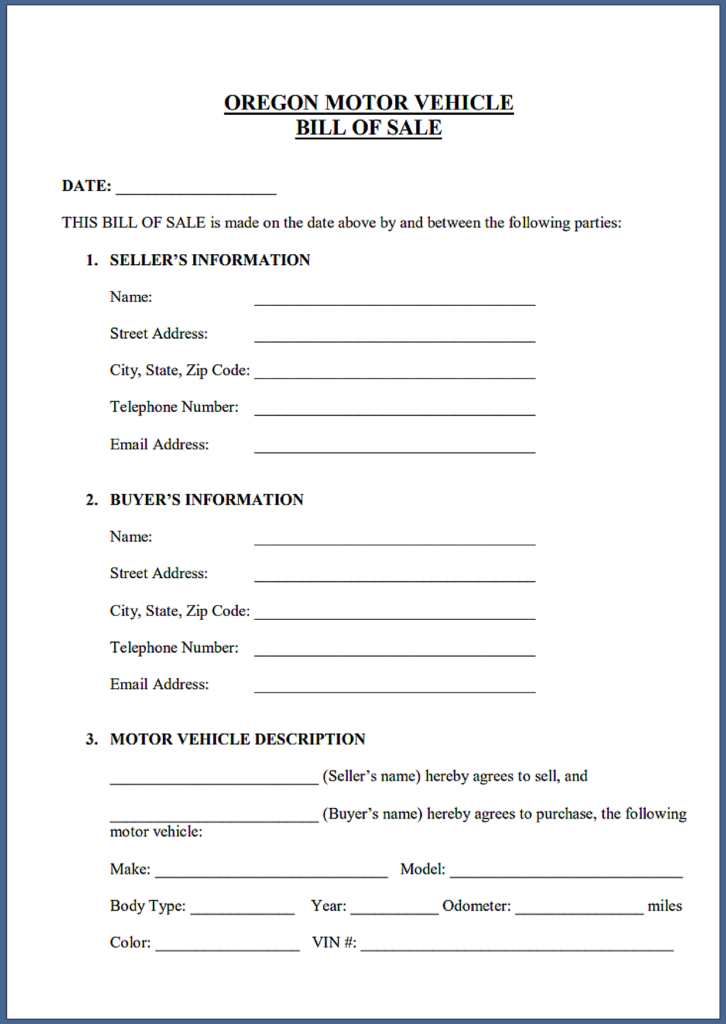
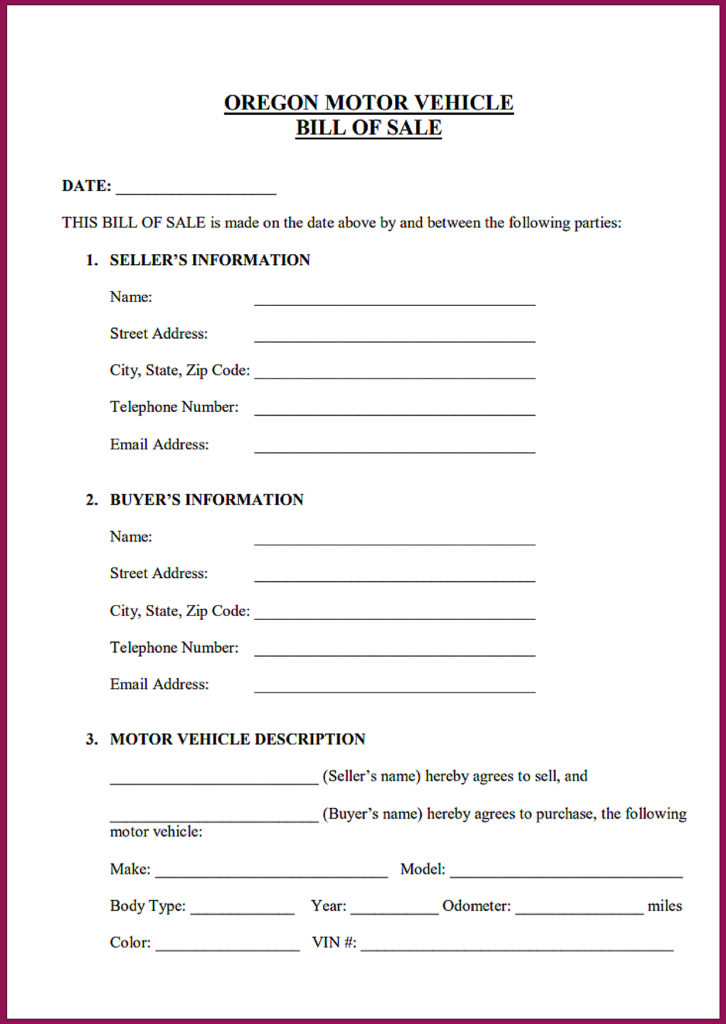
Sometimes, people don’t want a pre-filled form — they want flexibility. That’s where a blank auto bill of sale Oregon sellers often prefer comes in handy. I’ve seen situations where vehicles are sold between family members, friends, or long-time neighbors, and a blank form allows them to document the deal in their own words while still covering the legal basics.
That said, “blank” doesn’t mean casual. In my experience, problems arise when key details are left out simply because someone didn’t realize they mattered. A properly designed blank bill of sale still guides you to include everything Oregon expects. I’ve included a downloadable PDF version of this blank form so you can fill it out carefully, print it, and keep it as solid proof of the sale.
Oregon Auto Bill of Sale PDF
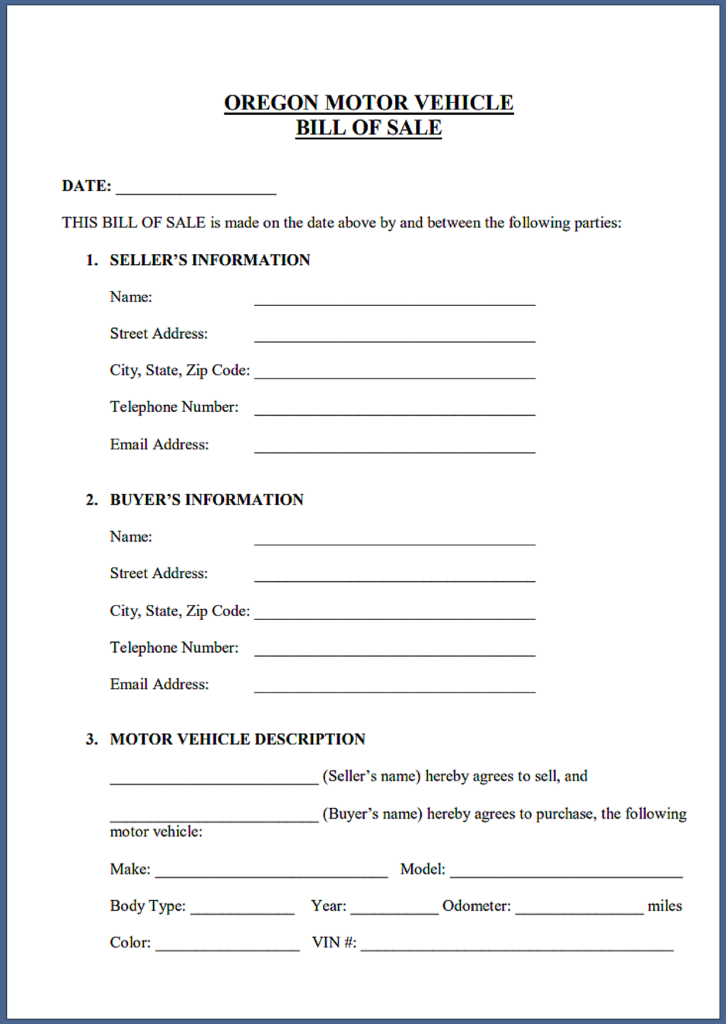
These days, most people want documents they can download, save, and access anytime — and I don’t blame them. An Oregon auto bill of sale PDF is especially useful if you’re preparing for a private sale, meeting a buyer after work, or handling paperwork outside normal DMV hours. I’ve seen many clients avoid last-minute stress simply because they already had the PDF ready.
From a legal standpoint, a PDF bill of sale works just as well as a paper form, as long as it’s completed accurately and signed properly. I often recommend keeping both digital and printed copies for your records. For that reason, I’ve included a PDF version you can download, making it easy to store, print, or share whenever necessary.
Oregon DMV Auto Bill of Sale
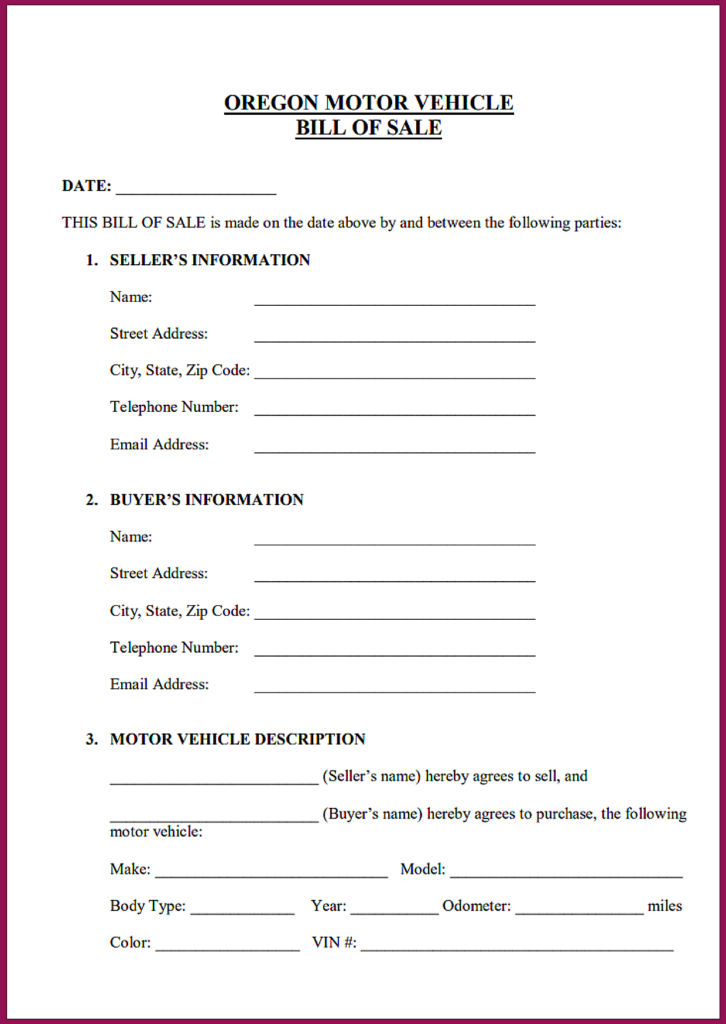
When the Oregon DMV gets involved — and it almost always does — the paperwork suddenly matters a lot more. An Oregon DMV auto bill of sale isn’t just about the sale itself; it helps establish when ownership changed, which can affect registration issues, liability questions, and even parking tickets or toll notices. I’ve seen DMV delays happen simply because the bill of sale didn’t match the title or lacked basic details.
From my experience, having a DMV-friendly bill of sale makes interactions with the DMV far smoother. It shows that the transaction was documented properly and reduces unnecessary back-and-forth. To help with that, I’ve included this Oregon DMV auto bill of sale in PDF format, so you can download it, complete it correctly, and walk into the DMV with confidence.