If you’re sitting across from me in my Oregon office with a motorcycle title in one hand and a handwritten receipt in the other, asking whether your motorcycle bill of sale Oregon paperwork is legally solid — you’re not alone. I’ve spent years handling private motorcycle sales, title corrections, DMV rejections, and ownership disputes across this state. And I can tell you from real experience: most problems don’t start with fraud — they start with incomplete paperwork.
A motorcycle bill of sale in Oregon is a written legal record of the transfer of ownership between a buyer and a seller. While the title is the primary ownership document issued by the Oregon DMV, the bill of sale serves as proof of the transaction details — price, date, vehicle information, and the identities of both parties. In my practice, I’ve seen this simple document prevent disputes, protect sellers from liability, and save buyers from expensive title headaches.
On paper, it looks straightforward. In real life? The small details are what make or break the transaction.
Free Printable Motorcycle Bill of Sale Oregon
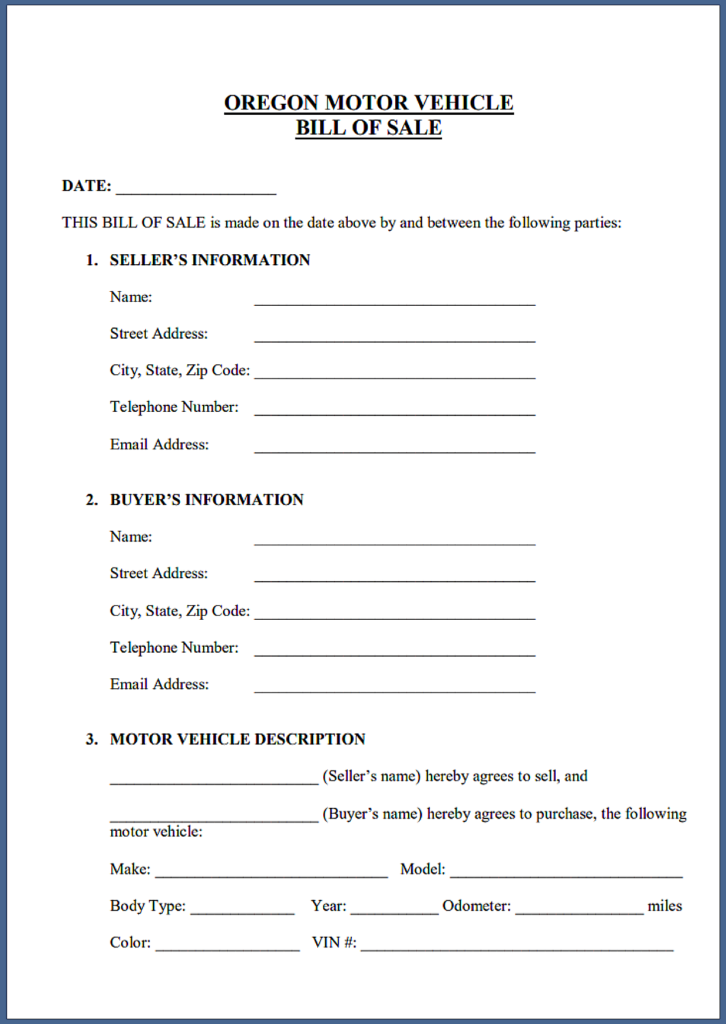
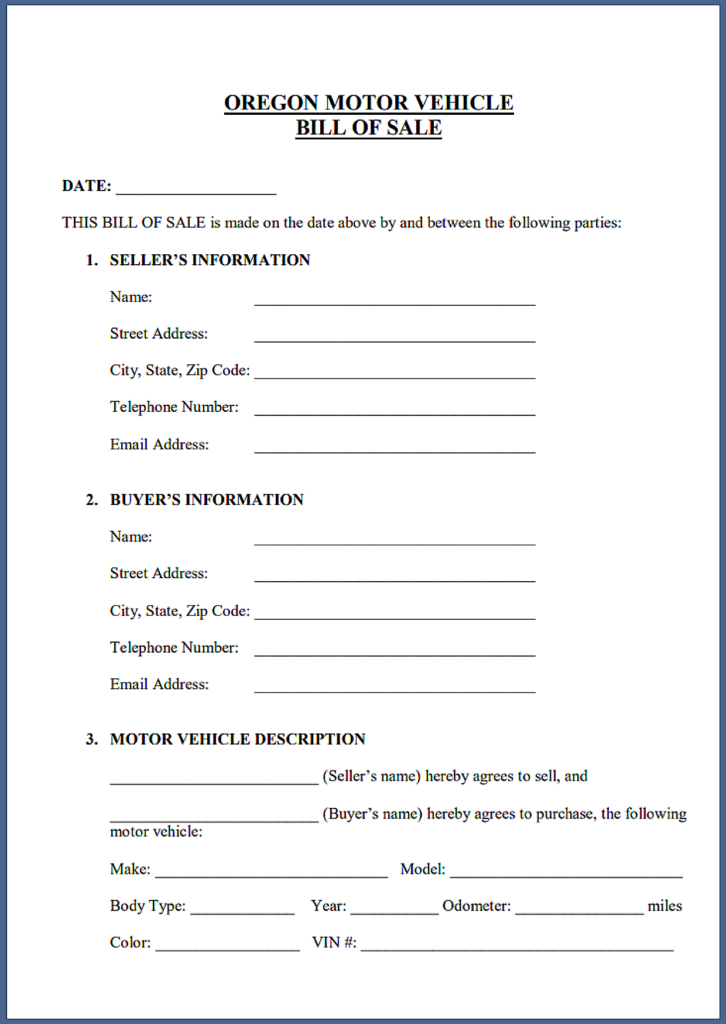
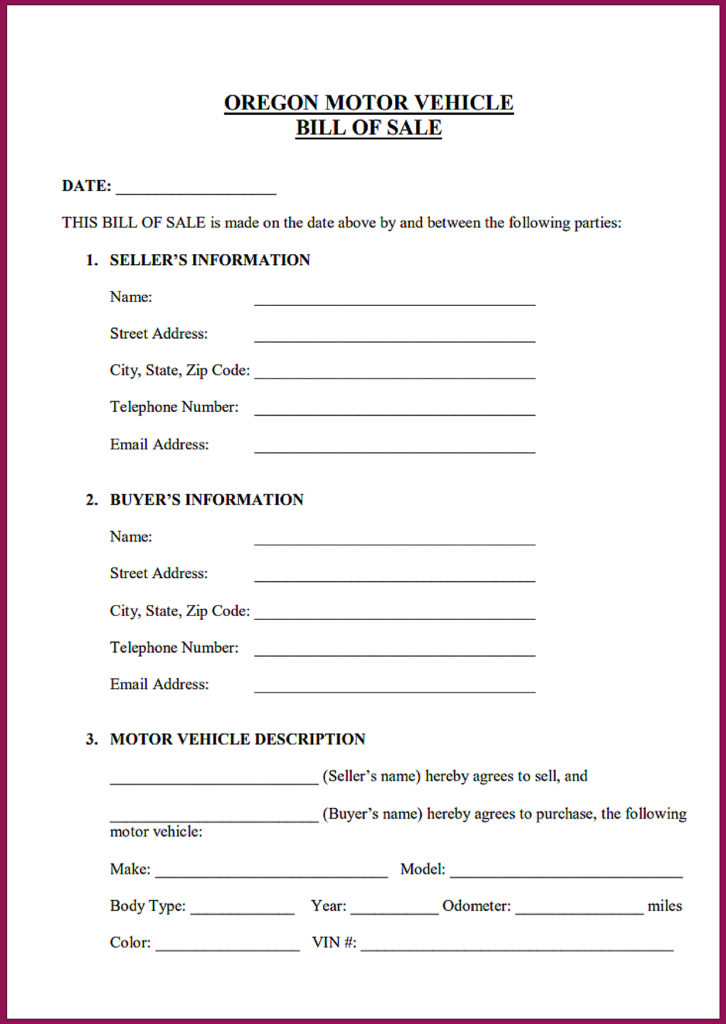
Over the years, I’ve had countless clients walk into my office asking if a “free printable motorcycle bill of sale Oregon” form they found online is actually valid. My honest answer? It depends on what’s inside it. A printable form is perfectly acceptable in Oregon as long as it includes the legally relevant details — full names, VIN, purchase price, date of transfer, odometer disclosure (when required), and proper signatures. The Oregon DMV doesn’t require fancy formatting — they require complete and accurate information.
What I’ve learned handling real title disputes is that the word “free” sometimes makes people careless. They download a template, fill in half the fields, skip VIN verification, and assume they’re protected. That’s when problems start. A properly completed printable bill of sale can absolutely protect both parties in a private motorcycle sale. And yes — for your convenience, you can download the PDF format of this form directly and use it for your transaction. Just make sure you complete it carefully and keep a signed copy for your records.
Oregon Motorcycle Bill of Sale Legal Requirements: Statutory Rules for Buyers and Sellers
| Topic / Issue | [OREGON] Legal Rule | Governing Statute |
|---|---|---|
| Governing Vehicle Law | Oregon vehicle titles, ownership transfers, odometer disclosures, and lien records are governed by the Oregon Vehicle Code. | ORS Chapter 803 |
| Title Transfer | The buyer must submit the title application to Oregon DMV within 30 calendar days of the transfer. | ORS 803.092 |
| Authorized Signers | The transferor and transferee listed on the title assignment or bill of sale are the parties to the transfer. | ORS 803.102; ORS 803.092 |
| Seller Notice | The seller must notify Oregon DMV of the motorcycle transfer within 10 calendar days of the sale. | ORS 803.112 |
| Witness Requirement | No statutory witness requirement is identified. | N/A |
| Notarization Requirement | No statutory notarization requirement is identified. | N/A |
| Age Requirement | Parties must be at least 18 years old to possess full independent contractual capacity. | ORS 109.510 |
| Mental Capacity | No statutory requirement is identified; governed by common law principles. | N/A |
| Odometer Disclosure | For motorcycles model year 2011 or newer and under 20 years old, the disclosure must state the numeric mileage and certify whether it is actual, exceeds mechanical limits, or is not actual. | ORS 803.120; 49 C.F.R. § 580.5 |
| Federal Odometer Law | Federal Truth in Mileage Act requirements apply to mandatory odometer disclosures. | 49 U.S.C. § 32705; 49 C.F.R. Part 580 |
| “As Is” Disclaimer | To exclude implied warranties of merchantability and fitness, the motorcycle sale contract must contain conspicuous written language meeting Oregon’s statutory requirements. | ORS 72.3160 |
| Filing Agency | The buyer files the title transfer application, original title, and supporting bill of sale with ODOT / DMV. | ORS 803.092 |
| Seller Notice Procedure | The seller submits a Notice of Sale through DMV2U or by form within 10 days of the sale. | ORS 803.112 |
| Private Contract Status | The bill of sale functions as a private agreement and supporting evidence of ownership when a title is missing or requires chain-of-custody verification. | Oregon vehicle-transfer procedures |
| False Statements | Knowingly submitting false statements or making material misrepresentations on vehicle title or transfer paperwork is unlawful and subject to statutory penalties. | ORS 803.070; ORS 803.114 |
| Missing Odometer Disclosure | A required odometer disclosure for a 2011+ motorcycle under 20 years old can cause DMV to reject the application if it is not properly completed. | ORS 803.102; ORS 803.120 |
| Active Lien | A motorcycle with an active recorded lien requires an original signed lien release from the security-interest holder for the title-transfer process. | ORS 803.092 |
| License Plates | Registration plates assigned to an Oregon vehicle remain with the vehicle when ownership changes, subject to the stated custom-plate exceptions. | ORS 803.530 |
| State Sales Tax | Oregon does not impose a general statewide retail sales tax or use tax on private motorcycle transactions. | Oregon state tax rules |
| Jurisdiction | State law governs title transfers, registration, and seller notices, while federal law governs the applicable odometer disclosure standards. | ORS Chapter 803; 49 U.S.C. § 32705; 49 C.F.R. Part 580 |
| Recent Odometer Amendment | The federal odometer exemption window was expanded to vehicles under 20 years old, capturing model year 2011 and newer motorcycles. | 49 U.S.C. § 32705; 49 C.F.R. Part 580 |
| Electronic Title Processing | Operational amendments to ORS 803.092 continue to streamline electronic title processing and security-interest releases. | ORS 803.092 |
The 30-day buyer deadline and 10-day seller notice deadline are two separate obligations. A buyer who receives the signed title still has to submit the title application, while the seller has a separate duty to notify DMV of the transfer. That distinction matters because relying entirely on the buyer leaves the seller without the separate notice step identified in Oregon law.
The odometer rule is particularly important for newer motorcycles. Your research identifies motorcycles from model year 2011 onward that are under 20 years old as subject to the specified disclosure, including certification of whether the mileage is actual, exceeds mechanical limits, or is not actual. An incomplete disclosure can result in DMV rejecting the transfer application.
The lien rule is another practical trap. If an active recorded lien remains, the buyer needs the original signed release from the security-interest holder for the title-transfer process. False statements or material misrepresentations in title paperwork can also lead to statutory penalties.
Oregon DMV Motorcycle Bill of Sale
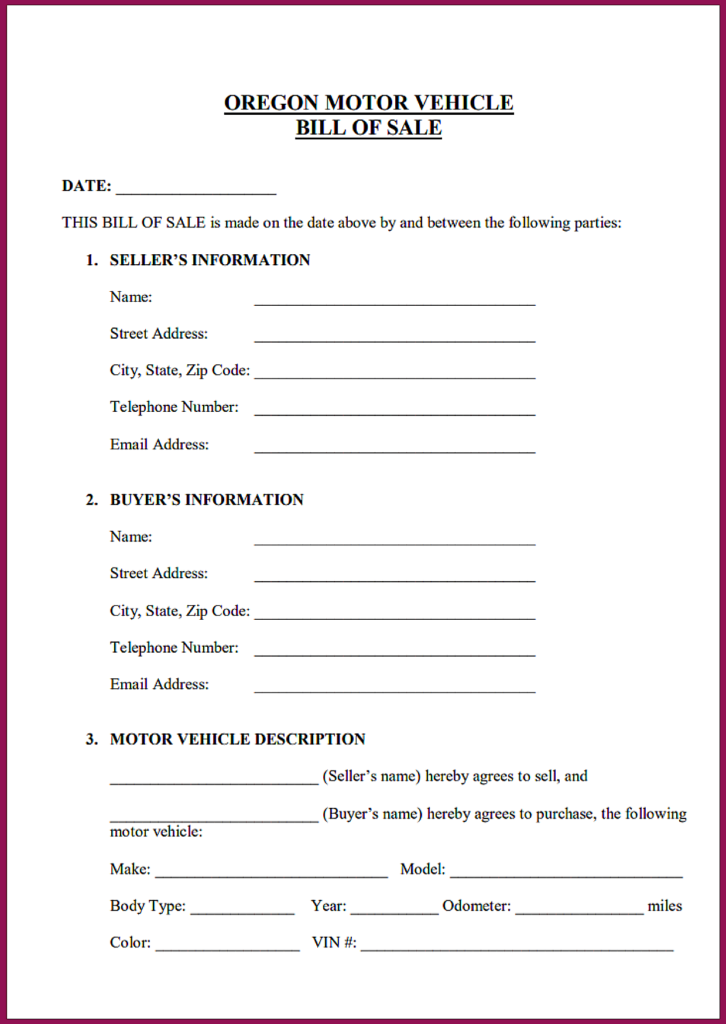
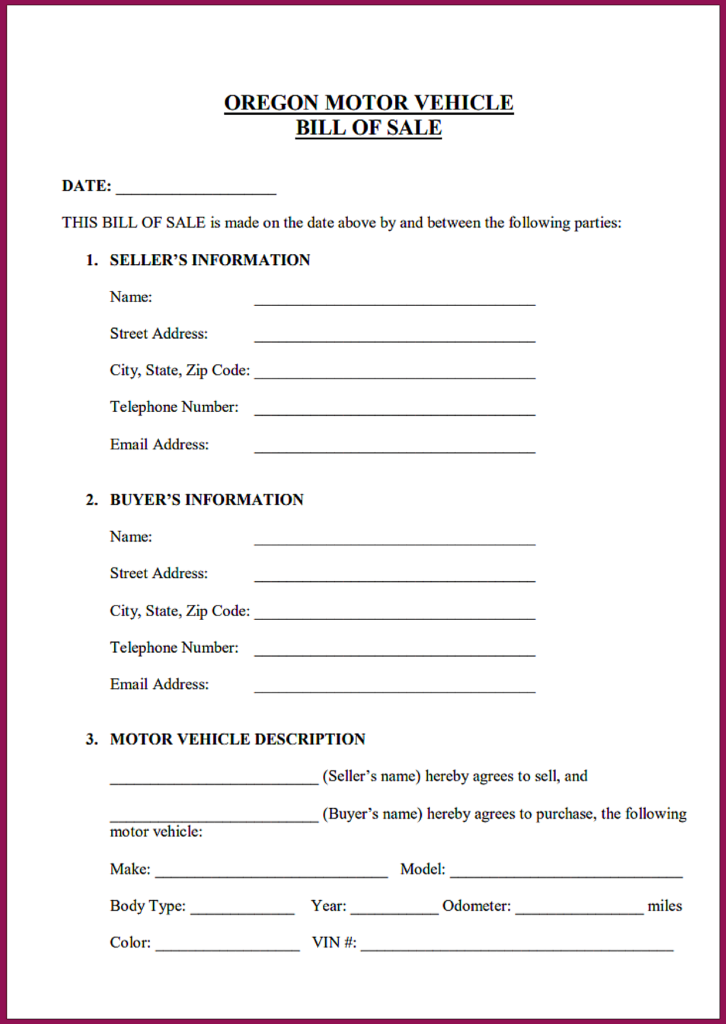
When clients ask me about an “Oregon DMV motorcycle bill of sale,” what they usually mean is whether the Oregon Driver and Motor Vehicle Services requires a specific state-issued form. In reality, Oregon DMV does not mandate a strict official bill of sale form in every private motorcycle transfer — the signed title is the primary ownership document. However, in my professional experience, DMV clerks appreciate clear supporting documentation when questions arise about sale dates, purchase price, or ownership history.
I’ve seen cases where a properly drafted bill of sale saved a client from late registration penalties or seller liability issues. It becomes especially important when the title has minor errors, or when there’s a delay in submitting paperwork. Having a structured document that mirrors DMV expectations adds clarity and credibility to the transaction. For ease of use, you can download the PDF format of this motorcycle bill of sale and complete it before heading to the DMV. Personally, I always recommend walking into DMV with more documentation than less.
Blank Bill of Sale for Motorcycle Oregon
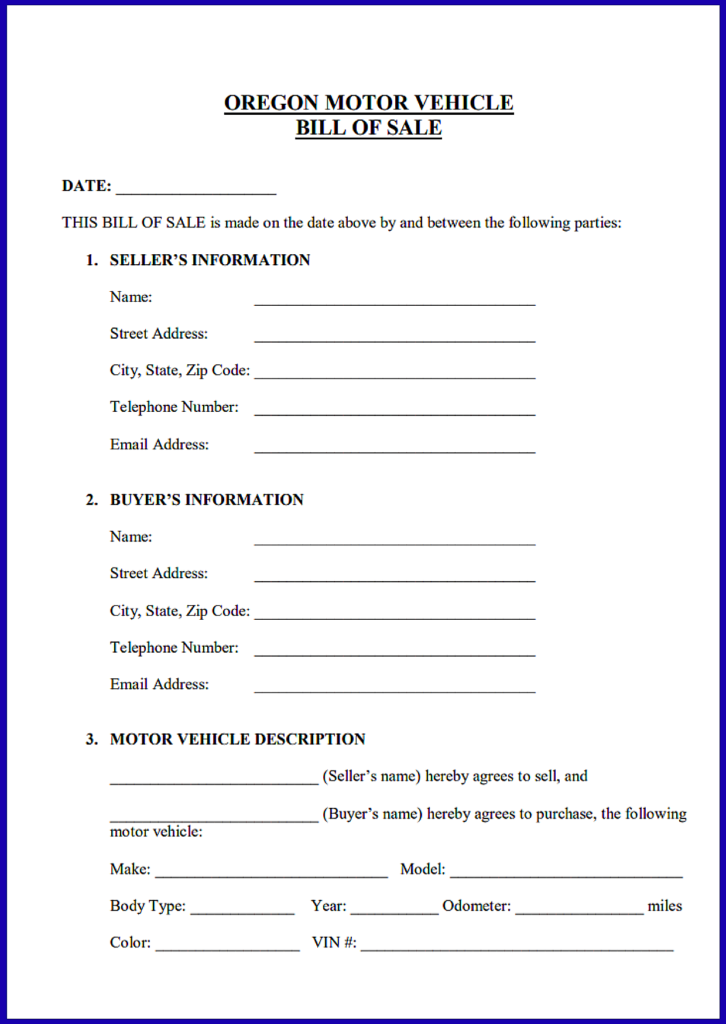
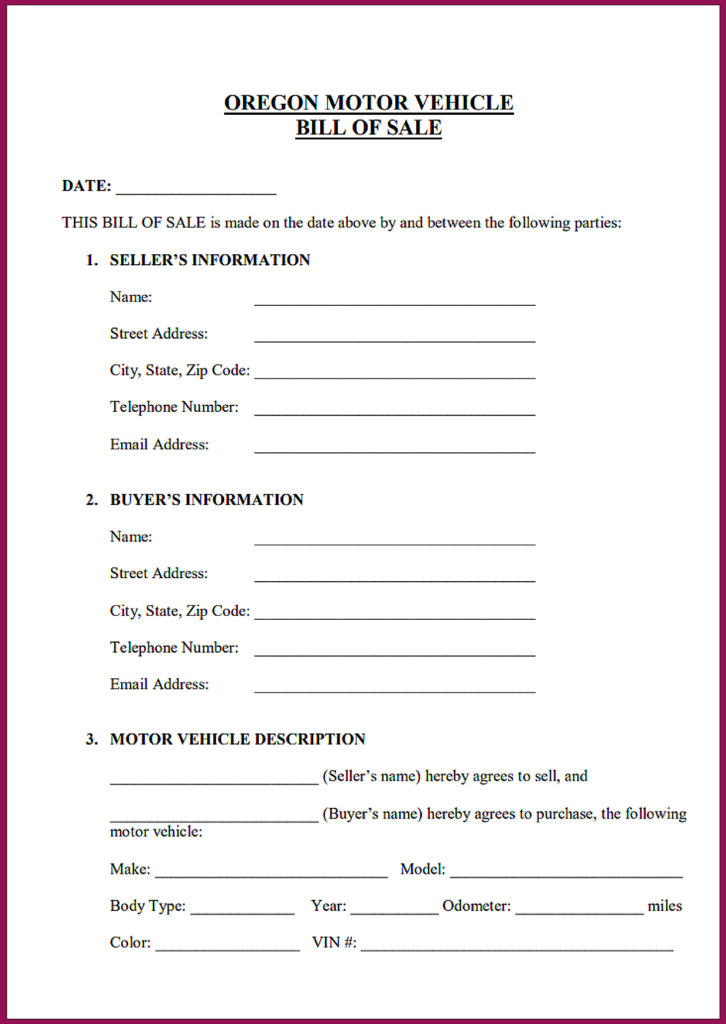
A blank bill of sale for motorcycle Oregon transactions gives you flexibility — but it also gives you responsibility. When I review blank forms clients bring me, I often see missing information that could create serious issues later. Oregon law doesn’t require complex legal wording, but it does require clarity. If ownership is ever questioned, the bill of sale becomes evidence. That means every field matters — especially VIN accuracy, date of transfer, and correct legal names.
In one situation I handled, a buyer used a blank template but forgot to include the full VIN. Months later, when the title transfer was challenged, that small omission created unnecessary legal friction. A blank form is perfectly fine — but it must be completed thoroughly and thoughtfully. To make the process easier, you can download the PDF format of this blank motorcycle bill of sale and fill it out properly before finalizing the deal. What I’ve learned is simple: blank doesn’t mean basic — it means you must be precise.
First Things First: Is a Bill of Sale Required in Oregon?
In Oregon, the primary ownership document for a motorcycle is the certificate of title, issued by the Oregon Driver and Motor Vehicle Services (DMV).
Technically, Oregon DMV does not always require a bill of sale if the title is properly signed over. But here’s what I’ve learned over the years:
I always recommend having a written motorcycle bill of sale — even when it’s not strictly required.
Why? Because titles get lost. Signatures get questioned. Dates get disputed. And when that happens, the bill of sale becomes your safety net.
I’ve seen buyers accused of not paying. I’ve seen sellers blamed for tickets months after the bike was “sold.” A simple document could have prevented those fights.
What I Always Tell Sellers
If you’re selling a motorcycle privately in Oregon, here’s what I strongly prefer you do:
-
Fill out the title completely and accurately
-
Remove your plates (Oregon plates stay with the seller, not the bike)
-
Submit a Notice of Sale to Oregon DMV immediately
-
Keep a signed copy of the bill of sale
Let me tell you why that Notice of Sale matters.
A few years ago, a client sold his motorcycle in Eugene. Nice guy. Cash deal. He signed the title but didn’t file the Notice of Sale. The buyer never registered it. A month later? Toll violations and parking tickets started showing up — in my client’s name.
In Oregon, until the DMV processes the transfer or receives notice, you can still be connected to that vehicle in state records. Filing that notice protects you.
It takes minutes. It saves months of stress.
What Buyers Need to Watch For
Buyers usually worry about one thing:
“What if something is wrong with the title?”
That’s a valid concern.
When I review a motorcycle sale, I check for:
-
Proper seller signature
-
Odometer disclosure (required if the bike is under 10 years old)
-
No open liens
-
No alterations or white-out on the title
If there’s a lien listed and no lien release? Stop right there. I’ve seen buyers pay thousands for bikes they couldn’t legally title because the previous loan was never cleared.
Personally, I would never hand over money until:
-
I see the original title.
-
I verify the VIN matches the bike.
-
I confirm any lien release documentation is in hand.
The Out-of-State VIN Inspection Can Add Another Step
There is one detail I would check before a buyer assumes the Oregon title transfer is routine: where the motorcycle was previously titled.
If the motorcycle has an out-of-state or out-of-country title, Oregon DMV requires a physical VIN inspection before issuing the Oregon title. The inspection verifies that the VIN on the motorcycle matches the title or other ownership document. The current Oregon DMV fee for a VIN inspection is $9.
This is separate from simply checking the VIN yourself at the time of sale. A buyer can compare the VIN on the frame with the title and still need the official DMV inspection because the motorcycle is coming from another state or country.
That makes the bill of sale especially useful as supporting paperwork, but it does not replace the inspection. Oregon DMV’s title instructions also identify the out-of-state title and the VIN inspection among the documents that may be required for the Oregon title application.
So, if you are buying a motorcycle from outside Oregon, I would check this before assuming you can submit the signed title and bill of sale and finish the transaction in one step. Missing the inspection can delay the Oregon title process even when the ownership paperwork itself is properly signed.
What Should Be in a Motorcycle Bill of Sale (Oregon-Specific)
I don’t like vague documents. A strong motorcycle bill of sale in Oregon should include:
-
Full legal names and addresses of buyer and seller
-
Motorcycle year, make, model
-
VIN (double-check this — I’ve seen one digit mistakes derail transactions)
-
Purchase price
-
Date of sale
-
Odometer reading
-
Signatures of both parties
You don’t need fancy language. I’ve seen handwritten bills of sale work perfectly fine — when they’re complete.
What matters is clarity.
The DMV Transfer Process in Oregon
After the sale, the buyer must submit the title and application to Oregon DMV within 30 days.
If they don’t? There can be late fees.
In my experience, delays often happen because:
-
The seller forgot to sign correctly.
-
The buyer didn’t realize they needed an emissions test (in certain counties).
-
The VIN inspection was required but skipped.
-
The odometer section wasn’t completed properly.
Oregon DMV is generally reasonable — but they are strict about incomplete paperwork. I always tell clients: triple-check before leaving the driveway.
About “As-Is” Sales
Almost every private motorcycle sale in Oregon is considered “as-is” unless you put something else in writing.
This means once the buyer takes possession, mechanical issues are usually their responsibility.
But here’s where it gets tricky — and I’ve handled these disputes:
If a seller knowingly hides a major defect (like a rebuilt title or flood damage), that can cross into misrepresentation. And that’s when legal problems start.
If you’re selling, be honest.
If you’re buying, inspect carefully — or bring someone who knows bikes.
Title Disputes & Real Problems I’ve Seen
Let me share a realistic scenario.
A young buyer from Portland purchased a used motorcycle from a private seller. They signed a simple bill of sale but the seller never signed the title properly. The buyer rode the bike for months — then tried to register it.
Oregon DMV rejected the transfer.
The seller had moved out of state. Tracking him down became expensive and stressful. Eventually, we had to explore bonded title options — which cost time and money that could have been avoided with proper paperwork.
This is why I say:
The bill of sale is protection.
The signed title is ownership.
Both matter.
Do You Need a Notary in Oregon?
For most motorcycle sales in Oregon, notarization is not required.
That said, in higher-value sales, I sometimes suggest it. Not because DMV demands it — but because it eliminates signature disputes.
If tensions are high or you don’t know the other party well, having a neutral witness can save arguments later.
A Gentle Legal Disclaimer (From Me to You)
Every situation is different. County rules, liens, inherited vehicles, lost titles — they all change the analysis.
Nothing here replaces personalized legal advice. I’m sharing what I’ve seen work — and what I’ve seen go wrong — over years of handling real Oregon vehicle matters.
If something feels off in your transaction, pause. Ask questions. It’s cheaper to prevent a problem than to fix one.
My Honest Advice
If I had to boil it down:
-
Don’t skip the bill of sale.
-
Don’t leave sections blank.
-
File your Notice of Sale immediately.
-
Double-check VIN and signatures.
-
Don’t rush because someone says, “It’s fine.”
I’ve seen too many “quick sales” turn into long headaches.
Motorcycle transactions in Oregon are usually straightforward — but only when both sides take them seriously.