
Build Your Bill Of Sale
Printable | DMV | Car | Boat | PDF | RV | Generic | Motorcycle | ATV | General | Gifted Car | Mobile Home | Trailer | Vehicle | Auto
When someone sits across from me and asks, “Brandon, do I really need a Bill of Sale Oregon?” — I don’t just hear a paperwork question. I hear risk.
After years practicing law here in Oregon — handling vehicle transfers, title disputes, private-party sales, and more DMV messes than I can count — I can tell you this clearly: a Bill of Sale in Oregon is a written legal record that proves a transfer of ownership between a buyer and a seller. It documents what was sold, for how much, and when the responsibility changed hands.
Most people think signing the title is enough. Sometimes it is. But in my experience, the problems start when something goes wrong — unpaid tickets, accidents, buyers who never register the vehicle, or simple disagreements about price.
That’s when everyone wishes they had better documentation.
So let me explain how Bill of Sale rules actually work here in Oregon — the same way I explain them to clients sitting across from me in my office.
Free Bill of Sale Oregon Templates
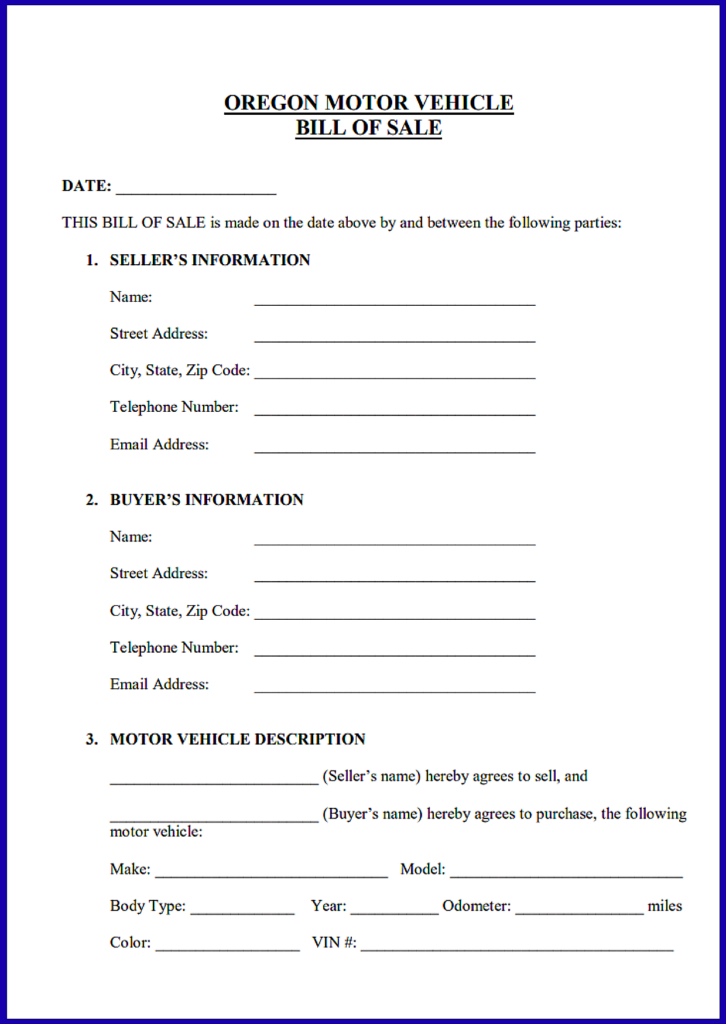
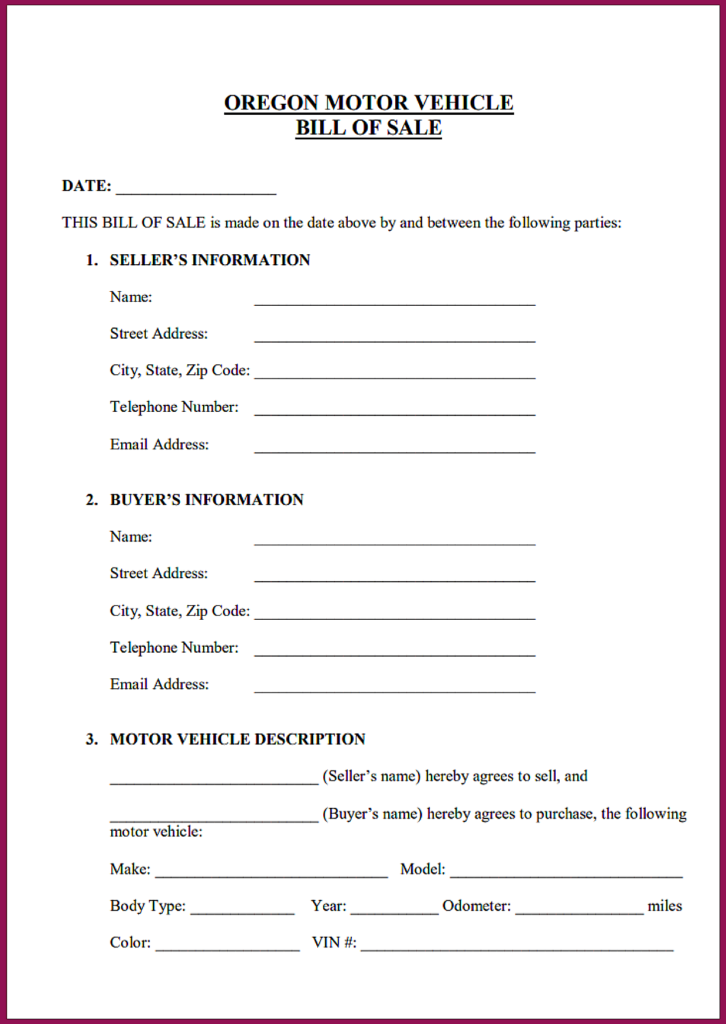
When clients ask me for a “free Bill of Sale Oregon template,” what they usually want is something quick and easy to download. I understand that. But after years handling disputes across Oregon, I’ve learned that not all templates are created equal. A proper Oregon bill of sale should clearly identify the buyer, seller, purchase price, property description, and date of transfer — and it must match Oregon’s real-world DMV and ownership practices. I always tell people: free is fine, but incomplete is expensive. A solid template protects you long after the handshake is over.
Oregon DMV Bill of Sale
When people say “Oregon DMV bill of sale,” they’re usually referring to documentation connected to the Oregon Driver and Motor Vehicle Services Division. Here’s what I explain in my office: Oregon DMV does not strictly require a separate bill of sale for every vehicle transfer, but having one can prevent serious liability issues. The DMV focuses on the signed title and Notice of Sale, but when disputes arise, a written bill of sale becomes critical evidence. I’ve seen cases where that single sheet of paper resolved months of confusion.
Oregon Vehicle Bill of Sale
An Oregon vehicle bill of sale is a written record proving the transfer of ownership of a motor vehicle between private parties. In my practice, this document becomes especially important when buyers delay title transfer or when payment terms are questioned later. I strongly prefer including VIN, exact sale price, odometer reading, and full legal names — no shortcuts. Vehicle sales in Oregon may seem simple, but documentation is what keeps them clean.
Auto Bill of Sale Oregon
“Auto” bill of sale usually means any passenger vehicle transaction. What I’ve learned from handling auto disputes is that misunderstandings rarely happen at the time of sale — they happen weeks later. A properly drafted auto bill of sale in Oregon clarifies when responsibility shifted. That date matters more than people realize, especially if tickets or accidents occur after the sale.
Car Bill of Sale Oregon
A car bill of sale in Oregon is not just a receipt — it is legal proof of transaction. I always explain that while the signed title transfers ownership, the bill of sale documents the financial agreement. If someone later claims the price was different, or that the vehicle had undisclosed conditions, this document becomes your protection. Personally, I never recommend selling a car without one.
DMV Bill of Sale Form Oregon
When clients mention the DMV bill of sale form in Oregon, they often assume there is a mandatory statewide form for every situation. In reality, Oregon allows flexibility, but the document must still contain essential legal details. I’ve helped clients clean up messy transfers simply because a form was incomplete. My advice? Whether using a state-style form or custom document, make sure every critical detail is clearly written and signed.
Boat Bill of Sale Oregon
Boat transfers in Oregon often involve coordination with the Oregon State Marine Board, not just the DMV. A boat bill of sale documents hull identification numbers, vessel details, and sale terms. I’ve seen buyers struggle to register boats because a bill of sale lacked key identifying information. With boats especially, precision matters.
Generic Bill of Sale Oregon
When people search for an Oregon bill of sale PDF, they’re usually looking for downloadable formats for vehicles, boats, trailers, RVs, or other property. I always remind clients that a PDF format is convenient, but the content is what protects you. Whether it’s an Oregon DMV bill of sale PDF or a vehicle-specific PDF, make sure it includes accurate property description, signatures, and clear sale terms. The format doesn’t protect you — the details do.
Motorcycle Bill of Sale Oregon
Motorcycle transfers follow similar principles as car sales in Oregon. I advise including engine number, VIN, make, model, and mileage. Motorcycles are frequently involved in informal private sales, which increases the risk of missing paperwork. Proper documentation avoids later ownership confusion.
Oregon Trailer Bill of Sale
Trailers in Oregon sometimes require title, sometimes registration only — depending on weight and type. This is where people get confused. I’ve helped clients who assumed “it’s just a trailer” and later discovered ownership issues. A clear oregon trailer bill of sale removes uncertainty about who assumed responsibility and when.
ATV Bill of Sale Oregon
ATVs in Oregon may involve registration through state systems depending on use. An ATV bill of sale should document serial numbers and condition. Off-road vehicles often change hands informally, but legally, documentation still protects both parties. I’ve seen handshake deals turn complicated when accidents happen.
General Bill of Sale Oregon
A general bill of-sale oregon covers any transfer of personal property not specifically regulated elsewhere. In my office, I describe it as a legal receipt that proves ownership changed hands. Even for simple transactions, clarity prevents future disagreement.
Is a Bill of Sale Required in Oregon?
Here’s the honest answer:
Oregon does not always legally require a bill of sale for every private sale — especially for motor vehicles — because ownership technically transfers through the signed title.
But personally? I always recommend one.
Why?
Because I’ve seen what happens when there isn’t one.
A few years ago, a client sold his pickup truck to a neighbor. Cash deal. Signed title. No bill of sale. A month later, the buyer never registered it and got into a minor accident. Guess whose name was still connected to the vehicle in certain systems?
My client’s.
It took weeks to unwind.
A simple one-page bill of sale would have saved him stress, time, and legal fees.
How Oregon Actually Handles Vehicle Sales
When you sell a vehicle in Oregon, the key players are:
-
The signed Certificate of Title
-
The buyer submitting transfer paperwork to the Oregon Driver and Motor Vehicle Services Division (DMV)
-
The seller filing a Notice of Vehicle Sale
That last part? Most sellers forget it.
And that’s where I start raising my lawyer eyebrows.
The Notice of Vehicle Sale Matters
In Oregon, sellers must file a Notice of Sale within 10 days. You can do it online or by mail. I strongly prefer filing it online immediately after handing over the keys.
Why?
Because once that notice is processed, you’re telling the state:
“This vehicle is no longer mine. Don’t send tickets or liability issues my way.”
Without that notice, I’ve seen sellers dragged into collections letters, toll violations, even small claims cases.
The bill of sale becomes your backup documentation if anything is disputed.
What I Always Include in an Oregon Bill of Sale
Now, Oregon doesn’t mandate a specific statewide form for all bill of sale situations. But I make sure my clients’ documents always include:
-
Full legal names of buyer and seller
-
Physical addresses (not just PO boxes)
-
Date of sale
-
Purchase price
-
Vehicle description (year, make, model)
-
VIN (Vehicle Identification Number)
-
Odometer reading
-
Signatures of both parties
If you’re dealing with a motor vehicle, I often reference the Oregon DMV’s Form 735-501 for clarity, even if we draft a custom bill of sale.
And here’s something I always say:
If it isn’t written down, it didn’t happen.
Handshake deals feel friendly. But paper protects friendships.
The Odometer Disclosure — Don’t Overlook It
Federal law requires accurate odometer disclosure for most vehicles under 20 years old. In Oregon, this is usually completed directly on the title.
I’ve seen buyers try to “ballpark” mileage.
Don’t.
Incorrect mileage reporting can create fraud allegations later. Even if it was accidental.
If you don’t know the exact mileage, say so clearly and mark it appropriately. Never guess.
Private Party Sales vs. Dealership Sales
Dealers handle paperwork every day. Private sellers don’t.
That’s why private sales are where I see the most problems:
-
Buyer delays title transfer
-
Seller forgets Notice of Sale
-
No written price agreement
-
Payment disputes
-
Family sales with no documentation
Family transfers are especially tricky. People assume trust replaces paperwork. In my experience, that’s when misunderstandings hurt the most.
Even if you’re selling to your cousin, I would still draft a clean bill of sale.
Boats, Trailers, and Other Property
Oregon also uses bills of sale for:
-
Boats (often through Oregon State Marine Board processes)
-
Trailers
-
ATVs
-
Firearms (though different legal considerations apply)
Each type of property may involve separate agencies and slightly different documentation requirements.
What I’ve learned is that people assume “it’s just a trailer” — until ownership is disputed two years later.
Paperwork always matters.
Common Mistakes I See (Over and Over)
Let me save you from the repeat offenders:
1. Leaving blanks on the document
If there’s a blank line, someone can fill it in later.
2. Not keeping a copy
I tell clients: take a photo immediately. Save it to the cloud.
3. Accepting partial payment without terms in writing
Installment agreements without clear language are lawsuits waiting to happen.
4. Forgetting tax implications
Oregon doesn’t have sales tax, which simplifies things — but other fees still apply during title transfer.
My Practical Advice
If you’re selling a vehicle in Oregon tomorrow, here’s what I personally would do:
-
Draft or download a clear bill of sale.
-
Fill it out completely — no shortcuts.
-
Sign the title properly.
-
File the Notice of Sale online the same day.
-
Keep copies of everything.
It takes maybe 20 minutes.
It can prevent months of frustration.
A Gentle Legal Reminder
Every situation has its own wrinkles. If you’re dealing with:
-
A disputed sale
-
A missing title
-
A deceased owner
-
A buyer who vanished
-
Identity or fraud concerns
Please talk to a local attorney before guessing your way through it.
This post is general information based on my experience here in Oregon — not specific legal advice for your exact situation.
Final Thoughts From My Office
The biggest misconception I see is this:
People think paperwork means distrust.
I see it differently.
Paperwork is clarity. It protects both sides. It prevents small issues from turning into courtroom problems.
After years handling Oregon DMV headaches, title disputes, and “I thought we agreed…” arguments, I can tell you — the cleanest transactions are the ones where everything was documented from day one.
If you have a question about your bill of sale situation in Oregon, drop it in the comments or reach out. I read them. And if you’re sitting there unsure about your next step, I’d rather you ask now than try to fix it later.
FAQs
Do I legally need a Bill of Sale in Oregon?
Not always — and that’s where confusion starts.
For most vehicle sales in Oregon, ownership legally transfers through the signed title with the Oregon Driver and Motor Vehicle Services Division. But in my experience, relying only on the title is risky. A bill of sale gives you written proof of the sale date, price, and transfer of responsibility.
Personally, I strongly recommend using one every single time — even if the law doesn’t explicitly require it.
Is there an official Oregon DMV Bill of Sale form?
There isn’t one universal “mandatory” DMV bill of sale form for all transactions.
Oregon DMV provides certain forms related to title transfers and odometer disclosures, but a standard bill of sale can be drafted privately as long as it includes all necessary details. What matters most is that the document clearly identifies the buyer, seller, vehicle (including VIN), price, and date.
I’ve seen disputes where poorly drafted forms caused unnecessary headaches. Clean documentation prevents that.
What information should be included in an Oregon Bill of Sale?
At minimum, I always advise including:
-
Full legal names and addresses
-
Date of sale
-
Purchase price
-
Detailed description of the property
-
VIN (for vehicles)
-
Odometer reading (if required)
-
Signatures of both parties
If any of that is missing, you’re leaving room for arguments later. And trust me — arguments happen more often than people expect.
Does a Bill of Sale need to be notarized in Oregon?
Generally, no.
Oregon does not typically require notarization for a standard vehicle bill of sale. That said, in higher-value transactions — like RVs, boats, or mobile homes — I sometimes recommend notarization for extra protection.
It’s not always required, but sometimes it’s worth the added layer of security.